
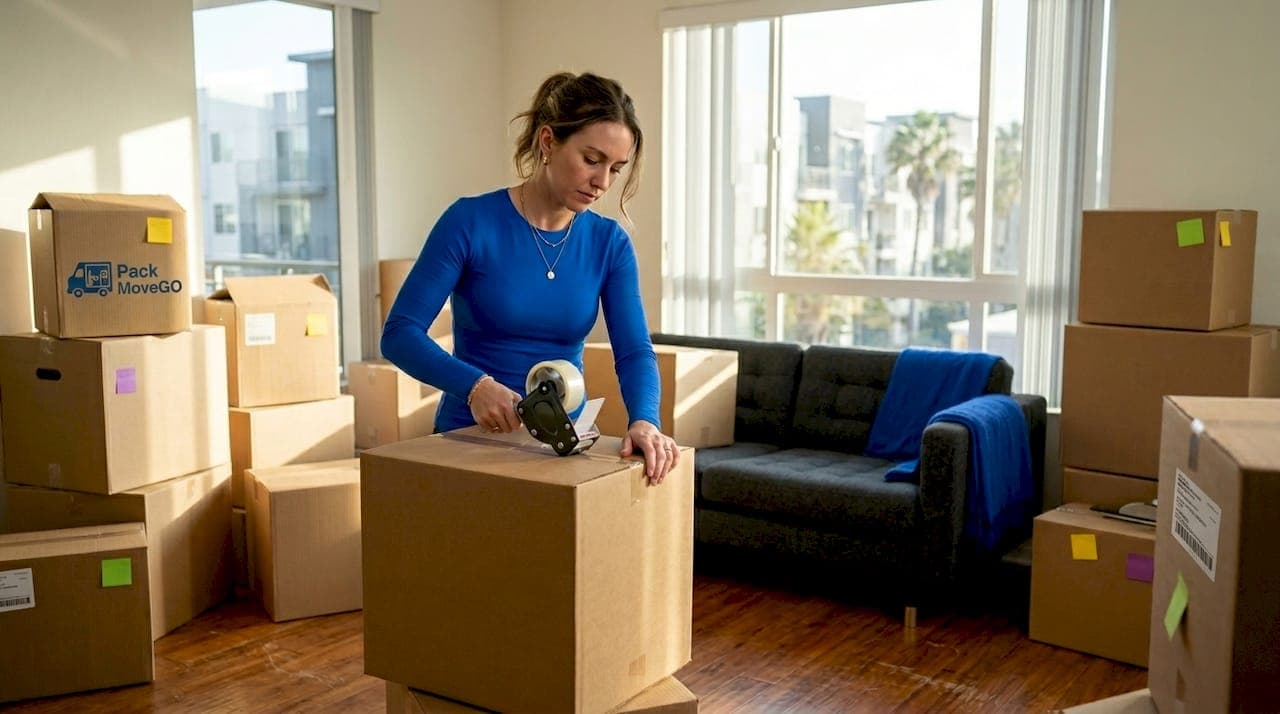
Most California moves fall apart before the truck ever arrives. The culprit is almost never the moving company or the traffic. It is almost always poor planning and a serious underestimation of how much work packing actually takes. You pack a few boxes the night before, realize you have three closets you forgot about, and suddenly moving day is a frantic scramble. Starting early and following a structured workflow prevents exactly that kind of chaos. This guide gives you a clear, step-by-step system for planning, preparing, and executing a California move without the last-minute stress.
Table of Contents
- What you need before you start: Tools, time, and essentials
- Step-by-step pack and move workflow for California homes
- Avoiding common mistakes: Access, timing, and last-minute chaos
- What really affects moving day: Crew size, packing stage, and access
- The real secret to a stress-free move in California: Why systems matter more than speed
- Take the stress out of your California move with expert help
- Frequently asked questions
Key Takeaways
| Point | Details |
|---|---|
| Start early | Packing ahead of time reduces stress and chaos on moving day. |
| Prepare essentials | Having a first-night bag guarantees you have what you need immediately when you arrive. |
| Double-check access | Logistical surprises like parking or elevator issues can delay your move and add stress. |
| Work in organized steps | A clear workflow helps you avoid mistakes and wasted effort. |
| Plan for variability | Every move has unpredictable timing; always build in a buffer for surprises. |
What you need before you start: Tools, time, and essentials
Now that we have seen why a workflow matters, let us examine exactly what you will need to set yourself up for a seamless packing and moving process.
Before you touch a single box, you need the right materials and a realistic picture of your timeline. Most people underestimate both.
Recommended packing tools and materials
Stock up on these before your first packing session:
- Moving boxes in small, medium, and large sizes. Small boxes work best for books and heavy items. Large boxes are for pillows, linens, and lightweight goods.
- Packing tape and a tape gun. A tape gun saves more time than you would expect.
- Bubble wrap and packing paper for fragile items. Old newspapers work in a pinch but can leave ink marks.
- Permanent markers in at least two colors, one for the room label and one for contents.
- Colored stickers or labels to match boxes to rooms quickly during unloading.
- Zip ties and stretch wrap for furniture legs and bundling items.
- A first-night essentials bag. More on this below.
- Furniture dollies and moving straps if you are handling any of the heavy lifting yourself.
You can find a full breakdown of packing supplies for California moves to make sure you are not forgetting anything before your move date.
How long does packing actually take?
Here is a reference table. These are general estimates, not guarantees. Your actual time will vary based on how much stuff you have accumulated, whether you declutter first, and how many people are helping.
| Home type | Packing time (solo) | Packing time (2 people) |
|---|---|---|
| Studio apartment | 1 to 2 days | Half a day to 1 day |
| 1-bedroom apartment | 2 to 3 days | 1 to 1.5 days |
| 2-bedroom condo | 3 to 5 days | 2 to 3 days |
| 3-bedroom house | 5 to 7 days | 3 to 4 days |
| 4+ bedroom home | 7 to 10 days | 4 to 6 days |
These numbers assume you are packing properly, wrapping fragile items, and labeling every box. If you are rushing through it, you will go faster but pay for it on the other end when you cannot find anything.
Access and parking essentials for California homes
California living comes with its own set of logistical challenges. Many apartments and condos require elevator reservations, loading dock permits, or specific parking passes for moving trucks. Get these sorted out well before moving day.
Make a checklist of the following for both your current and new address:
- Parking permits or temporary street parking waivers for the moving truck
- Elevator reservation windows (many buildings only allow moves during specific hours)
- Gate or building entry codes for the crew
- HOA move-in or move-out requirements and fees
Pro Tip: Pack your first-night essentials bag last, so it loads onto the truck last and comes off first. Include toiletries, a change of clothes, phone chargers, medications, a few snacks, paper towels, and basic cleaning supplies. Moving experts consistently recommend this system because it prevents last-minute scrambling when you arrive exhausted at your new place and cannot face unpacking 40 boxes to find your toothbrush.
Step-by-step pack and move workflow for California homes
With your supplies and game plan organized, let us break down the moving workflow into practical, actionable steps tailored for California moves.
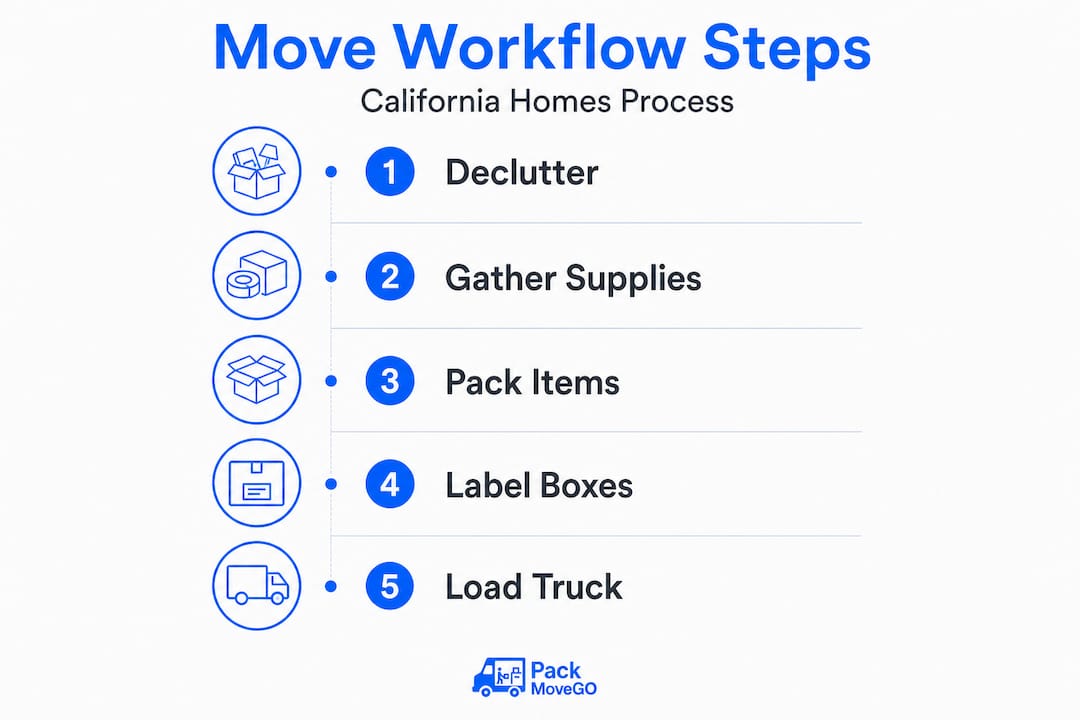
The full workflow, step by step
- Declutter first. Go room by room and separate items into three groups: keep, donate, and trash. Do this before you buy a single box. Moving things you do not need is a waste of money and time.
- Gather all supplies. Order or purchase everything on your materials list. Running out of tape mid-pack is a common and avoidable delay.
- Pack non-essential rooms first. Guest bedrooms, storage areas, and decorative items can be packed weeks in advance. This removes visual clutter and keeps stress levels lower as your move date approaches.
- Pack room by room. Finish one room completely before starting another. This keeps boxes organized and makes labeling accurate.
- Label every box. Write the destination room and a brief content description on at least two sides of each box. Boxes labeled only on the top get buried fast.
- Disassemble large furniture. Bed frames, desks, and shelving units should be broken down and hardware stored in labeled zip-lock bags taped to the furniture.
- Prepare your essentials bag. Set it aside and do not let it get mixed in with other boxes.
- Confirm access details. Call your building manager or HOA contact to confirm elevator windows, parking, and any required documentation.
- Load strategically. Heavy items go on the truck floor first. Fragile boxes on top. Furniture gets loaded last so it is accessible at the new location.
For more detail on organizing your packed items before storage or transport, the detailed storage packing steps and top packing tips resources walk you through each phase with practical examples.
Time benchmarks per phase
| Phase | Estimated time |
|---|---|
| Declutter | 1 to 3 days (depending on home size) |
| Supplies gathering | 1 day |
| Non-essential packing | 2 to 5 days |
| Room-by-room packing | 2 to 7 days |
| Furniture disassembly | 2 to 4 hours |
| Moving day loading | 2 to 6 hours |
Keep in mind that two similar-looking moves can take different amounts of time depending on crew size, walking distances from the unit to the truck, and how many flights of stairs are involved. Use these benchmarks as a floor, not a ceiling.
Pro Tip: Work in 2-hour packing sprints with 15-minute breaks. Packing is physically and mentally draining. Sustained sessions without breaks lead to sloppy packing, mislabeled boxes, and skipped steps. Set a timer, work hard, rest, then go again.
Avoiding common mistakes: Access, timing, and last-minute chaos
While following the workflow is crucial, sidestepping easily overlooked pitfalls can make or break your moving experience.
The most common moving day pain points
Even experienced movers fall into these traps:
- Blocked truck access. Your truck cannot double-park on a busy street for three hours. No permit means delays, fines, or forced rescheduling.
- Forgotten elevator codes or reservation windows. Arriving at your building at 8 a.m. with a crew only to find the elevator is reserved by another resident until noon is a costly mistake.
- Unprepared heavy items. A piano, a gun safe, or a large appliance needs special equipment and often extra crew. Discovering this on moving day adds hours and expense.
- Packing until 2 a.m. the night before. This one shows up more than any other mistake. Exhausted packing produces damaged items, lost belongings, and an extremely rough start to moving day.
- No clear labeling system. Boxes labeled "miscellaneous" become a permanent mystery. Every box should have a room and a rough contents list.
"One week before your move, double-check with your moving company or truck rental to confirm all logistical constraints, including parking, loading access, elevator codes, gate codes, and building move-in requirements." (Checklist guide for relocating into a new home)
This is not optional. Reconfirming one week out gives you time to resolve problems before they become day-of disasters. Think of it as a final pre-flight check. You would not skip it before a flight, and you should not skip it before a move.
Understanding why moving services matter in California often comes down to exactly these logistical issues. A professional crew knows how to handle access challenges, building rules, and packing regulations because they deal with them every day. Additional guidance on stress-free California moving tips and preparing for movers in California can help you get your side of the process dialed in before the crew shows up.
What really affects moving day: Crew size, packing stage, and access
Now let us address the biggest hidden variables that surprise homeowners and renters on moving day.
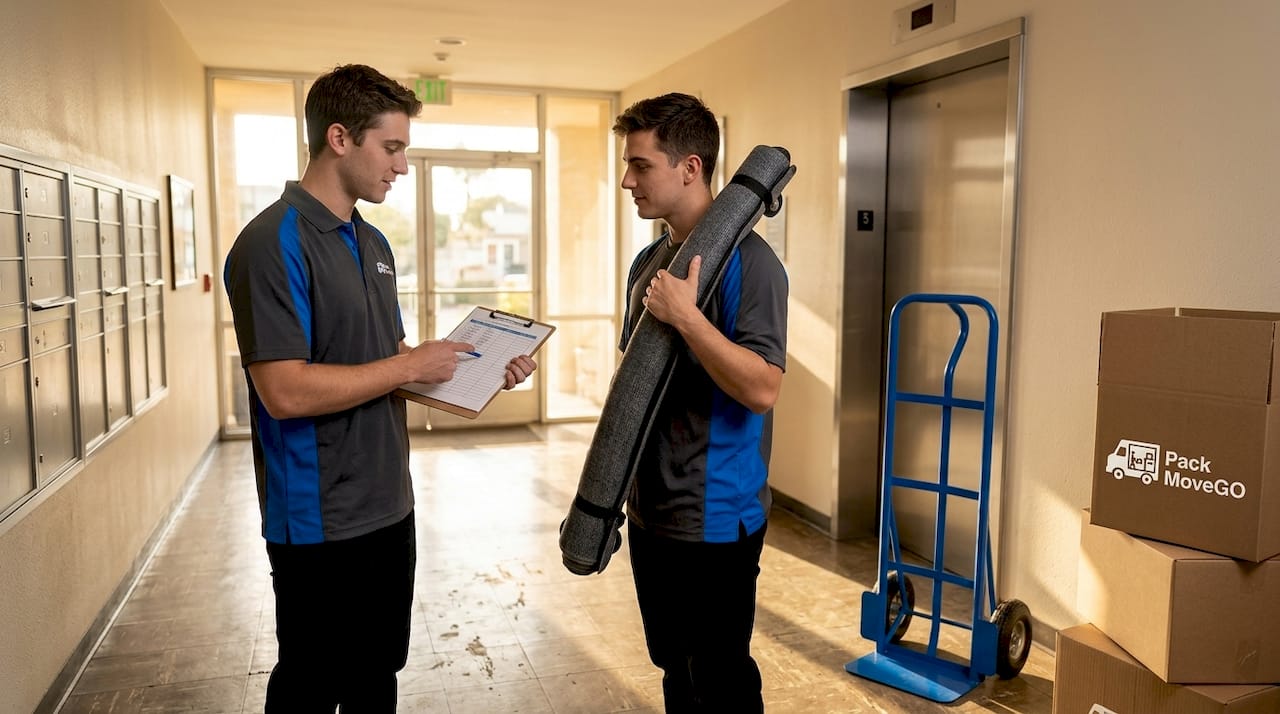
Most people focus on square footage when estimating how long their move will take. That is the wrong metric. Two apartments with the exact same layout can have dramatically different moving day timelines depending on three factors: crew size, how much is already packed, and access conditions.
Side-by-side comparison: Two similar moves, very different outcomes
| Factor | Move A | Move B |
|---|---|---|
| Home size | 2-bedroom apartment | 2-bedroom apartment |
| Crew size | 2 movers | 3 movers |
| Packing status | Fully packed and labeled | Partially packed |
| Truck distance to door | 30 feet | 200 feet (parking structure) |
| Elevator availability | Ground floor unit | 4th floor, shared elevator |
| Estimated move time | 3 to 4 hours | 6 to 8 hours |
The apartments are the same size. The moves are completely different. As a moving time estimator shows, variables like crew size and walk distances have a far bigger impact than the number of rooms or total square footage.
That is why time benchmarks are only a starting point. They tell you the minimum expectation under good conditions. The actual number depends on everything your building, street, and packing status bring to the table.
Understanding the difference between packing and loading is also important here. You can read more about packing vs loading explained to see how these two phases affect your total moving day hours and budget.
Pro Tip: For urban California moves, especially in cities like Los Angeles, San Francisco, or San Jose, add at least one to two hours of buffer time to any estimate. Parking enforcement, traffic, shared building access, and street noise ordinances are all real factors that slow things down. Planning for them costs nothing. Getting blindsided by them costs a lot.
The real secret to a stress-free move in California: Why systems matter more than speed
Here is a perspective that runs counter to a lot of moving advice you will find online.
Most guidance pushes efficiency. Pack faster. Load smarter. Save time. But in our experience working with California movers and renters, speed is not the problem. The absence of a system is. Rushing a move that has no organizational structure does not produce a fast move. It produces a chaotic one that still takes just as long, with more damage and more missing items at the end.
A reusable system, meaning a consistent labeling method, a prepared essentials kit, a room-by-room packing order, and a confirmed access checklist, removes the mental load of moving. You do not have to think about what to do next. You just follow the system.
The homeowners who have the smoothest moves are almost never the ones who packed fastest. They are the ones who started the system earliest. They spent three weeks doing a little bit each day rather than two frantic days doing everything at once. Their boxes were labeled. Their access was confirmed. Their essentials bag was ready. When moving day arrived, it was almost boring. That is the goal.
Most people over-prioritize speed because moving feels urgent. The truck is coming. The lease ends Friday. The pressure is real. But urgency is not a substitute for preparation. If you have followed your workflow, you do not need to rush. Everything is done. You are just executing.
The resources around professional packing essentials reflect this same philosophy. Professional movers do not pack fast because they are in a hurry. They pack fast because they have a system and they execute it the same way every time. That repetition is what makes them reliable. You can build the same reliability into your own move.
Take the stress out of your California move with expert help
If you are ready to simplify your move, here is where expert help and trusted checklists come in.
At PackMoveGo, our teams follow proven packing and moving workflows on every job, from studio apartments in San Diego to four-bedroom homes in Sacramento. We handle access coordination, loading logistics, and careful transport so you can focus on settling in rather than managing chaos.
Explore our full moving and packing services to see exactly what is covered. You can also visit our moving tips and checklists page for downloadable guides that help you organize your move from the first packed box to the last item unpacked. Whether you need a full-service team or just want a reliable plan to follow on your own, PackMoveGo has resources built specifically for California homeowners and renters.
Frequently asked questions
How early should I start packing for a California move?
Start packing at least two to three weeks before your move to avoid last-minute scrambling, using structured room-by-room organization to stay on track. Expert tips consistently recommend beginning with non-essential areas first so your daily routine stays intact as long as possible.
What factors can change the time my move will take?
Your actual move time depends on crew size, walking distances from your unit to the truck, parking availability, elevator access, and how much packing you complete before moving day. Two similar-looking moves can take very different amounts of time once these variables are factored in.
What is a "first-night essentials" bag and why is it important?
A first-night essentials bag holds everything you need during the first 24 to 48 hours after moving, such as toiletries, chargers, medications, and a change of clothes, so you do not have to dig through dozens of boxes when you arrive. Packing experts recommend treating this bag as a non-negotiable part of your moving workflow.
How can I prevent access issues on moving day?
Confirm parking permits, elevator reservation windows, gate codes, and building move-in requirements at least one week before your move. A pre-move checklist covering these logistics ensures you have time to resolve any issues before they disrupt your moving day.