
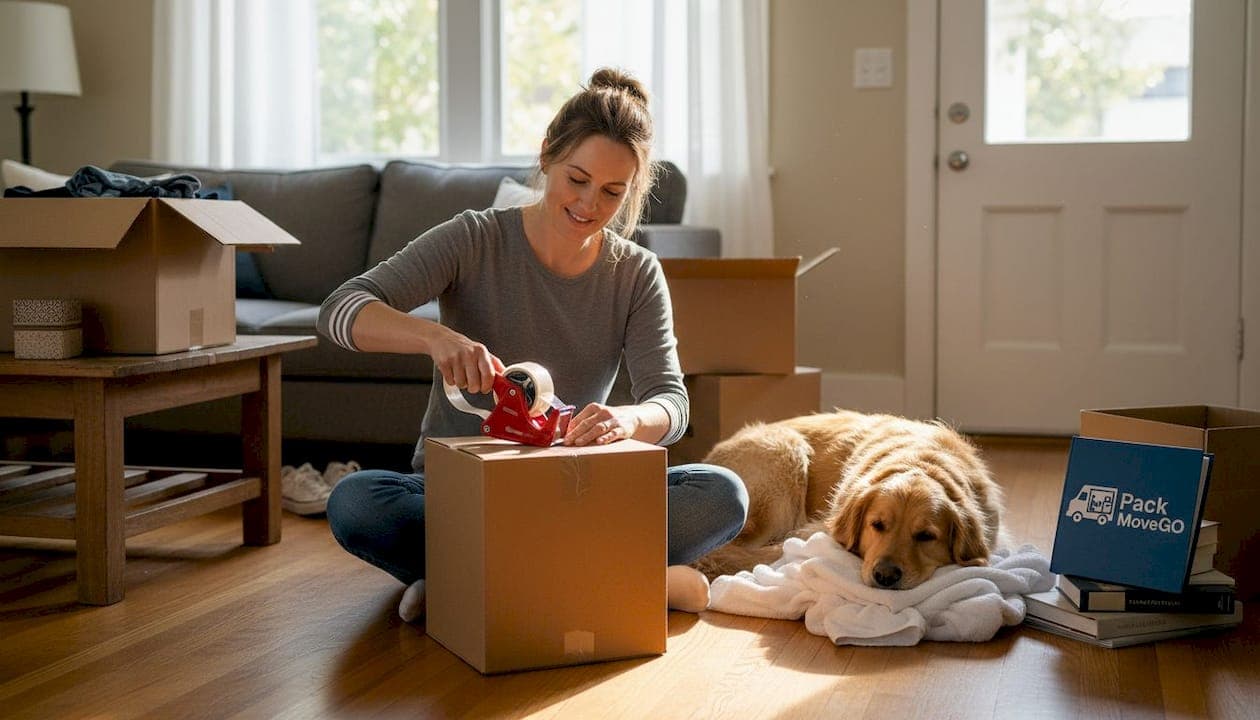
Packing up your entire home is rarely as simple as it looks. Boxes multiply, fragile items feel impossible to protect, and the clock never seems to stop. For California homeowners and renters, the challenge is real: tight timelines, varying apartment sizes, and long distances all add pressure. But packing does not have to spiral into chaos. With the right strategy, smart materials, and a clear system, you can cut stress significantly before the moving truck ever pulls up. This guide walks you through practical, proven steps to make your next California move feel manageable from start to finish.
Table of Contents
- Choose the right packing strategy: DIY vs. professional help
- Smart packing materials and space-saving hacks
- Labeling, inventory, and unpacking made easy
- Must-have 'Open First' box: What to pack for day one
- What most movers get wrong—and how to get it right
- Packing made easy with PackMoveGo
- Frequently asked questions
Key Takeaways
| Point | Details |
|---|---|
| Mix packing methods | Combine DIY for everyday items and professionals for valuables to save money and lower stress. |
| Smart material hacks | Use clothes and linens to cushion items and cut supply costs. |
| Label and inventory | Color-code or number boxes and keep an inventory for quick, hassle-free unpacking. |
| Essentials box first | Packing an 'Open First' box ensures comfort and convenience on move-in day. |
Choose the right packing strategy: DIY vs. professional help
Once you recognize that planning is key, the next decision is how you will actually tackle packing: going solo or calling in the pros. Both options have real merit, and the right choice depends on a few specific factors.
Start by looking at the size of your move. A studio apartment with minimal furniture is a solid candidate for DIY packing. A four-bedroom house with artwork, antiques, or specialty electronics is a different situation entirely. Timeline matters too. If you have three weeks, you can pace yourself. If you have three days, DIY packing for small moves saves money but professionals handle edge cases like fragile art or tight timelines better, and expert opinions favor pros for long-distance or high-value items.
Budget is another factor. DIY packing keeps costs lower upfront, but mistakes with fragile items can get expensive fast. Professional packers bring speed, materials, and experience. They also carry liability for items damaged during packing, which adds a layer of protection you simply cannot get on your own.
| Situation | Best approach |
|---|---|
| Studio or one-bedroom apartment | DIY |
| Large home with many rooms | Professional |
| Fragile or high-value items | Professional |
| Tight timeline under 72 hours | Professional |
| Limited budget, small load | DIY |
| Long-distance California move | Professional |
For renters moving locally within California, DIY often makes sense for general household items. For homeowners relocating across the state, investing in professional moving services is usually worth every dollar. The key is knowing where your limits are before you start.
Pro Tip: Mix both approaches. Pack everyday items like clothes, books, and pantry goods yourself. Let professional packers handle your valuables, glassware, and anything irreplaceable. This balance keeps costs reasonable while protecting what matters most.
Also consider the emotional cost of packing. Many people underestimate how draining it is to sort through years of belongings. If packing yourself means arriving at your new home exhausted and overwhelmed, the savings may not be worth it. Factor in your energy, not just your budget.
For a detailed breakdown on protecting delicate belongings during transit, the packing fragile items guide covers techniques that even experienced movers overlook.
Smart packing materials and space-saving hacks
After choosing your packing approach, it is time to gather materials that save both time and money. The good news: you probably already own more packing supplies than you realize.
Clothing, towels, and socks work surprisingly well as padding for fragile items. Using clothes as padding instead of buying extra bubble wrap cuts costs and saves space. This is not just a budget hack. It also reduces the number of boxes you need, which lowers both packing time and moving truck space.
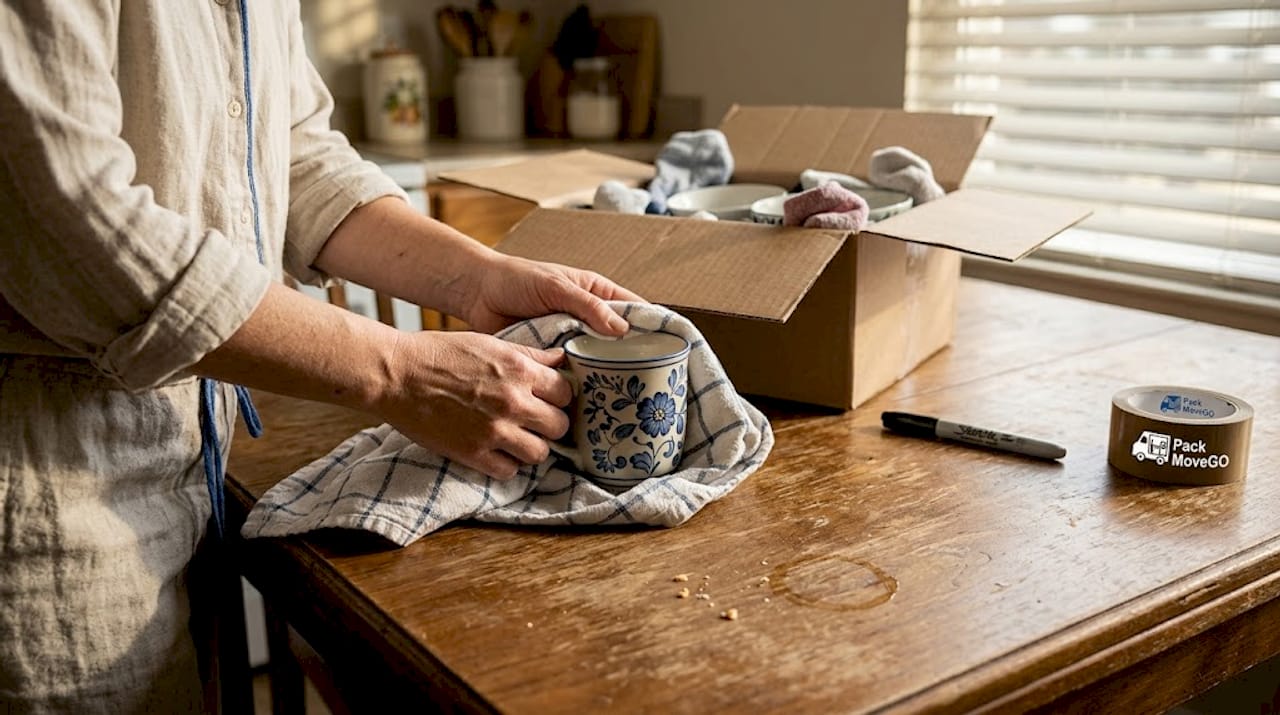
Many movers save up to 15% on packing costs by using DIY padding instead of purchasing commercial materials. That adds up fast, especially for a larger California home.
Here are practical ways to source materials and pack smarter:
- Check local Facebook Marketplace groups and Buy Nothing groups for free moving boxes
- Use suitcases, laundry baskets, and tote bags to move items without using extra boxes
- Wrap dishes in clean t-shirts or kitchen towels instead of paper
- Pack heavier items in smaller boxes to keep them manageable
- Fill empty spaces in boxes with rolled socks or scarves to prevent shifting
- Use original boxes for electronics when available
- Line the bottom of boxes with a folded blanket for extra cushioning
Pro Tip: Label every box as you pack it, not after. Writing the room name and a brief contents note on the side of the box takes ten seconds but saves hours of guessing later. Use a thick black marker so labels are easy to read in low light.
For more ideas on keeping your move organized and cost-effective, the moving tips and advice section covers practical strategies specific to California relocations.
Also think about what you can donate or discard before packing. Every item you do not pack is one less item to move, store, and unpack. A quick sort before you start can meaningfully reduce your total packing time.
Labeling, inventory, and unpacking made easy
With your materials ready, staying organized as you pack becomes essential for a smooth move-in experience. A good labeling system is not optional. It is the difference between a calm first week and a frustrating search through 40 unlabeled boxes.
Color-coded or numbered box inventories speed up unpacking by hours. Apps like Sortly make tracking even easier by letting you photograph box contents and search by keyword.
Here is a simple numbered process to set up your packing inventory:
- Assign each room a color or number before you start packing
- Write the room label and box number on at least two sides of every box
- Log each box in a spreadsheet or app with a brief contents description
- Note any boxes containing fragile items with a bold "FRAGILE" label
- Keep your inventory list accessible on your phone for easy reference on moving day
For box labeling tips that go beyond basic room names, a structured approach makes a real difference when you are trying to find your coffee maker at 7 a.m. on day one.
Here is a quick comparison of popular inventory tools:
| Tool | Best for | Cost | Standout feature |
|---|---|---|---|
| Sortly | Visual inventory | Free/paid | Photo-based item tracking |
| Google Sheets | Budget tracking | Free | Easy sharing with helpers |
| Moving Van app | Full move management | Paid | Checklist and floor plan tools |
| Paper list | Simple moves | Free | No tech required |
Avoid the common mistake of labeling only the top of a box. When boxes are stacked, the top is invisible. Always label the sides. Also, resist the urge to create a "miscellaneous" box. Every item deserves a clear destination, or it will end up sitting in a corner for months.
Must-have 'Open First' box: What to pack for day one
With every box labeled and documented, do not forget to prepare an essentials box for a seamless first night in your new place. This single box can make the difference between a comfortable first evening and a stressful scramble.
An "Open First" essentials box should include toiletries, clothes, medications, chargers, and basic kitchen items. Load it last so it comes off the truck first.
Here is what to include:
- Toothbrush, toothpaste, soap, and shampoo
- One or two changes of clothes and pajamas
- Any prescription medications
- Phone charger, laptop charger, and a power strip
- A set of utensils, one plate, one cup, and a pot
- Instant coffee, tea, or snacks
- Toilet paper and paper towels
- A small first aid kit
- Pet food and supplies if you have animals
"The essentials box is not about convenience. It is about protecting your mental energy on one of the most demanding days of the year. When you know exactly where your basics are, you can focus on settling in instead of searching." — Moving industry professional
Pro Tip: Use a bag or a clearly colored box for your essentials so it stands out immediately among your other boxes. Tell your movers it goes last on the truck and first off.
For a complete Open First box checklist tailored to California moves, including climate-specific items for warmer regions, check the resources on the PackMoveGo tips page.
Do not overlook items you use every single day without thinking. Your phone charger, your glasses, your daily vitamins. These are the things that cause real frustration when buried in box number 34.
What most movers get wrong—and how to get it right
Even with the best lists, most movers face pitfalls that are entirely avoidable. The biggest one: treating packing as a physical task rather than a mental one.
Most people underestimate how many boxes they need. They also overestimate how much they can pack in a single day. Both errors lead to last-minute chaos, rushed decisions, and items that arrive damaged or missing. The fix is simple but requires honesty. Start earlier than you think you need to, and build in buffer days.
Another common mistake is leaving the essentials box until the very end, then packing it carelessly. This is the one box that should get your most careful attention.
We have seen moves where everything went smoothly on paper but fell apart in the final 12 hours because the mover ran out of boxes, ran out of time, or simply ran out of energy. The real-world moving lessons we have gathered consistently point to one truth: preparation matters more than any tool or trick.
Start with a room-by-room checklist tailored to your actual home. Not a generic template. Your home. Count your items, estimate your boxes, and add 20% to that number. Packing is almost always more work than expected, and that is okay as long as you plan for it.
Packing made easy with PackMoveGo
Having learned what works, here is how PackMoveGo can help make your next move even simpler.
Packing is one of the most time-consuming parts of any move, and it is also where most mistakes happen. PackMoveGo offers moving services for Californians that cover every stage of your relocation, including professional packing support for fragile items, large homes, and tight timelines.
Whether you need a full-service pack or just want to fill gaps in your DIY plan, the PackMoveGo advantage is a licensed, insured team that shows up prepared. You can also browse the full list of moving tips to keep building your packing knowledge before your move date. Get a free quote today and take the guesswork out of your California relocation.
Frequently asked questions
What should go in an essentials or 'Open First' box?
Include toiletries, a change of clothes, medications, chargers, and basic kitchen items so you are set for the first 24 hours. Pack it last so it is the first box off the truck.
How can I reduce packing costs when moving in California?
Use clothing and towels as padding for breakables instead of buying bubble wrap to cut costs and save space without sacrificing protection.
What is the best way to organize moving boxes for easy unpacking?
Number each box and keep an inventory, or use color-coded labels and tracking apps like Sortly to speed up sorting and unpacking at your new home.
Should I pack myself or hire professionals for my California move?
DIY packing saves money for small moves, but professionals are recommended for fragile, valuable, or long-distance relocations where mistakes cost more than the service.
Recommended
- PackMoveGo - Professional Moving & Packing Services
- Moving Tips & Advice - PackMoveGo Blog
- Moving Tips & Tricks - PackMoveGo Guide
- Our Services - PackMoveGo | Residential, Commercial & Long Distance Moving
- Essential residential moving checklist: streamline your move