
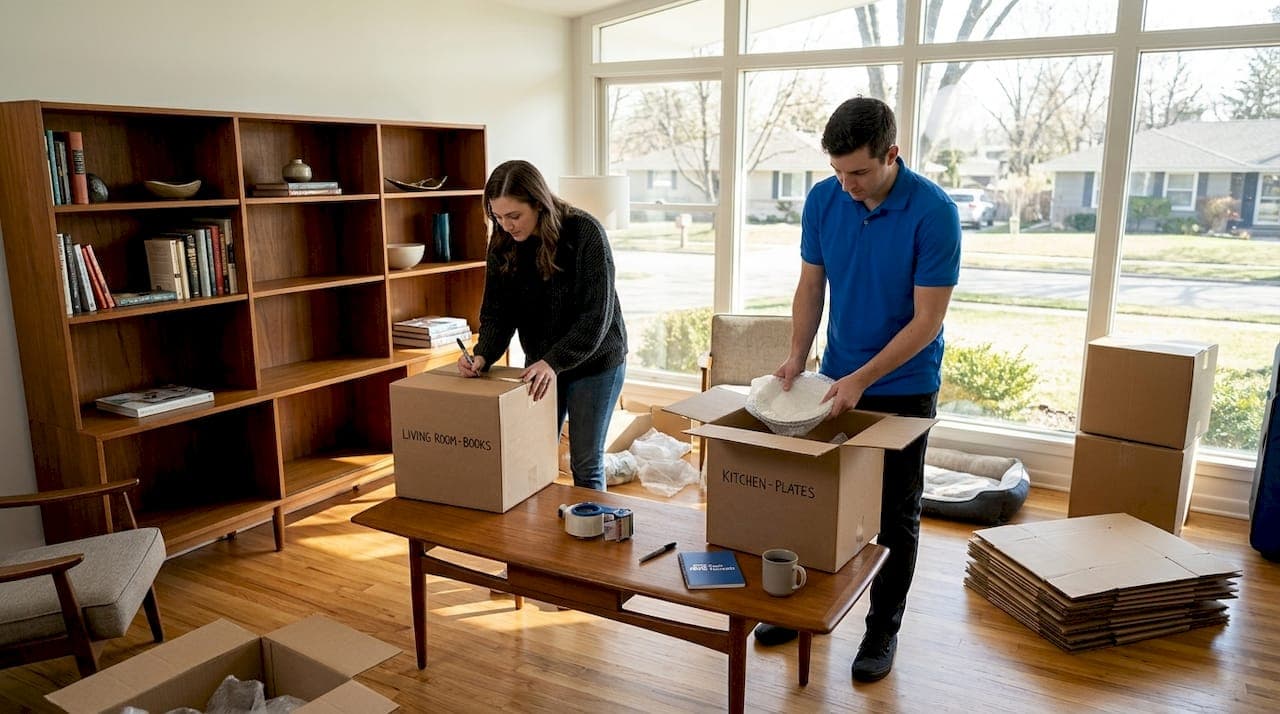
Packing for storage sounds simple until you open a unit three months later and find broken dishes, crushed boxes, and no idea where anything is. Poor planning during the packing process is one of the most common reasons California movers face damaged goods, unexpected storage costs, and moving day chaos. This guide walks you through exactly what supplies you need, the precise steps to follow, the mistakes that trip up even experienced movers, and how to connect your packing process to a genuinely smooth move from start to finish.
Table of Contents
- What you need: Essential supplies and preparation
- Step-by-step packing process for storage
- Avoiding common mistakes and troubleshooting
- Ensuring a smooth move: Storage, logistics, and next steps
- Expert perspective: Why your storage packing process is your move's biggest success factor
- How PackMoveGo supports your storage and moving journey
- Frequently asked questions
Key Takeaways
| Point | Details |
|---|---|
| Proper preparation matters | Having the right supplies and a plan prevents last-minute packing chaos. |
| Step-by-step packing wins | Following a clear process ensures safe storage and easier retrieval later. |
| Avoid common mistakes | Overfilled boxes and poor labeling can lead to costly damage and confusion. |
| Storage reduces stress | Storing items efficiently streamlines moving day and future unpacking. |
| Expert help pays off | Professional packing services can save time and protect your belongings. |
What you need: Essential supplies and preparation
Now that you know the stakes, let's make sure you have everything on hand before tackling the packing process.
Getting your supplies right before you start is not optional. Proper packing supplies are crucial for a stress-free California move, and running out mid-pack is one of the fastest ways to lose momentum and make poor decisions under pressure.
Here is a breakdown of the core materials you will need:
| Supply | Purpose | Recommended quantity |
|---|---|---|
| Medium and large boxes | General household items | 10 to 20 per room |
| Packing tape (2-inch) | Sealing and reinforcing boxes | 4 to 6 rolls minimum |
| Bubble wrap | Wrapping fragile items | 2 to 3 rolls per room |
| Packing paper | Filling gaps, protecting surfaces | 1 to 2 packs per room |
| Permanent markers | Labeling boxes clearly | 3 to 4 markers |
| Furniture covers | Protecting upholstered pieces | 1 per large furniture item |
| Specialty containers | Wardrobe boxes, dish packs | As needed per item type |
| Stretch wrap | Securing drawers, bundling items | 1 to 2 rolls |
Beyond the materials themselves, preparation before the first box is packed makes a major difference. Start with a full home inventory. Walk through every room and list what you own, what you plan to store, and what can be donated or discarded. Decluttering now saves money on storage space and reduces the physical volume you need to pack.
Sort items by category before you begin boxing anything. Keep kitchen items together, bedroom items separate, and seasonal gear in its own group. This sorting step directly affects how easy it is to retrieve specific items from storage later. Mixing categories across boxes is a reliable way to spend hours searching for one item.
- Box types matter: use dish pack boxes for kitchenware, wardrobe boxes for hanging clothes, and small boxes for books and heavy items
- Never skip reinforcing box bottoms with a double layer of packing tape, even if the box looks sturdy
- Use color-coded labels by room to make loading and unloading faster
- Gather all recommended supplies for moving at least one week before packing starts
Pro Tip: Always buy 20% more boxes and two extra tape rolls than you think you need. Last-minute trips to the store mid-pack waste time and often mean settling for inferior materials.
Review packing tips for your move before you finalize your supply list to make sure you are not missing anything specific to your home type or item inventory.
Step-by-step packing process for storage
With all your supplies ready, it's time to dive into the actual packing process step by step.
Optimized packing methods make moves safer and less stressful, and the sequence in which you pack matters just as much as the materials you use. Follow these steps in order for the best results.
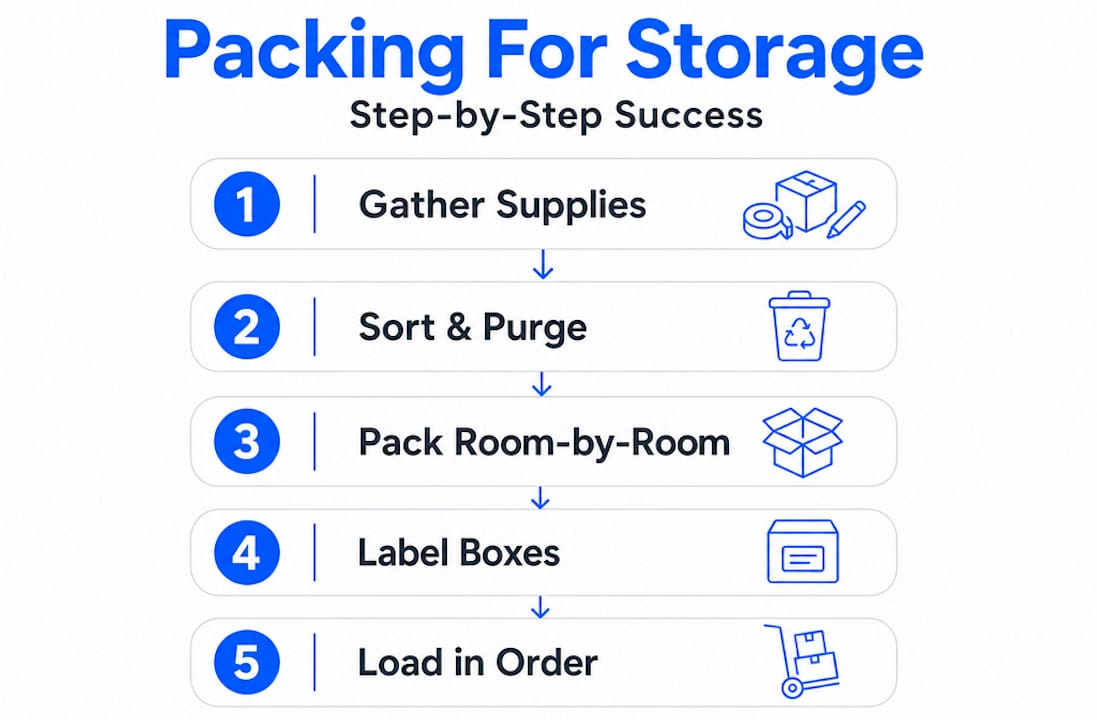
- Create a master inventory list. Before touching a single box, write down or use an app to record every item you plan to store. Include item descriptions and condition notes. This list is your insurance record and your retrieval guide.
- Declutter and sort by category. Remove anything you do not need in storage. Group remaining items by category: fragile, heavy, seasonal, everyday use.
- Pack room by room. Start with rooms you use least, typically guest rooms or garage storage. Work toward the rooms you use daily, like the kitchen and master bedroom.
- Wrap fragile items individually. Use bubble wrap for glass, ceramics, and electronics. Wrap each piece separately, then layer in packing paper. Never nest fragile items without padding between them.
- Fill boxes to capacity without overpacking. A box with empty space will collapse under weight. Fill gaps with packing paper or foam peanuts. Test by pressing the top: it should feel firm, not soft.
- Seal and label every box immediately. Do not stack an unlabeled box. Write the contents, the room of origin, and whether the box contains fragile items. Label on the sides, not just the top, so labels are visible when stacked.
- Photograph box contents before sealing. A quick photo on your phone takes 10 seconds and can save hours of searching later.
- Create a storage layout plan. Decide where each category of box will go in your storage unit before moving day. Heavy boxes go on the floor, lighter ones on top, and frequently needed items near the front.
Here is a quick comparison to help you decide between DIY packing and hiring professionals:
| Factor | DIY packing | Professional packing |
|---|---|---|
| Cost | Lower upfront | Higher upfront, fewer damages |
| Time required | High | Low |
| Expertise | Variable | Consistent and trained |
| Physical effort | High | Managed by the team |
| Risk of damage | Higher | Lower |
| Inventory tracking | Manual | Often included |
Review smart packing steps for additional guidance on sequencing and technique. If you want to understand how packing fits into the broader moving workflow, the difference between packing and loading is worth understanding before moving day arrives.
Pro Tip: Label every box with both the contents and the destination room, for example "Kitchen: baking supplies, east cupboard." This reduces confusion dramatically when you are unpacking weeks later in a new space.
Avoiding common mistakes and troubleshooting
Following the steps can simplify the process, but even experienced movers make mistakes. Knowing what to watch for keeps small errors from turning into expensive problems.
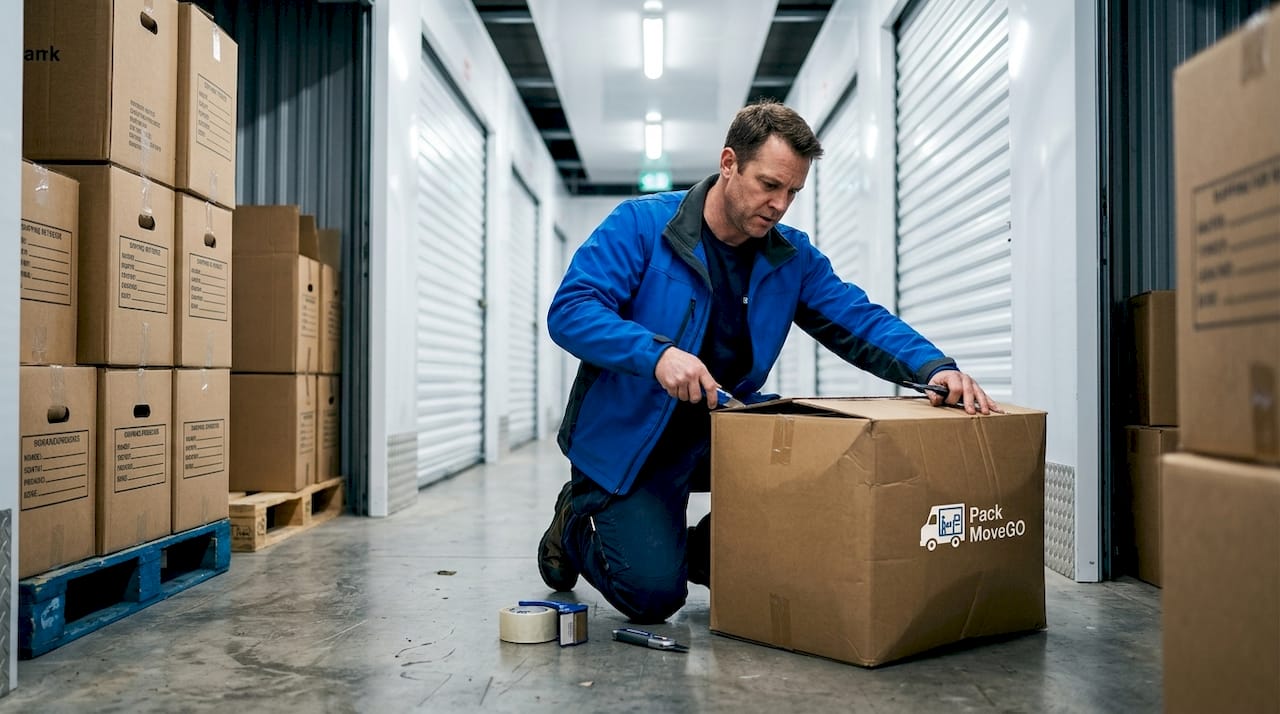
Improper packing is a leading cause of damage and stress during relocation. The most frequent errors are also the most preventable, which makes them especially frustrating when they occur.
Here are the biggest mistakes to avoid:
- Overpacking boxes: A box that weighs more than 50 pounds is a back injury and a structural failure waiting to happen. Split heavy items across multiple smaller boxes.
- Inadequate padding: Wrapping one item in a single sheet of packing paper is not enough. Fragile items need multiple layers, and every surface should be cushioned.
- Poor or missing labels: Unlabeled boxes go to the wrong room, get stacked in the wrong order, and create hours of unnecessary searching. Label every box, every time.
- Mixing fragile with heavy items: A ceramic bowl packed with books will not survive storage. Keep fragile items in their own boxes, clearly marked.
- Skipping the inventory: Without a list, you cannot verify that everything arrived. This becomes critical when filing an insurance claim.
- Using weak or reused boxes: Old boxes from grocery stores are often weakened by moisture or prior use. Use purpose-built moving boxes for anything valuable.
"The most preventable damages come from improper packing — not just during transport, but also during long-term storage."
If you open a box and find it feels soft or the sides are bowing, that box is overfilled or structurally weak. Empty it, redistribute the contents into two boxes with proper padding, and reseal. It takes 10 minutes now versus broken items discovered months later.
Studies on moving insurance claims indicate that a significant portion of damage reports, often cited at around 40%, trace back directly to packing mistakes to avoid rather than transport accidents. That number matters because packing is entirely within your control. Transport bumps are not.
Understanding why storage helps moving can also shift your perspective. Storage is not just a holding area. When items are packed correctly and stored strategically, you reduce the volume being actively moved on moving day, which lowers risk, cost, and physical strain.
Ensuring a smooth move: Storage, logistics, and next steps
Packing successfully is just the first part. Here's how to make sure the rest of your move is equally smooth and stress-free.
Storing items efficiently can simplify relocation and reduce stress significantly, especially for California moves where apartment buildings, HOA rules, and parking restrictions can complicate moving day logistics.
Before you send anything to storage, run through this final checklist:
- Confirm every box has a readable label on at least two sides
- Verify fragile boxes are separated and marked clearly
- Check your master inventory against the number of boxes packed
- Photograph the storage unit layout once loaded
- Keep a digital copy of the inventory accessible on your phone
On moving day itself, a few logistics steps make a major difference. Confirm parking access and building elevator reservations at least 48 hours in advance. In California, especially in urban areas like Los Angeles or San Francisco, parking is never guaranteed. Communicate your arrival window clearly to your movers and confirm it the evening before.
Research on moving day outcomes shows that movers who prepare for movers in advance, meaning they have clear access, labeled boxes, and an organized floor plan ready, experience up to 30% faster load times. That time savings translates directly into lower hourly costs if you are working with a time-based pricing model.
After move-in, retrieval strategy matters. Place the boxes you know you will need first, like kitchen essentials or daily toiletries, closest to the storage unit entrance or in the first room you unpack. Use your inventory list to locate specific items without opening every box. If you built your storage layout plan during packing, retrieval becomes a quick reference exercise rather than a scavenger hunt.
Consider a staged unpacking approach: prioritize function rooms first (kitchen, bathroom, bedroom) and leave storage or utility rooms for last. This keeps your daily routine functional while the broader unpacking process continues.
Expert perspective: Why your storage packing process is your move's biggest success factor
Most people treat packing as the boring part of moving. They save it for last, rush through it, and then wonder why moving day turns into a problem-solving session instead of a smooth operation. After working with California movers across dozens of different home types and storage scenarios, the pattern is clear: the quality of the packing process determines the quality of the entire move.
Professional packing methods are often underestimated in their impact on relocation success. It is not just about having nice boxes or fancy bubble wrap. It is about the discipline of doing it right before the pressure of moving day arrives.
Here is what most guides will not tell you: the difference between "just packed" and "well-packed" does not show up on moving day. It shows up three months into storage when you need that one item and either find it immediately or spend two hours digging through improperly labeled, overpacked boxes. Long-term storage punishes bad packing slowly and quietly. A cracked box under weight, moisture damage from a bag that was not sealed, a ceramic that shifted in transit because there was not enough padding. None of these are dramatic failures. They accumulate.
The investment in professional packing benefits is not just about physical labor. It is about applying a system. Trained packers work from a method that accounts for weight distribution, fragility, retrieval order, and labeling consistency. They do not guess. They follow a process.
If you are going DIY, treat your packing process with the same seriousness. Set a timeline, gather materials a week early, and commit to the labeling and inventory steps even when they feel tedious. The 20 minutes you spend on your inventory list now is worth hours on the back end. That is not a comfortable truth for people already stretched thin during a move, but it is the most practical advice available.
How PackMoveGo supports your storage and moving journey
When packing feels overwhelming or you simply want the job done right the first time, having the right support changes everything.
PackMoveGo offers residential moving services designed specifically for California homeowners and tenants who need reliable, organized, and stress-free relocations. Whether you need full-service packing support, access to professional-grade packing materials, or just a clear plan for your upcoming move, the team is ready to help. You will also find practical moving tips and guides built around real California moving scenarios. Get a free quote today and find out how PackMoveGo can take the guesswork out of your next move.
Frequently asked questions
What materials should I never use for packing items in storage?
Avoid newspaper because it smudges onto surfaces, plastic bags because they trap moisture and accelerate mold, and weak or reused supermarket boxes because they lack the structural integrity needed for stacking in storage.
How early should I start the packing process for storage?
Begin packing non-essential items at least two weeks before your move, which gives you time to stay organized, source additional supplies if needed, and avoid the rushed packing that leads to most common errors.
Do I need professional packing services for storage moves?
Professional packing improves safety and efficiency, particularly for fragile, valuable, or high-volume items where a trained system reduces damage risk and saves significant time on both ends of the move.
Is it better to store items before or after moving into a new home?
Storing items during a move simplifies the overall process by reducing the volume actively transported on moving day, which lowers stress, speeds up logistics, and gives you flexibility in the new space before committing to a final layout.