
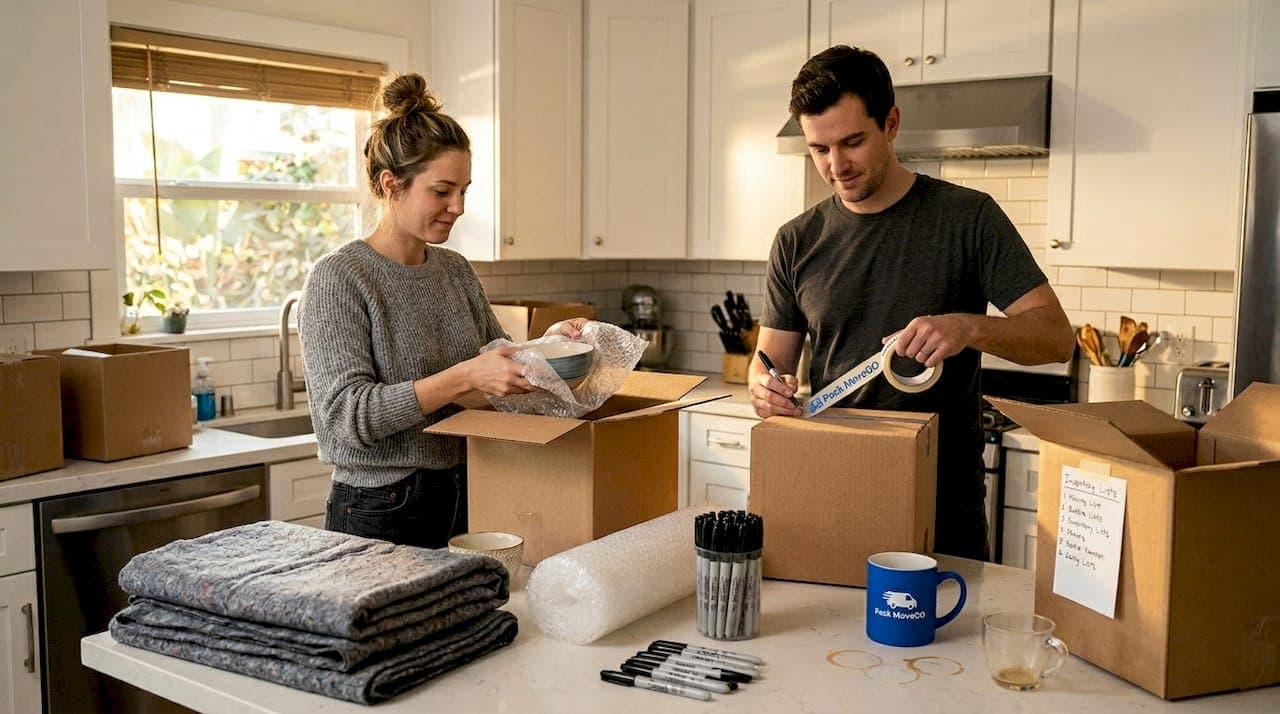
Forgetting one critical packing item can turn moving day into an expensive scramble. Many California homeowners and renters discover too late that they underestimated their supply needs, only to lose time, money, and energy fixing preventable problems. The right packing supplies are not a minor detail. They are the foundation of a smooth relocation, whether you are crossing town in Los Angeles or driving your belongings up to Sacramento. This article gives you a clear, practical checklist built on real moving experience, covering everything from box selection to specialty items for California's unique conditions.
Table of Contents
- Define your packing criteria
- The must-have packing supplies
- Comparison of packing supplies: Which options work best?
- Situational packing recommendations for California moves
- The overlooked truth about packing supplies
- Get expert support for your California move
- Frequently asked questions
Key Takeaways
| Point | Details |
|---|---|
| Plan packing by criteria | Identify your packing needs before shopping to prevent wasted time and supplies. |
| Essential items checklist | Boxes, tape, cushioning materials, and labeling tools are must-have supplies for any move. |
| Compare options smartly | Evaluate packing supply durability and cost to match your move's demands. |
| Tailor supplies to your move | Choose packing materials based on your California move type, destination, and weather risks. |
| Professional help saves headaches | Moving experts can provide tailored kits and advice for a stress-free relocation. |
Define your packing criteria
With your goal in mind, it helps to start by defining clear packing criteria before buying a single roll of tape or a single box. Many people rush straight to the nearest hardware store and grab whatever looks right. That approach leads to wasted money, mismatched supplies, and boxes that collapse under weight.
Start by taking stock of what you actually own. Walk through every room and note the following:
- Volume of items: How many rooms are you packing? A studio apartment requires far fewer supplies than a four-bedroom house.
- Fragility: Do you have china sets, glassware, artwork, or electronics? Fragile items need specific wrapping materials.
- Size and weight: Large, heavy items like books need small, sturdy boxes. Lightweight items like pillows can go in large boxes without causing strain.
- Move type: Local moves in California, say from San Diego to Anaheim, are shorter and faster. Long-distance moves from California to another state require more durable, weather-resistant materials.
- Budget: Set a realistic supply budget before shopping. Quality matters, but overspending on supplies eats into your moving fund.
- Environmental priorities: Many California residents prefer eco-friendly supplies such as recycled cardboard, biodegradable packing peanuts, or reusable plastic bins.
Choosing the right packing materials is crucial for secure transportation, which means your criteria directly shape the safety of everything you own during transit.
Once you have a clear picture of your inventory, write it all down. A master list organized by room keeps you on track and prevents you from buying ten small boxes when you actually need twenty medium ones.
Pro Tip: Before buying anything, check our moving tips blog for free downloadable checklists tailored to California moves of all sizes. These tools save hours of planning time.
Think about your move timeline as well. If you have two weeks to pack, you can be methodical and reuse materials as you go. If you have three days, you need everything on hand immediately. Rushing supply runs mid-pack wastes time and breaks your momentum.
Defining your packing criteria is the most undervalued step in the entire process. It takes thirty minutes and saves you from the two most common packing disasters: running out of supplies halfway through, and spending double on materials you did not need.
The must-have packing supplies
With the criteria set, let's detail the must-have supplies that consistently deliver results across California moves of every size and distance.
Boxes are the backbone of any move. You need a variety of sizes. Small boxes (1.5 cubic feet) handle books, canned goods, and anything dense. Medium boxes (3 cubic feet) work for kitchen items, tools, and folded clothing. Large boxes (4.5 cubic feet or more) are for pillows, comforters, and light housewares. Specialty boxes matter too. Wardrobe boxes with built-in hanging bars keep clothes wrinkle-free. Dish pack boxes with built-in dividers protect plates and glasses far better than wrapping each piece in extra paper.
Packing tape is where many people cut corners and pay for it later. Standard masking tape will not hold a heavy box shut. Use a heavy-duty, 2-inch-wide packing tape with a dispenser. You will go through more tape than you expect. A single two-bedroom apartment typically requires six to eight rolls. Tape every seam on the bottom of each box, not just a single strip across the center.
Bubble wrap and packing paper are essential for fragile items. Bubble wrap cushions impact and is best for electronics, framed pictures, and ceramic pieces. Packing paper (unprinted newsprint) wraps dishes, fills empty box space, and prevents items from shifting during transit. Critical packing materials enable secure and efficient relocation, which explains why experienced movers never skip these two items.
Here is a quick reference for essential supplies:
- Boxes (small, medium, large, wardrobe, and dish pack)
- Heavy-duty packing tape with dispenser
- Bubble wrap (at least one roll per fragile box)
- Packing paper or unprinted newsprint
- Furniture moving blankets or covers
- Mattress bags and protectors
- Permanent markers (black and color-coded)
- Colored label stickers for room identification
- Stretch wrap (for securing drawers and protecting upholstered furniture)
Furniture covers and moving blankets protect your sofa, dining table, and other large pieces from scratches, dings, and dust. Stretch wrap is inexpensive and works well to hold blankets in place while also preventing drawers from opening during the move.
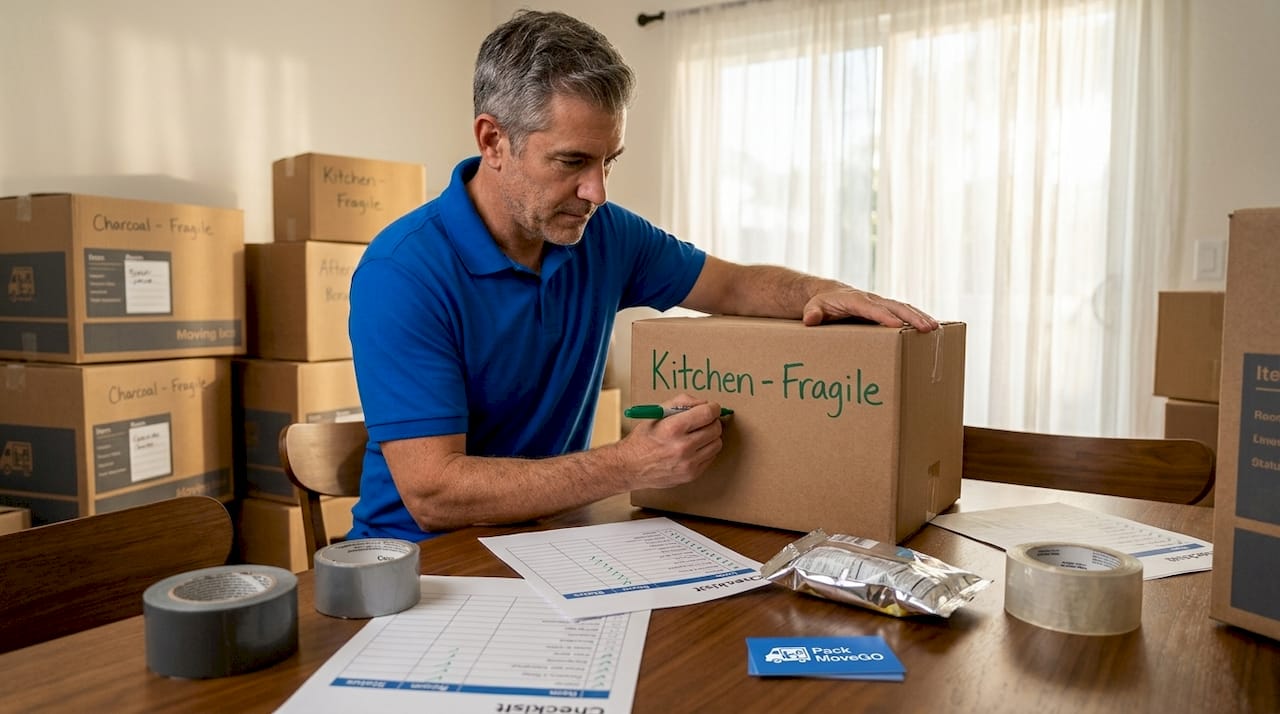
Markers and labels are the unsung heroes of organized unpacking. Color-code each room. Green for kitchen, blue for bedroom, red for bathroom. You save hours of searching and your movers know exactly where each box belongs without asking. Explore professional packing services if you want experts to handle labeling and supply selection from start to finish.
Pro Tip: Reusable plastic bins are a smart eco-friendly choice for local moves. Many California movers rent them by the week, reducing cardboard waste and saving money compared to buying boxes outright.
Comparison of packing supplies: Which options work best?
Knowing the essentials, compare your options to find the best fit for your unique move.
The two biggest categories to compare are cardboard boxes versus plastic bins, and bubble wrap versus packing paper. Each has trade-offs that affect your budget, protection level, and environmental footprint.
| Supply Type | Cost | Durability | Best For | Environmental Impact |
|---|---|---|---|---|
| Cardboard boxes | Low to moderate | Moderate | Short and long-distance moves | Recyclable but single-use |
| Plastic bins (rental) | Rental fee | High | Local moves | Reusable, low waste |
| Bubble wrap | Moderate | High | Fragile, breakable items | Non-biodegradable |
| Packing paper | Low | Moderate | General item wrapping | Recyclable, eco-friendly |
| Moving blankets | Low (rental) | Very high | Furniture protection | Reusable, durable |
| Foam peanuts | Low | Moderate | Filling box gaps | Poor, non-biodegradable |
| Biodegradable peanuts | Moderate | Moderate | Eco-conscious movers | Excellent |
Cardboard boxes win on price and availability. You can often source free boxes from grocery stores, liquor stores, or community apps. However, used boxes carry a real risk. Their structural integrity is already compromised, and a box that has been wet even once is prone to collapse under weight. Some materials are better suited for intercity transport due to enhanced strength, meaning new double-walled cardboard is worth the modest investment for long hauls.
Plastic bins, available from rental companies throughout California, offer superior stacking strength and weather resistance. They are ideal for local moves where you can return them within a week. For a move from California to Nevada or Oregon, renting becomes impractical. Purchasing new cardboard boxes makes more sense for that scenario.
For fragile protection, bubble wrap offers reliable cushioning from impact. But it is expensive per roll and adds up fast. A practical approach: wrap the most breakable items in bubble wrap, then use packing paper for general padding and void fill. This hybrid method balances cost and protection effectively.
"Investing in quality supplies pays off during stressful moves. The cost of replacing broken items always exceeds what you saved on cheaper materials."
Moving blankets, typically available through rental programs at moving companies or hardware stores, are indispensable for protecting furniture. One blanket can prevent hundreds of dollars in scratch damage to a dining table or headboard. Check our moving tips blog for guidance on calculating exactly how many blankets your furniture inventory requires.
Situational packing recommendations for California moves
Let's tailor the essentials to situations unique to California moves.
California is a large and varied state. A move from a San Francisco studio apartment operates very differently from a family relocation from Fresno to San Diego. Each scenario calls for specific supply adjustments. Packing needs vary between local and long-distance moves, and California's geography, climate, and seasonal risks add additional layers of consideration.
Here are the key scenarios and their supply priorities:
- Studio or one-bedroom apartment, local move: Focus on compact, medium boxes and reusable plastic bins. You likely have limited furniture, so fewer blankets are needed. Prioritize labeling by zone since your new space may be similarly small.
- Two to three-bedroom home, local move: Scale up to forty or more boxes. Add wardrobe boxes for closets and specialty boxes for kitchen items. Include at least six moving blankets for furniture.
- Family relocation, long-distance: Add double-walled boxes for all heavy items. Use vacuum storage bags for bedding to reduce volume. Purchase extra bubble wrap for electronics and heirlooms. Weather-resistant stretch wrap on all furniture is critical.
- Wildfire season move: California's wildfire season runs roughly from late summer through fall. If you are evacuating quickly or moving during smoky conditions, prioritize sealed plastic bins over open cardboard to protect items from ash infiltration and moisture.
- Coastal to inland move: California coastal areas bring humidity that affects cardboard. Seal all boxes with extra tape layers and use moisture-absorbing packets inside boxes containing electronics or wooden items.
| Move Type | Key Supplies | Quantity Focus | Special Consideration |
|---|---|---|---|
| Studio, local | Medium boxes, bins, markers | Low to moderate | Efficient labeling |
| 2 to 3 bedroom, local | Full range of box sizes | Moderate to high | Wardrobe and dish packs |
| Long-distance | Double-walled boxes, stretch wrap | High | Weather protection |
| Wildfire evacuation | Sealed plastic bins, tape | Immediate needs | Speed and ash resistance |
| Coastal to inland | Extra tape, moisture packets | Moderate | Humidity and mold prevention |
Pay close attention to California-specific risks. Coastal fog near areas like Monterey or Santa Barbara can dampen cardboard quickly during a morning move. Inland valley heat in places like Bakersfield or Riverside can warp vinyl records, melt candles, and damage heat-sensitive electronics if left in poorly ventilated boxes in a hot moving truck. Insulated boxes and thermal wrap are a practical investment for these conditions. For tailored advice based on your specific route, our moving tips blog covers regional California moving guides.
The overlooked truth about packing supplies
Beyond the checklist, here's what years of moving experience reveal about packing success.
The biggest mistake California movers make is false economy. They collect used boxes from behind grocery stores or rely on boxes that have survived two or three previous moves. This feels smart. It rarely is. A used box that collapses under thirty pounds of kitchen supplies can break dishes worth far more than the cost of a new box. The math rarely works in favor of reused boxes for heavy or fragile loads.
Labeling matters far more than most people expect. We have watched families spend entire afternoons searching through unlabeled boxes in their new home because they assumed they would remember what went where. Detailed labels, room name, general contents, and fragility status, cut unpacking time in half. That is a real, measurable outcome.
Over-preparation is always the right call. Running out of tape or bubble wrap on moving day is a far worse problem than having extra supplies left over. Unused packing paper can be recycled. Unused tape costs you nothing to keep. But running out at 9 p.m. with three boxes still unpacked is a genuine crisis.
Pro Tip: Spend a little more on quality supplies upfront. You will save double the cost in avoided damage, stress, and repeat store runs. Check expert moving advice to see exactly where quality investment pays off most.
Get expert support for your California move
To ensure your move is truly worry-free, professional services give you both peace of mind and practical support.
PackMoveGo offers tailored packing supply kits designed specifically for California moves, from quick apartment relocations to complex long-distance family moves. Our moving services include access to curated supply bundles, so you never have to guess about quantities or material quality. Our packing professionals are trained to assess your specific needs and prevent the supply mistakes that derail moving day. You also get access to practical moving tips that cover every stage of your relocation. Get a free quote today and let us handle the planning so you can focus on settling in.
Frequently asked questions
What is the most critical packing supply for fragile items?
Bubble wrap and packing paper offer the best protection for fragile items during a move. Critical packing materials enable secure and efficient relocation, with bubble wrap absorbing impact and packing paper preventing shifting inside boxes.
How many boxes should I prepare for a two-bedroom apartment?
For a two-bedroom apartment, plan on 20 to 30 boxes of various sizes based on most moving checklists. Choosing the right packing materials is crucial for secure transportation, so factor in specialty boxes for dishes and hanging clothes.
Are reusable containers better than cardboard boxes?
Reusable containers offer more durability and environmental benefits compared to traditional cardboard boxes. Critical packing materials enable secure and efficient relocation, and plastic bins are especially practical for local California moves where weekly rentals are available.
Do I need special supplies for a move during California wildfire season?
Yes, water-resistant and flame-retardant supplies are recommended for moves during wildfire season in California. Packing needs vary between local and long-distance moves, and sealed plastic bins are strongly preferred over open cardboard during smoky or high-risk fire conditions.