
Many Californians treat packing and loading as the same thing. They are not. Mixing up these two distinct moving services leads to damaged belongings, unexpected costs, and real frustration on move day. Whether you are relocating a two-bedroom apartment in San Diego or moving a full office in Sacramento, knowing exactly what each service covers puts you in control. This guide breaks down the roles, risks, and costs of packing versus loading so you can make clear, confident decisions before your next California move.
Table of Contents
- Understanding packing: More than just boxes
- What loading really involves: Weight, safety, and logistics
- Packing vs loading: Side-by-side comparison
- How to choose: Matching service levels to your move
- Why most moving mishaps start with unclear roles and how to avoid them
- Take the stress out of your California move
- Frequently asked questions
Key Takeaways
| Point | Details |
|---|---|
| Packing is preparation | Packing involves securely boxing and protecting items to prevent damage during transit. |
| Loading is logistics | Loading is the careful placement of items onto the truck, emphasizing weight balance, safety, and efficiency. |
| Hybrid saves money, shifts risk | DIY packing with professional loading cuts costs but increases your liability for fragile items. |
| Clear roles avoid issues | Clarifying who handles packing versus loading prevents confusion, loss, and disputes. |
| Local needs matter | Choosing the right service level depends on California's unique moving challenges and your own priorities. |
Understanding packing: More than just boxes
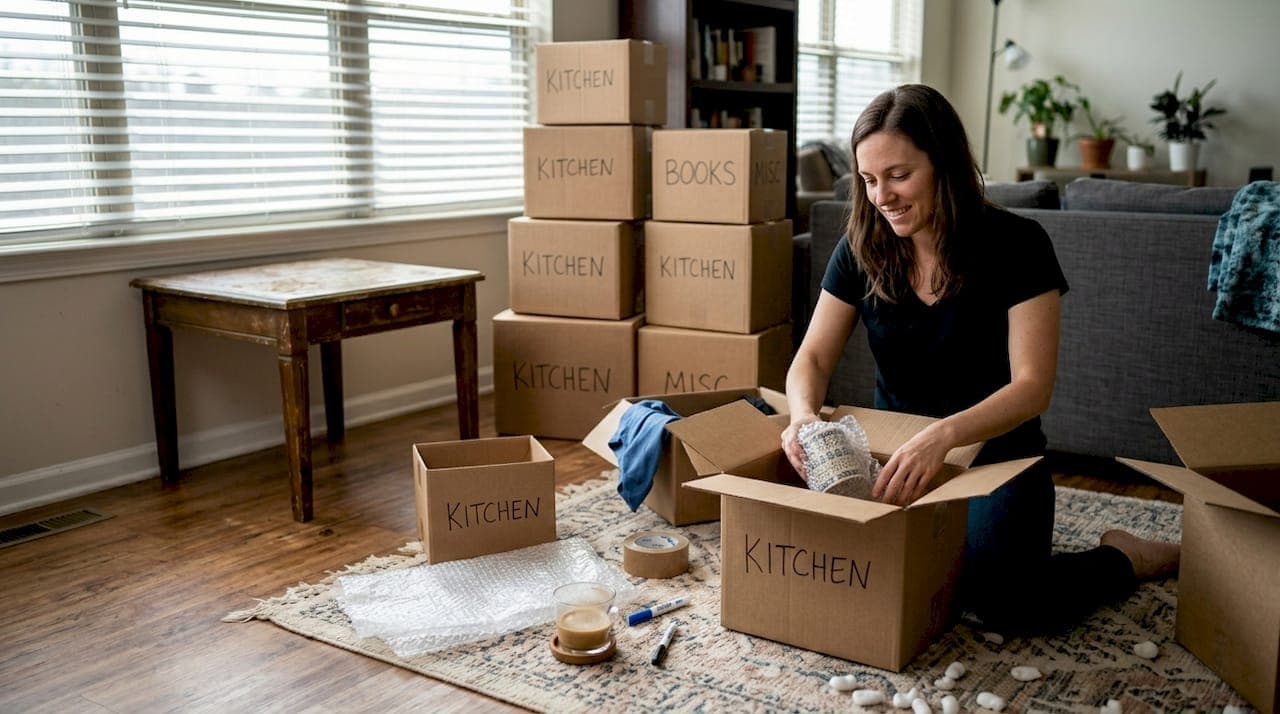
Packing is the first major phase of any move, and it goes well beyond tossing items into cardboard boxes. At its core, packing means securely wrapping, cushioning, and boxing your belongings so they survive transport without damage. Done right, it also involves organizing items by room, labeling boxes clearly, and documenting contents for easy unpacking.
Professional packers bring materials and methods that most people do not have at home. They use double-walled boxes for heavy items, bubble wrap and packing paper for fragile pieces, and foam padding for electronics and artwork. Every box gets sealed, labeled, and stacked in a way that makes loading more efficient. You can find more moving advice on how to prepare your items before the crew arrives.
Here is what professional packing typically includes:
- Wrapping all fragile items individually with protective materials
- Boxing items by category and room for organized unpacking
- Labeling every box with contents and destination room
- Disassembling furniture when needed before wrapping
- Inventorying high-value items for insurance documentation
DIY packing is a real option, especially for non-fragile, everyday items. But it comes with trade-offs. Most people underestimate how long packing takes and overestimate how well standard tape and grocery-store boxes protect items in a moving truck. Professional packing reduces damage and stress but costs more, typically adding $300 to $2,000 to your total move cost depending on home size.
Improper packing creates a chain of problems. Boxes that collapse under weight damage everything beneath them. Items packed without cushioning shift during transport and break. Unlabeled boxes slow down unpacking by days. And if your movers did not pack the items, their liability for damage is often limited or eliminated entirely.
Pro Tip: Pack a separate "first night" box with essentials like toiletries, a change of clothes, phone chargers, and snacks. Keep it with you, not in the truck. You will thank yourself when you arrive exhausted and cannot find anything.
What loading really involves: Weight, safety, and logistics
Once everything is packed, loading begins. This is the physical process of moving packed items from your home or office into the moving truck. It sounds straightforward, but professional loaders will tell you it is one of the most technical parts of the entire move.
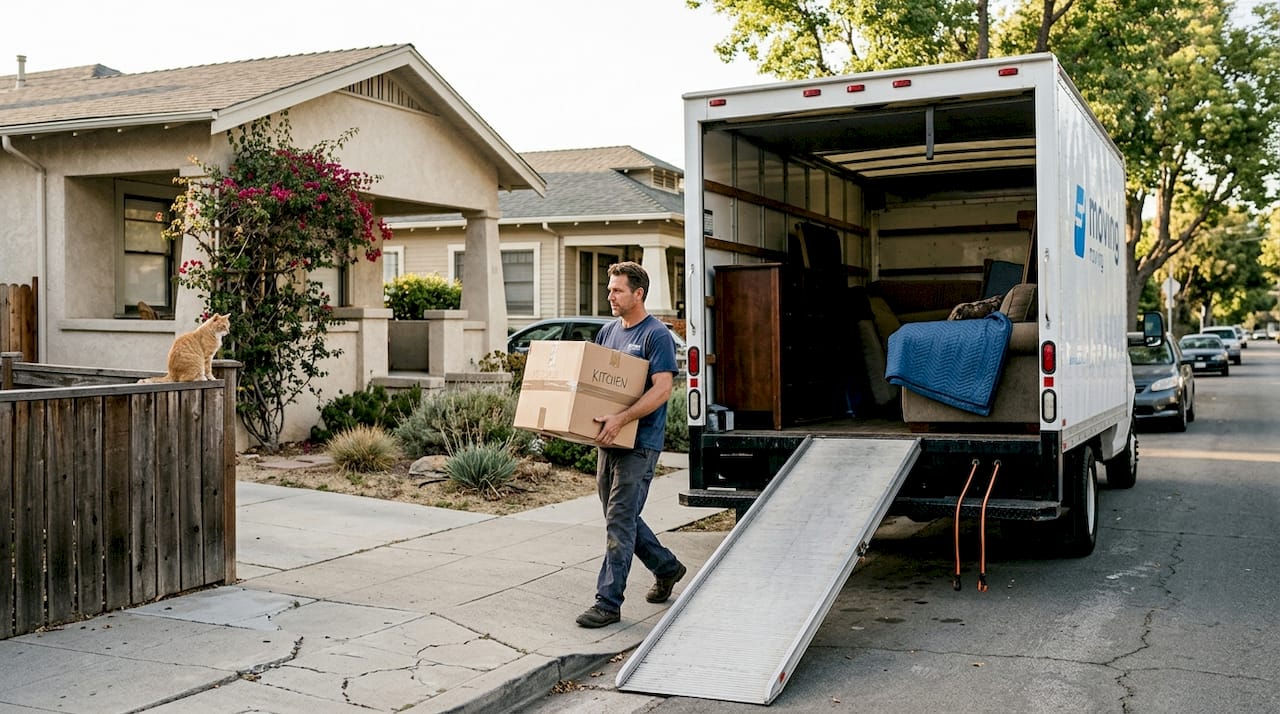
Loading is not just about muscle. It requires a clear plan for weight distribution, item placement, and securing the load so nothing shifts during transit. Heavy furniture goes in first, against the cab wall, to keep the truck balanced. Lighter boxes stack on top. Fragile items get positioned away from areas prone to vibration or impact. Our moving and loading services are designed around exactly this kind of precision.
Key concerns professional loaders manage on every job:
- Weight distribution to prevent truck sway and tire blowouts
- Furniture padding to protect surfaces during transit
- Tie-down straps to secure items and prevent shifting
- Appliance dollies and ramps to move heavy items safely
- Stacking order to protect fragile items from crushing
Loading a truck incorrectly is one of the leading causes of moving day injuries and property damage. Professional loading services reduce the risk of injury and property damage significantly compared to DIY approaches.
California adds its own layer of complexity. Narrow streets in San Francisco, strict HOA parking rules in many Southern California communities, and multi-story buildings without elevators all affect how loading is planned and executed. Professional loaders account for these variables before the truck even arrives.
DIY loading risks are real. Back injuries from improper lifting are extremely common. Scratched hardwood floors, dented walls, and broken railings happen when people move large furniture without the right equipment. Truck damage from overloading or uneven weight placement can result in costly repair bills or even a breakdown mid-route.
Pro Tip: Before loading day, walk through your home and identify every item that needs special handling. Note narrow doorways, tight stairwells, and any items over 100 pounds. Share this list with your loading crew in advance so they bring the right equipment.
Packing vs loading: Side-by-side comparison
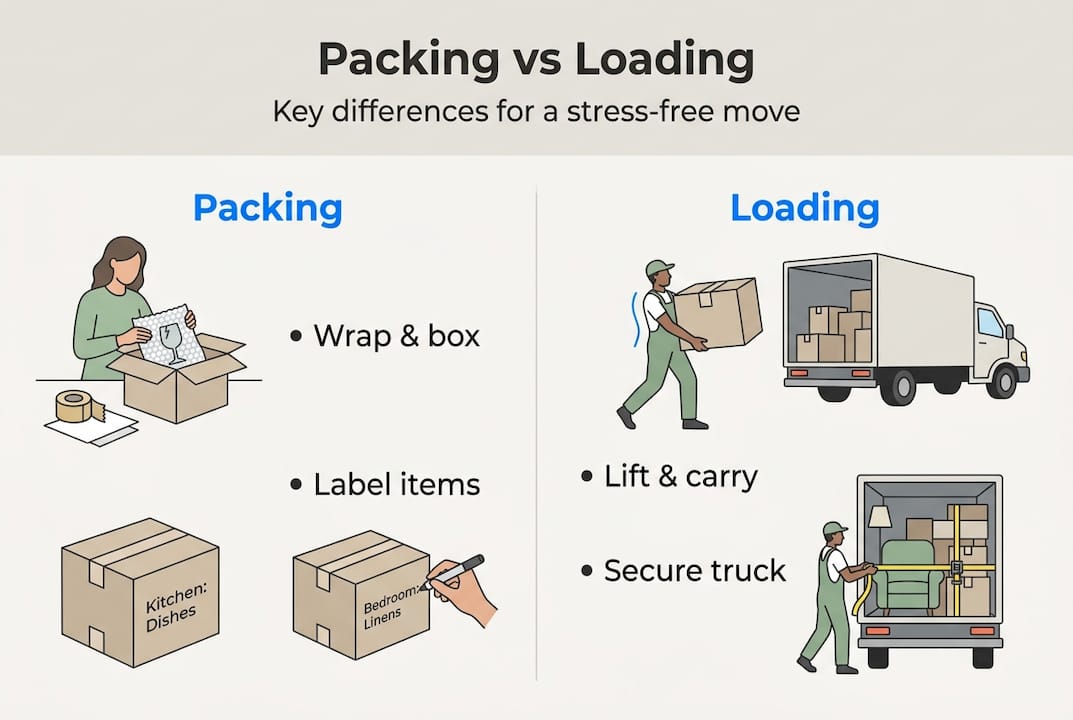
To further clarify what sets these crucial services apart, let us look at how packing and loading compare side by side.
| Factor | Packing | Loading |
|---|---|---|
| What it involves | Wrapping, boxing, labeling items | Placing items into the truck safely |
| Primary skill | Organization, materials knowledge | Physical technique, weight planning |
| Key risk | Item damage from poor wrapping | Injury, truck damage, item breakage |
| DIY difficulty | Moderate | High |
| Cost range | $300 to $2,000+ | $200 to $800+ |
| Liability impact | High: affects mover coverage | High: tied to packing quality |
A hybrid approach, where you handle your own packing but hire professionals for loading, is one of the most popular choices among budget-conscious movers. DIY packing tips can help you prepare your non-fragile items correctly. This approach can save 30 to 50 percent compared to full-service moving, but it does shift liability for fragile items onto you.
Factors that influence which combination works best for your move:
- Budget: Full-service costs more upfront but reduces risk and time investment
- Fragility: Antiques, artwork, and electronics benefit most from professional packing
- Timeline: Tight schedules favor full-service to avoid packing delays
- Liability: If movers pack and load, they carry more responsibility for damage
- Physical ability: Loading is physically demanding; hiring out protects your health
The key takeaway is that packing and loading are separate skill sets with separate cost structures and separate liability implications. Treating them as one service leads to gaps in planning and coverage.
How to choose: Matching service levels to your move
Understanding these differences makes the choice clearer, so how should you decide which option is right for your California move?
Start by categorizing your move. A residential move with standard furniture and household goods is very different from a commercial relocation with server equipment, filing systems, and office furniture. Each type calls for a different level of professional involvement.
Follow these steps to match your needs to the right service level:
- List every item that requires special care. Antiques, electronics, musical instruments, and artwork should always be professionally packed.
- Assess your physical capacity. If you or your helpers cannot safely lift 50 to 100 pounds repeatedly, hire professional loaders.
- Check your building's rules. Many California apartment complexes and HOAs require licensed movers for elevator reservations and parking permits.
- Review your insurance. Understand what your homeowner's or renter's policy covers during a move and where mover liability begins.
- Set a realistic timeline. Packing a three-bedroom home properly takes 15 to 25 hours. Budget accordingly or hire help.
| Move type | Recommended approach |
|---|---|
| Studio or 1-bedroom | DIY packing, professional loading |
| 2 to 3-bedroom home | Hybrid or full-service |
| 4+ bedroom home | Full-service recommended |
| Commercial office | Full-service with specialty handling |
| Long-distance move | Full-service for maximum protection |
For items like fragile heirlooms or high-value electronics, professional moving help is worth every dollar. The cost of replacing a broken antique or a damaged laptop far exceeds the cost of professional packing. If you want to explore your options, the range of moving services available through PackMoveGo covers everything from partial packing to full-service commercial moves.
Hybrid packing, where you pack standard items yourself and let professionals handle delicate ones, reduces overall cost but changes who carries liability for fragile items. Make sure this is clearly documented in your moving contract.
Pro Tip: Ask your moving company to do a pre-move walkthrough. A good crew will identify problem areas, recommend the right service level, and give you a more accurate quote than a phone estimate ever could.
Why most moving mishaps start with unclear roles and how to avoid them
Stepping back, here is our take on why this confusion around packing versus loading continues to trip up even the most organized California movers.
The real problem is not that people do not understand what packing or loading means in isolation. It is that they do not establish who is responsible for each task before move day. When that clarity is missing, things fall through the cracks. A box gets left unpacked. A piece of furniture gets loaded without proper wrapping. And when something breaks, nobody agrees on who is at fault.
Misassigned packing and loading duties increase stress, damage rates, and insurance disputes. We see this pattern repeatedly. The fix is simple but requires discipline: get everything in writing before the truck arrives.
A clear contract should specify exactly which items the moving company will pack, which items you are packing yourself, and how liability is assigned in each case. A pre-move walkthrough with your crew eliminates assumptions. A shared checklist keeps everyone accountable. Reading through common moving mishaps can also help you anticipate problems before they happen.
Role clarity is not just a logistics issue. It is a financial protection strategy.
Take the stress out of your California move
Now that you know the difference between packing and loading, you are better equipped to plan a move that protects your belongings and your budget. But knowing the difference is only half the work. Executing it well requires the right team.
PackMoveGo offers licensed, insured professionals who handle both packing and loading with the precision California moves demand. Whether you need full-service support or just a loading crew for move day, our moving and packing services are built around your specific situation. Get a free quote today and find out how straightforward a stress-free California move can be. For more guidance before you book, browse our moving tips to prepare with confidence.
Frequently asked questions
Does professional packing or loading cost more?
Professional packing usually costs more due to labor and materials, while loading is less expensive but physically demanding and technically complex.
Is it safer to do my own packing or let movers handle it?
Letting movers handle packing is generally safer for fragile or valuable items. A DIY and pro hybrid saves 30 to 50 percent but increases your liability for fragile items.
What happens if items get damaged during loading?
Damage during loading may be covered only if professionals packed and loaded the items. Hybrid approaches shift liability for fragile items to the homeowner.
Can I hire only loading or only packing services?
Yes, most moving companies in California offer standalone packing or loading services to fit specific needs and budgets.
How do I know which service I need for my move?
Evaluate your budget, moving distance, item fragility, and your comfort with heavy lifting to choose the right combination of services.