
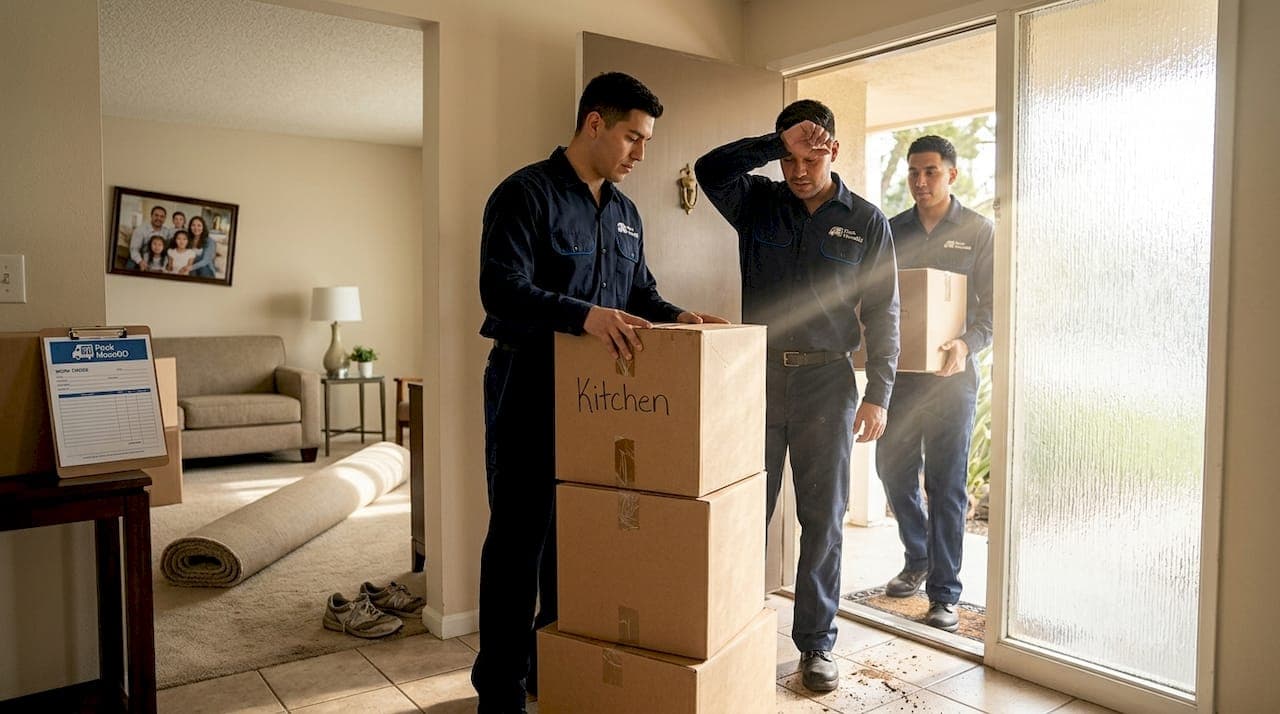
Professional movers can pack a 3-bedroom home in as little as 4 hours. Most people attempting a DIY move spend 2 to 3 weeks doing the same work. That gap is not just about convenience. For working homeowners and businesses across California, time lost to moving is money lost, stress added, and risk taken on without any safety net. Whether you are relocating a family in Sacramento, moving an office in the Bay Area, or facing an urgent same-day situation, understanding what professional moving services actually deliver changes the entire calculation.
Table of Contents
- Time and efficiency: Professional movers vs. DIY
- True cost and protection: Insurance, liability, and hidden fees
- Commercial moves: Minimizing downtime and disruption
- Urgent and specialty moves: Why speed and expertise matter
- Most people underestimate the true cost — here is what you are missing
- Ready to move? Get expert help in California
- Frequently asked questions
Key Takeaways
| Point | Details |
|---|---|
| Time savings | Professional movers pack and move homes in hours, while DIY efforts take weeks. |
| Hidden costs | DIY moving often ends up costing more due to lost time, injury risk, and lack of insurance. |
| Specialty expertise | Pros reliably handle urgent moves, delicate items, and complex logistics that DIY cannot manage. |
| Business protection | Commercial moves run smoothly and minimize downtime with professional help for IT and records. |
| Legal safety | Licensed movers offer insurance and regulatory protection, shielding you from financial risk. |
Time and efficiency: Professional movers vs. DIY
The numbers tell a clear story. A 3-bedroom home packed by a professional crew takes 4 to 8 hours. A homeowner doing it solo often stretches that across 2 to 3 weeks of evenings and weekends. The difference is not effort. It is systems, tools, and experience.
Here is a direct comparison of what each approach looks like in practice:
| Task | Professional movers | DIY approach |
|---|---|---|
| Packing a 3-bedroom home | 4 to 8 hours | 2 to 3 weeks |
| Loading a moving truck | 2 to 4 hours | 4 to 8 hours |
| Furniture disassembly/reassembly | Included, same day | Often skipped or delayed |
| Damage risk during transit | Low (padded, secured) | High (improvised packing) |
| Total local move (2BR) | 3 to 5 hours | 1 to 3 days |
Pros arrive with professional moving tools like dollies, furniture pads, loading ramps, and stretch wrap. These are not extras. They are what allow a crew to move a refrigerator safely in 10 minutes instead of 45. Every item in the truck is secured using load bars and tie-downs that most renters do not own.
For California homes specifically, local move times scale with size:
- Studio or 1-bedroom: 2 to 3 hours with pros
- 2-bedroom: 3 to 5 hours
- 3-bedroom: 5 to 8 hours
- 4-bedroom or larger: 7 to 10 hours
These timelines assume a single-location move with standard access. Stairs, long carries, or elevator buildings add time. Pros account for this in advance. DIY movers usually discover it on moving day.
The efficiency gains from moving efficiency also extend to planning. Professional crews conduct a walkthrough or inventory review before the move date. This prevents surprises like furniture that does not fit through a door or boxes that exceed truck weight limits.
Pro Tip: Before booking any moving service, walk through every room and list large items separately. Beds, dressers, appliances, and outdoor furniture are the most common sources of underestimated move time.
True cost and protection: Insurance, liability, and hidden fees
Efficiency is only part of the story. The real protection comes from understanding what is actually covered and where the hidden risks are.
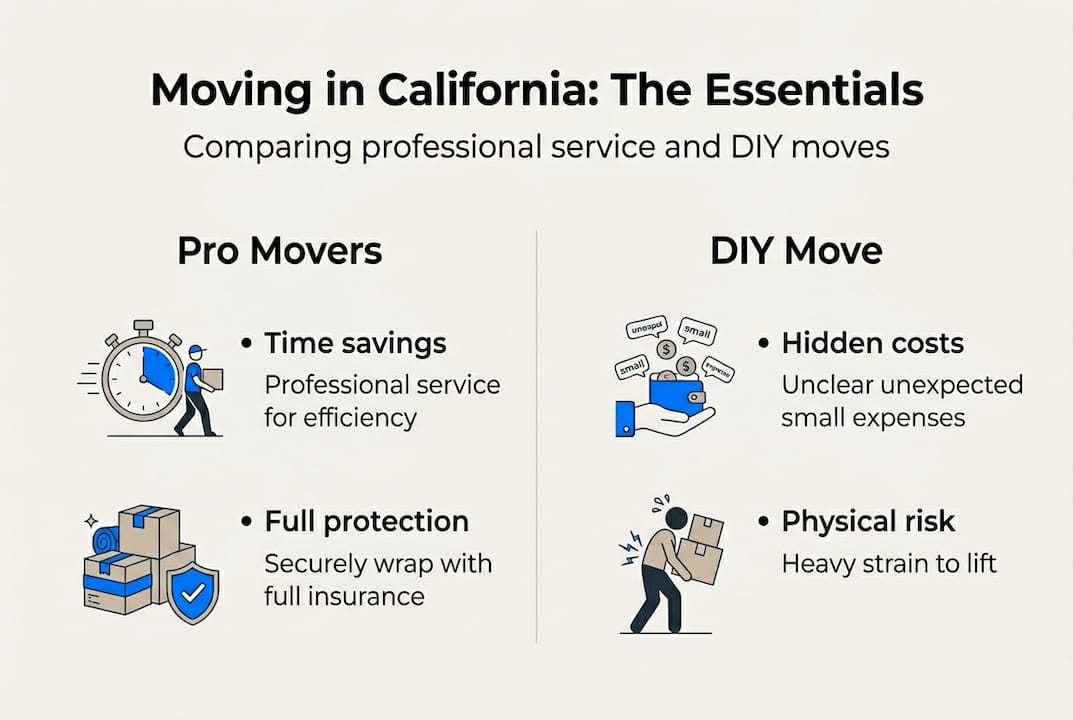
Local moves in California, particularly in the Bay Area and Sacramento, typically cost $400 to $4,500 depending on home size. That range includes insurance and liability coverage that DIY moves simply do not have.
| Cost factor | Professional move | DIY move |
|---|---|---|
| Base cost (2BR local) | $400 to $900 | $150 to $350 (truck rental) |
| Packing materials | Often included or itemized | $100 to $300 out of pocket |
| Insurance coverage | Included by law | None |
| Lost work time | Minimal | $300 to $900 estimated |
| Injury risk cost | Covered by mover liability | Your personal cost |
Under federal law, FMCSA regulations require all licensed movers to offer two types of coverage. Released Value Protection is free and covers items at $0.60 per pound. Full Value Protection is an upgrade that covers repair, replacement, or cash settlement for any damaged item. DIY moves have neither.
Here are the hidden costs that homeowners and businesses frequently overlook:
- Equipment rental fees: Dollies, furniture pads, and truck insurance add up fast
- Fuel surcharges: Truck rentals charge per mile plus fuel, which is rarely estimated accurately
- Lost productivity: A full weekend of moving equals 16 to 20 hours of personal time
- Medical costs: Back injuries from improper lifting are one of the most common DIY move outcomes
- Replacement costs: Broken items with no coverage come entirely out of pocket
Understanding the hidden costs of DIY moves before committing to a plan is one of the most practical steps any homeowner can take. The upfront savings of going solo often evaporate once the full picture is clear.
Commercial moves: Minimizing downtime and disruption
Shifting from protection to productivity, the stakes get even higher when a business is relocating. For businesses, full-service commercial moves reduce downtime significantly, especially when IT infrastructure and records are involved.
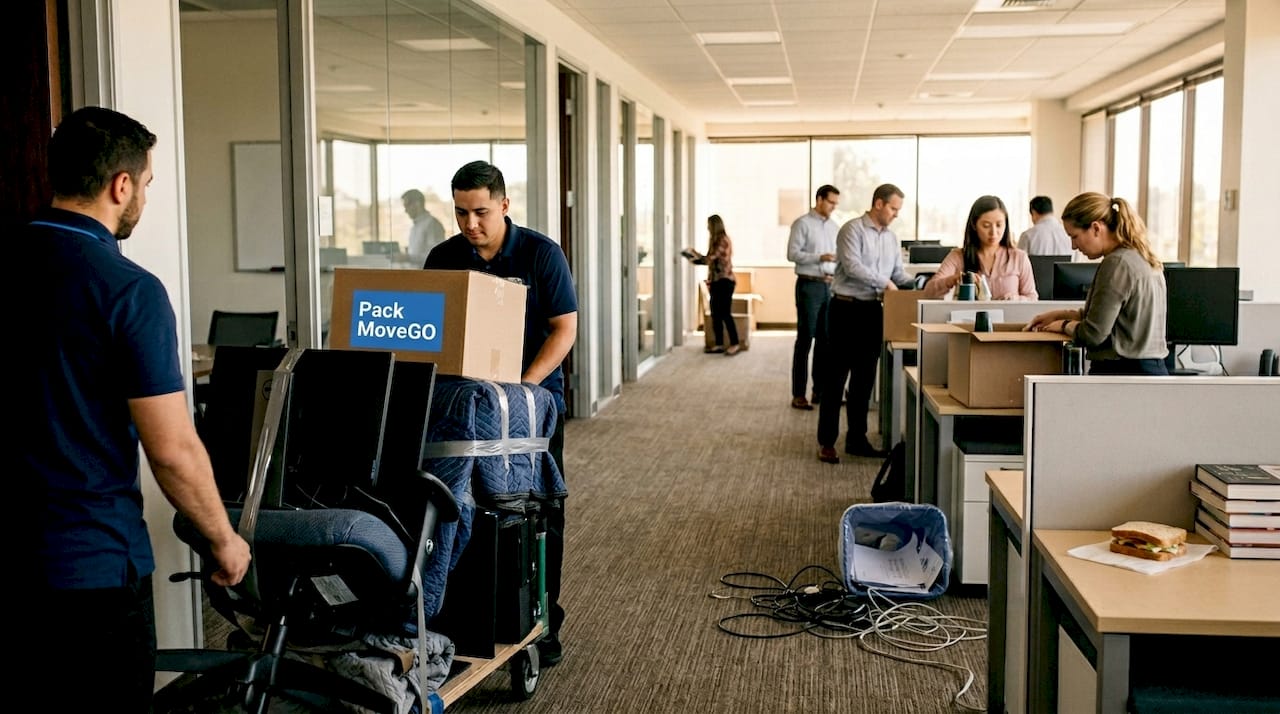
Office moves differ from residential relocations in several important ways. Equipment like servers, workstations, and networking hardware requires careful disconnection, labeling, and reinstallation. Physical records must maintain chain of custody. Employee workstations need to be functional on day one at the new location.
Here is how professional movers approach a commercial relocation to keep disruption minimal:
- Pre-move audit: Catalog all equipment, furniture, and records before the move date
- IT coordination: Work with your IT team to map disconnection and reconnection steps
- Phased moving schedule: Move departments in stages so some staff remain operational
- Overnight or weekend moves: Schedule heavy lifting during off-hours to avoid business interruption
- Day-one setup: Pros reassemble and position furniture so staff can work immediately
- Post-move walkthrough: Confirm all items arrived and nothing was left behind
"Every hour of office downtime carries a direct cost. For a 20-person team earning an average California wage, a single lost workday can represent $8,000 or more in unproductive labor. Professional movers who plan around your schedule protect that investment."
For minimizing commercial downtime, the most effective strategy is treating the move as a project with a timeline, not a single event. Pros bring that structure automatically.
Pro Tip: Schedule your commercial move to coincide with a low-traffic period, such as a long weekend or end of quarter. Coordinate with your moving team at least 3 to 4 weeks in advance to allow for proper planning.
Urgent and specialty moves: Why speed and expertise matter
Urgency and specialty needs bring their own requirements. Not every move is planned months in advance.
Same-day and urgent moves are triggered by real circumstances: a job offer that starts next week, a lease termination with 48 hours notice, a family emergency requiring an immediate relocation, or an eviction situation. In the San Francisco and Bay Area region, urgent same-day moves are handled by professional crews using rapid dispatch systems and structured 24 to 72-hour timelines. DIY is not a realistic option in these situations.
Specialty moves add another layer of complexity. Here are the most common scenarios that require expert handling:
- Antiques and fragile art: Custom crating, climate-aware transport, and white-glove handling
- HOA-restricted buildings: Specific elevator reservations, parking permits, and time windows
- Multi-story homes or stairs: Equipment and crew size must match the physical demands
- Senior relocations: Slower pace, extra care with sentimental items, and coordination with family
- Families with young children or pets: Scheduling that accounts for safety and reduced chaos
- Piano or large instrument moves: Specialized equipment and trained crew required
"In urgent situations, a professional team can execute a full residential move in a single day. That includes packing, loading, transport, and unloading. For a solo mover with no equipment and no crew, the same job is simply not achievable in the same window."
Professional movers also carry the permits and insurance needed to operate in dense California cities. Parking restrictions, building access rules, and HOA regulations are handled as part of the service. For urgent moving tips and how to prepare for a fast turnaround, having a checklist ready before you call a mover saves critical time.
Most people underestimate the true cost — here is what you are missing
Now that we have looked at the numbers and scenarios, here is a perspective that most moving guides skip entirely.
When people compare DIY to professional moving, they focus on the invoice. A DIY local move might cost $300 to $1,000 upfront, while a professional service runs higher. That comparison feels obvious. But it ignores the variables that actually determine value.
Lost work time alone can run $300 to $900 for a single move weekend. Add one back injury and you are looking at medical bills, missed work, and weeks of recovery. Add one broken piece of furniture with no coverage and the replacement cost exceeds what you saved.
We have seen this pattern across thousands of California moves. The people who regret hiring professionals are rare. The people who regret not hiring them are common. The moving cost realities are not just about price. They are about what you are actually buying: time, safety, and certainty. Those things have real value, and they are worth accounting for before you decide.
Ready to move? Get expert help in California
If you are ready to minimize risk, downtime, and hassle, here is how to secure expert help for your California relocation.
PackMoveGo provides licensed and insured California moving services for residential and commercial clients across the state. Whether you need a planned home move, an urgent same-day relocation, or a complex commercial transition, our team is available 24/7. Visit our site for professional move support and a free quote tailored to your situation. You can also browse our library of moving tips California residents rely on to prepare for every type of move. We handle the logistics so you can focus on what comes next.
Frequently asked questions
How long does a professional moving service take compared to DIY?
Pros can pack a 3-bedroom home in 4 to 8 hours, while a DIY approach typically takes 2 to 3 weeks of part-time effort spread across evenings and weekends.
What does moving insurance cover in California?
Licensed movers must offer Released Value Protection at $0.60 per pound at no charge, plus Full Value Protection as an upgrade that covers repair or replacement of damaged items.
Are urgent and same-day moves possible in California?
Yes. Professional crews in the SF and Bay Area use rapid dispatch systems to complete emergency relocations within 24 to 72 hours, something that is not achievable with a DIY approach.
What risks come with DIY moving?
DIY moves appear cheaper upfront at $300 to $1,000 locally, but hidden costs including lost work time, injuries, and zero insurance coverage often push the total well above professional service rates.
Recommended
- PackMoveGo - Professional Moving & Packing Services
- Our Services - PackMoveGo | Residential, Commercial & Long Distance Moving
- Types of moving services: choose the best option for 2026