
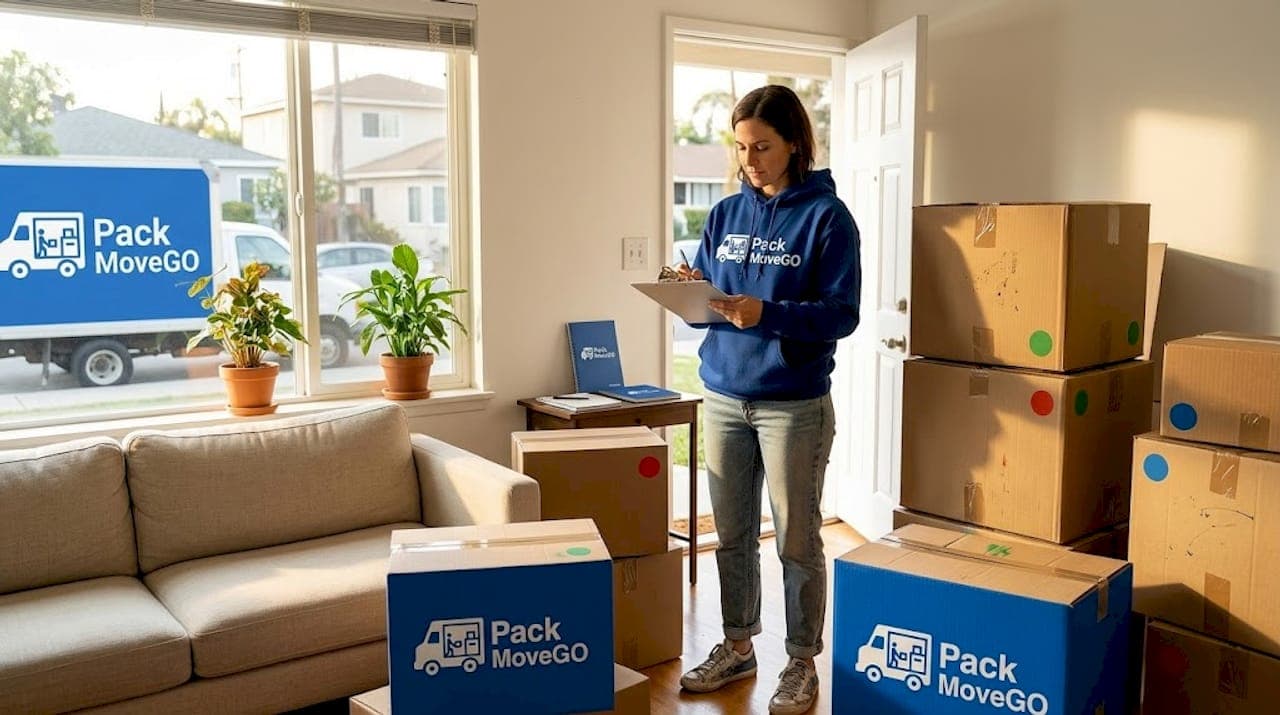
Moving day has a way of exposing every gap in your planning. Lost boxes, missing keys, security deposit disputes, and frantic searches for the phone charger buried under a pile of linens, these are not accidents. They are the result of skipped steps. For California homeowners and renters alike, the difference between a smooth handoff and a chaotic one comes down to preparation done in advance. This guide walks you through every phase, from assembling your documents to completing your final walk-through, so you protect your time, your belongings, and your money.
Table of Contents
- Essential prep checklist before movers arrive
- Step-by-step phases for smooth moving prep
- Packing and labeling for maximum efficiency
- Move-out and walk-through: final checks
- The moving prep secret most guides miss
- Let experts make your move stress-free
- Frequently asked questions
Key Takeaways
| Point | Details |
|---|---|
| Prep checklist matters | Gathering all documents and supplies ahead of time saves hours of stress on moving day. |
| Phased approach works | Following a structured moving prep timeline ensures nothing is forgotten. |
| Labeling and essentials | Clear labels and having a 'first night' kit simplify unpacking and reduce mistakes. |
| Document for security deposit | Photos and records protect renters from wrongful security deposit deductions. |
| Final checks | A thorough walk-through and inventory check are critical to avoiding losses and disputes. |
Essential prep checklist before movers arrive
Now that you know the stakes of good preparation, it is crucial to assemble everything you need before movers arrive. Think of this phase as building your command center. You want every document, supply, and piece of access information in one place before a single box is sealed.
Start with your critical documents. If you are a renter, pull out your lease and review the move-out clauses carefully. California leases often include specific notice requirements, cleaning standards, and conditions about repainting or carpet. For California renters, plan for lease-required move-out steps to reduce security deposit disputes. Homeowners should have their moving company contract, proof of insurance coverage, and any HOA rules about move-out hours or elevator reservations.
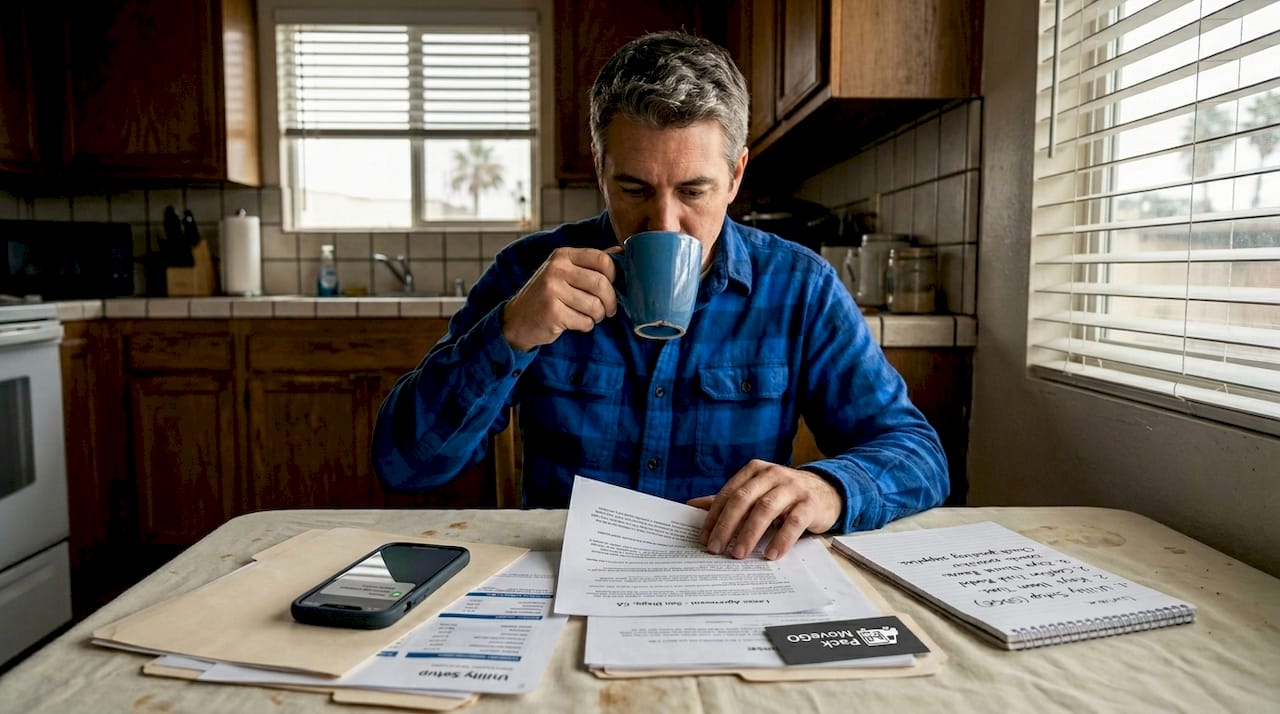
Pro Tip: Create a digital folder on your phone or cloud storage and scan every relevant document into it before packing begins. If a paper copy is lost during the move, you have a backup with timestamps.
Your physical supplies matter just as much. Running out of tape or boxes mid-pack stalls everything. Here is what you need on hand:
- Sturdy moving boxes in small, medium, and large sizes
- Packing tape and a heavy-duty tape gun
- Bubble wrap, packing paper, and foam padding for fragile items
- Permanent markers in at least two colors for labeling
- Color-coded labels or stickers by room
- A camera or smartphone for documentation photos
- An inventory list (printed and digital copies)
- An essentials kit or box for day-one necessities
You also need to plan for access. Confirm elevator reservations if you live in a high-rise, arrange parking permits for the moving truck, and notify your building manager or HOA of your move date. These moving tips become especially relevant in dense California cities where street parking for large trucks requires advance coordination with the city or building management.
Here is a quick reference table for must-have items and documents before movers arrive:
| Item or Document | Why It Matters |
|---|---|
| Lease agreement | Confirms move-out requirements and notice period |
| Moving company contract | Outlines liability, pricing, and timeline |
| Utility shutoff list | Prevents billing errors and service overlap |
| Packing materials | Boxes, tape, markers, padding |
| Essentials kit | First-night items accessible without unpacking everything |
| Camera or smartphone | Time-stamped documentation of unit condition |
| Inventory list | Tracks all items loaded and delivered |
Getting this checklist complete at least one week before your move date gives you time to address anything unexpected, like a missing document or a supply shortage, without scrambling.
Step-by-step phases for smooth moving prep
With your supplies and documents ready, follow these structured phases to manage your move efficiently. A phased approach prevents the overwhelming feeling of trying to do everything at once.
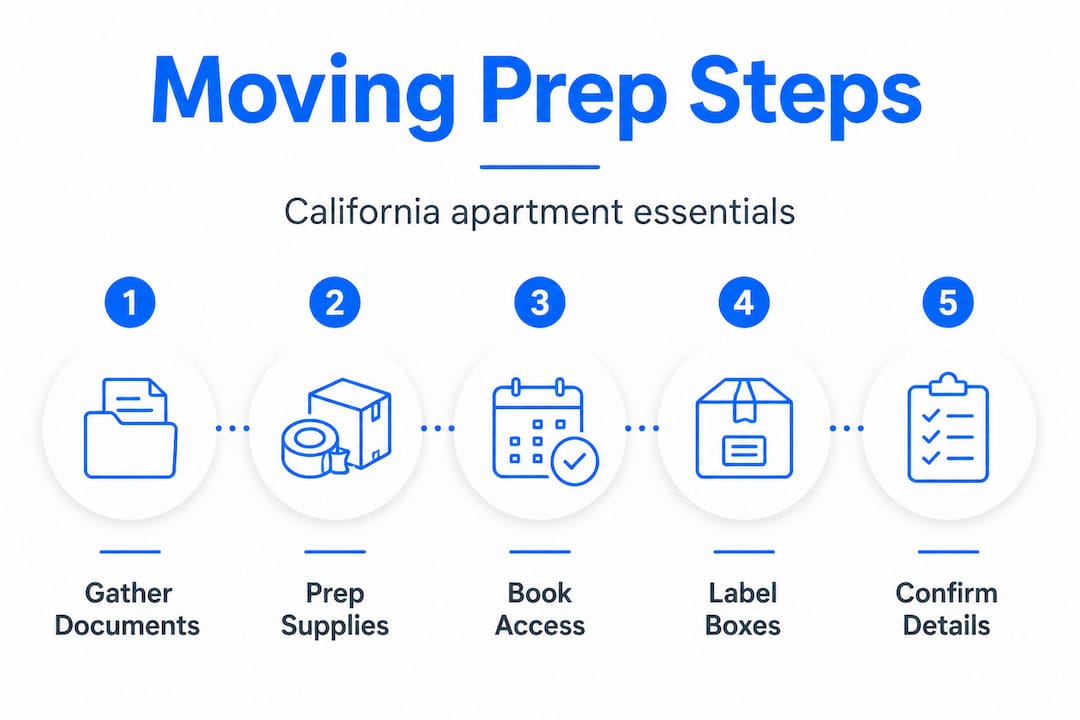
According to a proven five-phase preparation method, the most effective sequence is planning and budgeting first, then sorting and decluttering, then building your inventory and records, then packing with essentials prioritized, and finally confirming access and walk-through logistics with your movers.
Here is what each phase looks like in practice:
-
Planning and budgeting. Set your move date, confirm the mover booking, and establish a total budget that includes packing supplies, tips, cleaning fees, and any overlap in rent or mortgage. California moves, especially long-distance ones within the state, can involve significant fuel surcharges and fees.
-
Sorting and decluttering. Go room by room and separate items into keep, donate, sell, and discard piles. Decluttering before packing reduces your total volume, which directly lowers your moving cost. Fewer boxes mean fewer hours billed.
-
Inventory and documentation. Write down every item being moved, including serial numbers for electronics and photos of valuable furniture. This inventory becomes your legal reference if anything is lost or damaged. Keep one copy with you and give one to the moving company.
-
Packing with essentials set aside. Pack room by room, sealing and labeling each box completely before starting the next. Set aside a clearly marked essentials box containing everything you need for the first 24 hours at your new home.
-
Walk-through and access coordination. Schedule a final walk-through the morning of your move. Confirm the movers have the correct address, parking plan, and elevator access. Walk through your old space one final time to catch anything missed.
Pro Tip: Use color-coded labels for each room, blue for the bedroom, red for the kitchen, green for the living room. Hand movers a color-coded floor plan of your new home so they can place boxes in the right rooms without asking you every five minutes.
Here is a side-by-side look at DIY versus professional mover preparation:
| Preparation Area | DIY Move | Professional Movers |
|---|---|---|
| Timeline | Often underestimated | Typically planned with buffer time |
| Documentation | Frequently skipped | Inventory and liability forms included |
| Packing quality | Variable based on skill | Standardized and damage-reducing |
| Labeling | Often incomplete | Systematic room labeling |
| Furniture disassembly | Time-consuming for homeowner | Handled by crew |
| Insurance coverage | Limited or none | Carrier liability included |
Booking moving and packing services from a licensed provider covers several of these gaps automatically, especially documentation and packing quality, which are the two areas where DIY moves most often result in damage or disputes.
Packing and labeling for maximum efficiency
Once you have a plan, focus on the details of how you pack and label to make move day seamless. This step is where most movers lose time and where most damage happens. The fix is simple: a consistent system.
Labeling each box by room can prevent hours of post-move searching and accidental breakage.
Every box label should include two things: the destination room and a brief description of contents. "Kitchen, pots and pans" is far more useful than just "Kitchen." For fragile items, write "FRAGILE" on at least three sides of the box in large letters, not just the top. Movers stack boxes, and what is visible from one angle may not be visible from another.
Your essentials kit deserves special attention. Use a clearly marked box or bag that stays with you in your personal vehicle, not in the moving van. Good essentials to include are:
- Bedsheets and a pillow
- Toiletries and medications
- Two days of clothing
- Phone and laptop chargers
- Snacks and water bottles
- Important documents (passports, leases, contracts)
- A basic tool kit for reassembling furniture
Using a "first night" essentials kit means you can place it correctly in your new home immediately, without tearing through boxes at 10 p.m. looking for your toothbrush.
Pro Tip: Keep your essentials box and all valuables like jewelry, hard drives, or sentimental items with you personally. Moving vans handle dozens of boxes, and even careful movers cannot guarantee the security or priority placement of individual items during transit.
Here are the core organization best practices for packing and labeling:
- Pack heavy items in small boxes, light items in large boxes
- Fill all empty space in boxes with packing paper to prevent shifting
- Wrap each fragile item individually, not grouped together
- Label the top and at least two sides of every box
- Use one color per room consistently across all boxes
- Seal every box with at least two strips of tape across the seam
- Number your boxes and match them to your inventory list
Professional moving services often include packing assistance that follows these standards automatically, which is worth considering if you have a large volume of fragile or high-value items.
Move-out and walk-through: final checks
Packing is done, but these final checks ensure your transition is complete and you are protected from disputes. The final walk-through is your last opportunity to catch anything missed and to create a verified record of the unit's condition.
Don't sign off on delivery before inspecting every item and noting any damage. This is vital for insurance claims.
Follow these steps in order:
-
Verify all rooms and closets are empty. Check inside every cabinet, under every shelf, and in any storage areas, including the garage, attic, or patio storage if applicable.
-
Walk through with your landlord or agent. For renters, this joint walk-through is critical. California law provides specific timelines and requirements around security deposits, and a walk-through with documentation protects you from unfair deductions.
-
Take time-stamped photos of every room. Photograph walls, floors, appliances, fixtures, and any pre-existing damage that was present when you moved in. These records support your position in any deposit dispute.
-
Match your inventory with the movers on both ends. Before the truck leaves your old address and after it arrives at your new one, confirm the item count matches your inventory list.
-
Note any damages before signing delivery documents. Before you sign off on delivery, record any damage on the documents in both copies, which supports claims if something is lost or damaged during transit.
For California renters, treat move-out cleaning and condition requirements as a parallel checklist running alongside your packing process, not an afterthought. Notice requirements, professional cleaning standards, and carpet or repaint conditions can all trigger deductions if not properly addressed and documented. Start cleaning early, ideally room by room as you empty each space.
The residential moving checklist approach works best when you treat move-out as a formal legal handover, not just an exit. Every signature, photo, and document you collect during this phase is protection that costs you nothing but time.
The moving prep secret most guides miss
Most moving guides are focused on the physical process: boxes, tape, truck reservations. That information is useful, but it misses what actually separates a truly smooth move from a stressful one. The real differentiator is treating your move like a legal and logistical handover from the very beginning.
Here is what we have seen consistently: renters who start documentation before packing the first box almost never face security deposit disputes. Homeowners who create a formal inventory and hand it to their movers almost never end up arguing about damaged furniture. The pattern is clear. Preparation is not just physical. It is about reducing friction and future-proofing yourself from disputes that can drag on for weeks or months after move day.
The most common regret we hear from California movers is not "I should have packed more carefully." It is "I should have taken more photos" or "I should have read my lease more carefully before I signed the walk-through form." These are documentation failures, not packing failures.
Our moving advice consistently points to one mindset shift that changes everything: stop thinking of moving prep as something you do for the movers and start thinking of it as something you do for yourself. The photos protect you. The inventory protects you. The signed documents protect you.
Start documentation before the first box is packed. Keep that evidence until your security deposit is returned in full and all deliveries are confirmed complete. Do not delete photos. Do not throw away receipts. Every piece of paper and every image is a small insurance policy that costs you nothing.
Let experts make your move stress-free
All of this preparation is manageable, but it takes real time and attention. If your schedule is tight or the scope of your move is large, professional support can take the most error-prone steps off your plate.
PackMoveGo offers professional moving services that cover the full process, from packing and labeling to transportation and delivery confirmation. Whether you are handling a local California move or a long-distance relocation across the state, a licensed and insured team ensures your inventory is tracked, your items are protected, and your documentation is handled correctly. PackMoveGo also supports commercial moves and provides storage options for situations where your move-in date does not align perfectly with your move-out date. For more actionable guidance before your move date, browse more moving tips and request a free quote to understand your exact costs with no surprises.
Frequently asked questions
What should I do if my movers arrive earlier than scheduled?
Keep your essentials kit and critical documents packed first so you can direct the crew immediately. Have your inventory list and room color-coding system ready so movers can begin without waiting on your instructions.
How can I avoid losing my security deposit as a California renter?
Document the unit's condition with time-stamped photos before and after your move, and complete every item on your landlord's move-out checklist before your final walk-through.
Should I tip movers in California?
Tipping is not required, but 10 to 20 percent of the total bill or a flat amount per mover is considered standard for good service.
Is it better to pack myself or use professional packing services?
Professional packing comes with standardized quality and liability coverage for any items damaged in transit, while DIY packing can reduce costs if you have adequate time and the right materials.
What happens if something is damaged during the move?
Record damage on the documents in both copies before signing the bill of lading, as this step is required to file a successful insurance or liability claim with the moving company.