
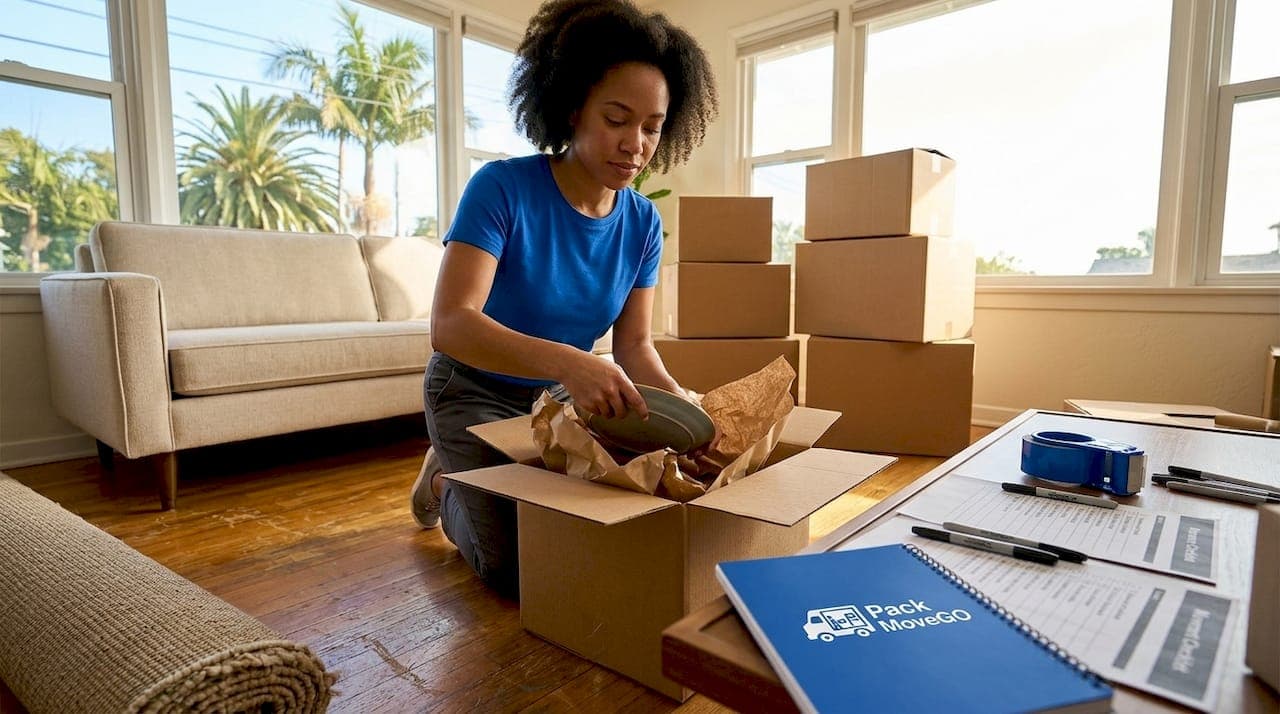
Moving is one of the most disorganized experiences most people go through, and it rarely has to be. Boxes that are too heavy, unlabeled bags, fragile dishes wrapped in yesterday's newspaper — these are not small inconveniences. They are the result of skipping a plan. A strategic approach to packing saves you time, cuts moving costs, and keeps your belongings safe from your front door to your next one. This guide gives you practical, step-by-step packing advice built for California homeowners and renters who want their move handled efficiently, not just eventually.
Table of Contents
- Essential packing supplies and preparation checklist
- Step 1: Declutter and organize before you pack
- Step 2: Packing strategies for efficiency and safety
- Step 3: Common packing mistakes and how to avoid them
- Our perspective: Why efficient packing is about more than boxes
- Pack easier with expert help from PackMoveGo
- Frequently asked questions
Key Takeaways
| Point | Details |
|---|---|
| Prep early | Begin organizing and packing several weeks in advance to ensure a low-stress move. |
| Declutter first | Reducing your load ahead of time can save you 20–50% on boxes and moving costs. |
| Use the right materials | Quality boxes and specialty wraps protect your valuables from damage during transport. |
| Pack smart | Try different packing strategies to optimize space and make unpacking easier. |
| Avoid mistakes | Label thoroughly, pace yourself, and prepare an essentials box to prevent moving-day problems. |
Essential packing supplies and preparation checklist
Before you place a single item in a box, you need the right materials and a clear starting point. Jumping into packing without preparation is one of the fastest ways to create chaos — you run out of tape mid-box, realize you have no padding for your dishes, or discover your marker dried out after labeling just two boxes. Getting organized before you start makes the entire process faster and less frustrating.
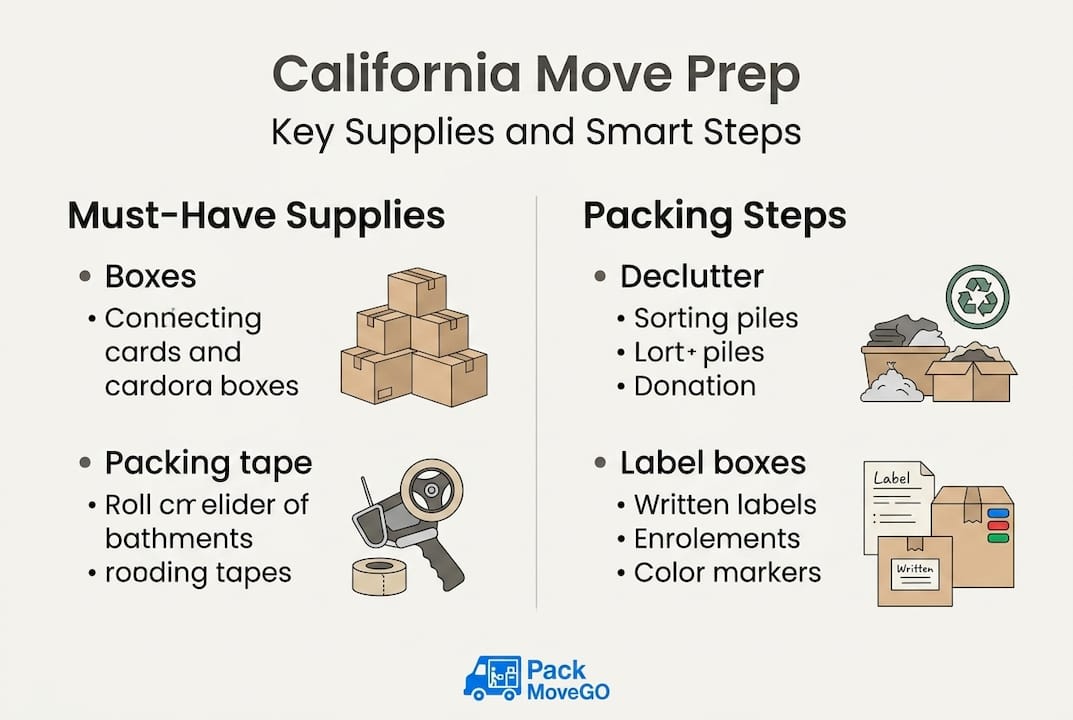
Here is a breakdown of must-have packing materials and what each one does:
| Supply | Purpose |
|---|---|
| Sturdy moving boxes (various sizes) | Safely contain and stack household items |
| Packing tape and dispenser | Seal boxes securely without gaps |
| Bubble wrap | Cushion fragile items like glass and ceramics |
| Packing paper | Wrap dishes, fill empty space in boxes |
| Permanent markers | Label boxes clearly by room and contents |
| Stretch wrap | Bundle furniture, protect upholstery |
| Box cutter | Open and resize boxes quickly |
| Specialty dish/wardrobe boxes | Safe transport for kitchenware and hanging clothes |
Pro Tip: Do not cut corners on box quality. Thin or recycled grocery store boxes are more likely to collapse under weight or moisture. For fragile items like mirrors, artwork, and glassware, invest in specialty boxes. The cost is minimal compared to replacing a broken item.
Before packing a single room, work through these key preparation steps:
- Notify utilities at least two weeks before your move date so service transfers line up correctly
- Gather all supplies in one central location so you are not hunting for tape across three rooms
- Create a room-by-room packing schedule to avoid packing everything at once and burning out
- Mark fragile items in advance with bright stickers or colored tape so movers know what to handle carefully
- Set aside items you will need until the last day such as toiletries, medications, and chargers so they do not get buried in boxes
Timing is critical. A 3 to 4 bedroom home takes three to four weeks to pack properly, and starting six to eight weeks before your move date is ideal. That schedule allows you to pace yourself without the pressure of packing an entire household in a single weekend. Use packing supply tips to build your materials list before you shop.
Step 1: Declutter and organize before you pack
Once you have your supplies and checklist in place, the single most valuable thing you can do before packing is to reduce what you are moving in the first place. Moving is not just a physical process. It is a filtering process. Every item you choose to bring along costs you time, space, and money.
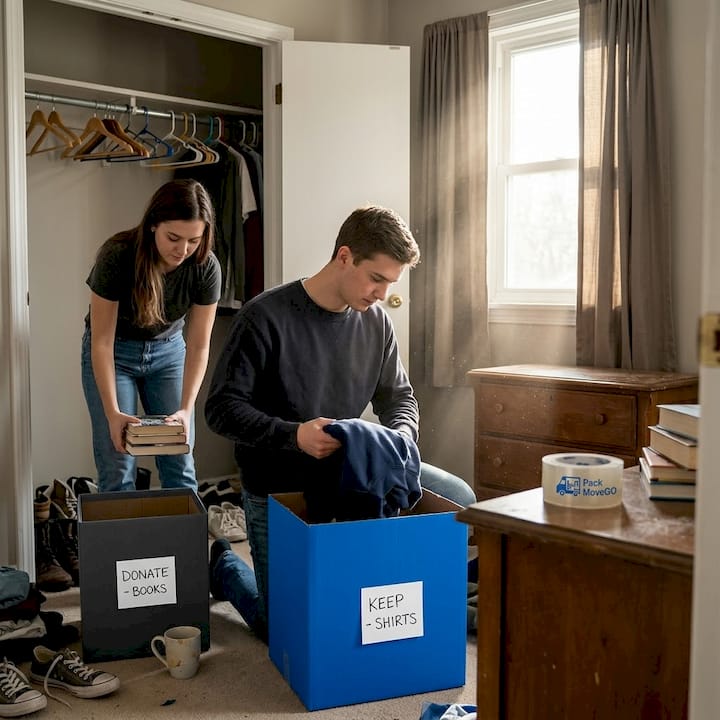
Decluttering before a move can reduce your total box count by 20 to 50 percent. That is not a small number. Fewer boxes means fewer trips, lower weight, and a smaller bill if you are paying by the pound or the truckload. It also means less to unpack on the other end, which directly affects how quickly you feel settled in your new home.
Here is a simple sorting system to work through every room:
- Donate: Items in good condition that you have not used in the past year, clothing that no longer fits, duplicate kitchen tools
- Sell: Electronics, furniture, collectibles, or clothing with resale value — use local apps or garage sales
- Toss: Expired products, broken items without repair value, outdated paperwork, worn-out clothing
- Keep: Items you use regularly, items with significant sentimental or financial value, seasonal necessities
Pro Tip: Use the "$20 in 20 min" rule. If you can replace an item for $20 or less within 20 minutes of arriving at your new location, leave it behind. This decluttering method is especially effective for kitchen gadgets, small appliances, and household tools you rarely reach for.
The financial benefit of decluttering is real. Cutting your moving load can reduce overall moving costs by 20 to 30 percent through fewer boxes, reduced truck size, and less labor time. For a California long-distance move, where costs are calculated partly on weight, this adds up quickly.
To stay organized during decluttering, work one room at a time. Set up four labeled areas: donate, sell, toss, keep. Do not mix rooms. Completing one space before moving to the next gives you a visible sense of progress and keeps the process manageable. Check out step-by-step moving advice if you want a structured timeline to follow as you work through each room.
Step 2: Packing strategies for efficiency and safety
Getting rid of excess items clears the way for efficient packing. But strategy matters here, too. How you pack is just as important as what you pack, and the wrong approach leads to damaged items, impossible-to-stack boxes, and a chaotic unpacking process.
Two common methods exist for organizing your packing: room-by-room and zone-based. Here is how they compare:
| Strategy | Best for | Pros | Cons |
|---|---|---|---|
| Room-by-room | Most households | Easy to label, logical unpacking | Can slow you down if rooms are large |
| Zone-based | Open-plan homes or studios | Flexible for non-standard layouts | Harder to track which items go where |
For most California homeowners with traditional room layouts, room-by-room packing is the cleaner approach. Each box gets a single room label, making unpacking straightforward.
Follow these five essential packing steps in order:
- Sort items within each room into categories before touching a single box
- Protect fragile items with bubble wrap or packing paper, filling empty box space with paper to prevent shifting
- Label every box on the top and at least one side with the room name and a brief contents summary
- Seal boxes with two full strips of tape on the bottom seam and top seam for stability
- Inventory each box by number and list its contents in a moving spreadsheet or app
"For fragile and kitchen items in particular, professional movers recommend letting pros handle the packing to avoid costly breakage. Glassware, china, and large artwork carry both financial and sentimental value that a misaligned box can destroy in transit."
Pro Tip: Packing cubes work well for clothing and linens in wardrobe boxes because they stay organized and you can transfer them directly to drawers. Compression bags save space but can damage delicate fabrics and are better reserved for bulky items like comforters and winter coats. Pick your tool based on the item, not just the space. Find detailed efficient packing methods for specific item types before you start boxing up your home.
Step 3: Common packing mistakes and how to avoid them
Even with a strong packing plan, mistakes can lead to headaches — and some of them are costly. Knowing what the most common errors are gives you a chance to course-correct before moving day arrives.
Here are the five most common packing mistakes California movers make:
- Overfilling boxes: Heavy items packed into large boxes create boxes that cannot be safely lifted or stacked. Pack heavy items like books into small boxes. Use large boxes only for lightweight items like pillows or linens.
- Poor or missing labeling: An unlabeled box is a mystery box. On moving day, you will not have time to open every box searching for your router or your child's school supplies. Label every single box before sealing it.
- Starting to pack too late: Waiting until the week before your move almost guarantees a rushed, chaotic process. Items get tossed into boxes without protection, and important things go missing. Start with off-season rooms like guest rooms and storage areas first.
- Not protecting valuables: Jewelry, important documents, external hard drives, and irreplaceable items should never go into a moving truck. Keep them in a personal bag that travels with you.
- Skipping the essentials box: This is the most overlooked step. Pack one clearly labeled box or bin with everything you need for your first 24 hours in the new place: phone charger, toiletries, a change of clothes, coffee maker, paper plates, and any medications. This box comes off the truck last and goes into your home first.
"DIY packing saves money but carries real risk of damage, especially for complex, heavy, or delicate items. For anything with significant value, monetary or otherwise, calling in professionals is almost always the smarter financial decision in the long run."
If you find yourself mid-pack with overstuffed boxes, do not tape them closed and hope for the best. Split the contents into two smaller boxes and repad the fragile items. It takes ten minutes now and saves a broken item later. For complex or large moves, professional moving help is available to handle the parts of your move that carry the highest risk.
Our perspective: Why efficient packing is about more than boxes
After working with hundreds of California households, one pattern stands out. The families who struggle most on moving day are not the ones who ran out of tape. They are the ones who underestimated the emotional weight of the process.
Sorting through a home full of belongings forces decisions. What do you keep? What do you let go of? That emotional friction causes people to stall. Then, because they stalled, they pack too fast at the end. That rushed packing is where the real damage happens, both to belongings and to moving budgets.
The declutter-first approach we recommend is not just logistical. It gives you clarity. When you start packing with only items you actually value and use, the process feels lighter, literally and mentally.
There is also a real trade-off between the slow and steady approach, packing a few boxes per day over six weeks, and the all-in-one-weekend sprint. Steady packing reduces stress and allows for better decision-making. But weekend packing is not always wrong — it works for smaller moves or people who focus better under a clear deadline. Either way, the cost of disorganization outweighs the cost of planning. Every hour spent preparing saves three on moving day. Explore expert moving insights to find the approach that matches how you actually work.
Pack easier with expert help from PackMoveGo
Packing a California home efficiently is a process with real steps, real tools, and real decisions. But you do not have to figure all of it out alone.
PackMoveGo offers comprehensive moving tips, free quotes, and access to licensed and insured California moving services that cover everything from packing fragile items to full-service residential relocations. Whether you need a professional team to handle your kitchen and valuables or just want a reliable truck and crew on moving day, PackMoveGo has a solution that fits your timeline and budget. Take the guesswork out of your next move and get a free quote today.
Frequently asked questions
How far in advance should I start packing for a move?
For a large household, start organizing and packing non-essential items at least 6 to 8 weeks before moving day to avoid last-minute stress. Smaller homes or apartments can often manage with four weeks if you stay on schedule.
What is the fastest way to reduce packing workload?
Decluttering before you begin packing can shrink your box count by 20 to 50 percent and meaningfully reduce your moving costs. Starting with items you rarely use makes the process faster and less emotionally draining.
Should I pack fragile items myself or hire pros?
For anything breakable or high in value, professional packing is the safer choice. Movers are trained to secure fragile items correctly, and the cost of professional packing is usually far less than replacing damaged goods.
How can I prevent moving day chaos?
Label every box on the top and one side, keep an essentials box accessible, and finish packing at least one full day before your scheduled move. This buffer gives you time to handle anything unexpected without pressure.
What is the "$20 in 20 min" rule for moving?
If you can replace an item for $20 or less in 20 minutes, it is often smarter to leave it behind rather than spend time and money moving it. This rule works especially well for kitchen gadgets, cleaning supplies, and small tools.