

Planning a move in California without a clear picture of every cost involved is one of the most common mistakes homeowners and business managers make. Many people budget for the obvious items, like the moving truck and boxes, then get blindsided by storage fees, elevator surcharges, permit costs, and expenses they never even considered. On top of the financial surprises, there are real tax planning implications if your relocation is work-related, particularly under California's separate rules. This guide breaks down every major moving expense category with real examples, clarifies which costs may be tax-relevant, and gives you a practical framework for staying in control of your budget from day one.
Table of Contents
- Core categories of moving expenses
- Detailed examples of common moving expenses
- Special cases: storage, travel, and non-deductible costs
- Side-by-side comparison: deductible vs. non-deductible costs
- What most guides miss about tracking moving expenses
- Make your California move seamless with expert help
- Frequently asked questions
Key Takeaways
| Point | Details |
|---|---|
| Track all core categories | Classify your moving expenses into packing, transport, storage, travel, and extra fees for a thorough budget. |
| Know tax rules | Most federal moving deductions are gone post-2017 except for active-duty military, but California has some exceptions. |
| Check storage limits | Only storage up to 30 days may count as deductible in eligible moves. |
| Avoid common mistakes | Meals, house-hunting, and travel unrelated to the move are not deductible. |
| Documentation matters | Keep receipts and itemize your costs so nothing is overlooked or misclassified. |
Core categories of moving expenses
With the importance clear, the next step is to create a framework for all possible moving costs. Before you can track expenses accurately, you need to know what you are actually tracking. Moving expenses fall into five core categories, and each one has its own sub-items, rules, and potential surprises.
Here are the five categories every California mover should know:
- Packing costs. This includes boxes, tape, bubble wrap, packing paper, mattress covers, and labor fees if you hire packers. For a standard three-bedroom home in California, packing supplies alone can run between $200 and $600.
- Transport costs. This covers the moving truck rental or professional moving company fees, fuel surcharges, mileage fees for long-distance moves, and tolls. For cross-state moves, these costs can reach several thousand dollars.
- Storage costs. Short-term or long-term storage unit rentals, container storage, and climate-controlled unit fees all fall here. Many California moves require at least a short overlap in storage due to lease timing or escrow delays.
- Travel costs. Gas, airfare, or lodging required to physically get yourself and your family to the new location. Only certain travel-related costs are relevant for tax purposes, as discussed below.
- Ancillary fees. This catch-all includes moving insurance, utility transfer fees, cleaning services, tipping movers, elevator or stair fees, and city or building permits.
Not all of these are tax-deductible. The IRS moving expense deduction was eliminated for most non-military taxpayers after 2017. That is a critical fact many Californians still do not know. California, however, maintains its own rules. California's moving expense deduction focuses on work-related relocation and applies specific distance and time tests to determine eligibility. Categories that California may allow include transportation of household goods and lodging during travel, while meals and house-hunting trips are explicitly excluded.
Pro Tip: Start a dedicated moving expenses spreadsheet on day one. Label every column by category and sub-item. Keeping records organized from the start will save you hours at tax time and protect you if any dispute arises with your moving company. A stress-free move in California begins with solid planning, not just good movers.
Do not make the mistake of counting house-hunting trips, meals during your move, or temporary lodging beyond the travel period as "moving expenses." These are commonly misclassified, and they will not hold up under California scrutiny. Understanding why moving services are essential for California relocations can also help you avoid over-budgeting for DIY attempts that end up costing more.
Detailed examples of common moving expenses
Now that you know the main categories, let's dig into what each one actually looks like line by line for a typical California move.
Packing supplies and labor:
- Small, medium, and large boxes: $1.50 to $5 per box, with an average move requiring 30 to 60 boxes
- Specialty boxes for dishes, wardrobes, and mirrors: $8 to $25 each
- Bubble wrap, packing paper, and tape: $50 to $150 for a standard home
- Professional packing labor: $25 to $50 per hour per packer
Stocking up on California packing supplies early in the process protects your belongings and often reduces labor time on moving day. Reading through solid packing tips before you start can also cut down on the number of boxes you actually need.
Transportation and labor:
- Local moving company (within the same city): $100 to $200 per hour for a two-person crew plus a truck
- Long-distance truck rental for a DIY move (Los Angeles to San Francisco, roughly 380 miles): $500 to $1,200 depending on truck size and season
- Fuel surcharges: Often added at 5% to 15% of the base move cost
- Tolls and permits: $20 to $200 depending on route and city requirements
Insurance and liability:
- Basic released value coverage (standard): Usually included, but covers only $0.60 per pound per item. That means a 50-pound TV worth $800 would only get you $30 in a claim.
- Full value protection: Typically $100 to $500 extra but covers actual replacement or repair cost. Worth every dollar for higher-value items.
The IRS guidance on specific deductible moving costs for eligible armed forces members specifically lists hauling a trailer, packing, crating, in-transit storage, and insurance for household goods and personal effects. While most Californians do not qualify for the federal deduction, these categories still represent real budget items you should account for.
Storage fees:
- A 10x10 climate-controlled unit in the Bay Area: $180 to $350 per month
- A portable storage container: $150 to $300 per month plus delivery fees
- In-transit storage arranged through your moving company: Often billed by the week at $50 to $150
Lodging and travel:
- One night at a mid-range hotel along I-5 or Highway 101: $90 to $200
- Gas for a personal vehicle during the move: Calculated at IRS standard mileage rates
- One-way airfare if flying ahead while movers transport goods: $80 to $400
Pro Tip: Hidden fees show up most often with building-specific requirements. Many California apartment complexes and high-rises charge elevator reservation fees ($50 to $200), require certificates of insurance from your moving company, or mandate moves only during weekday hours. Weekend surcharges from moving companies can add 15% to 25% to your total. Always ask about these fees before signing a contract. Getting familiar with California full service moving options helps you identify whether bundled pricing is more cost-effective than itemized billing.
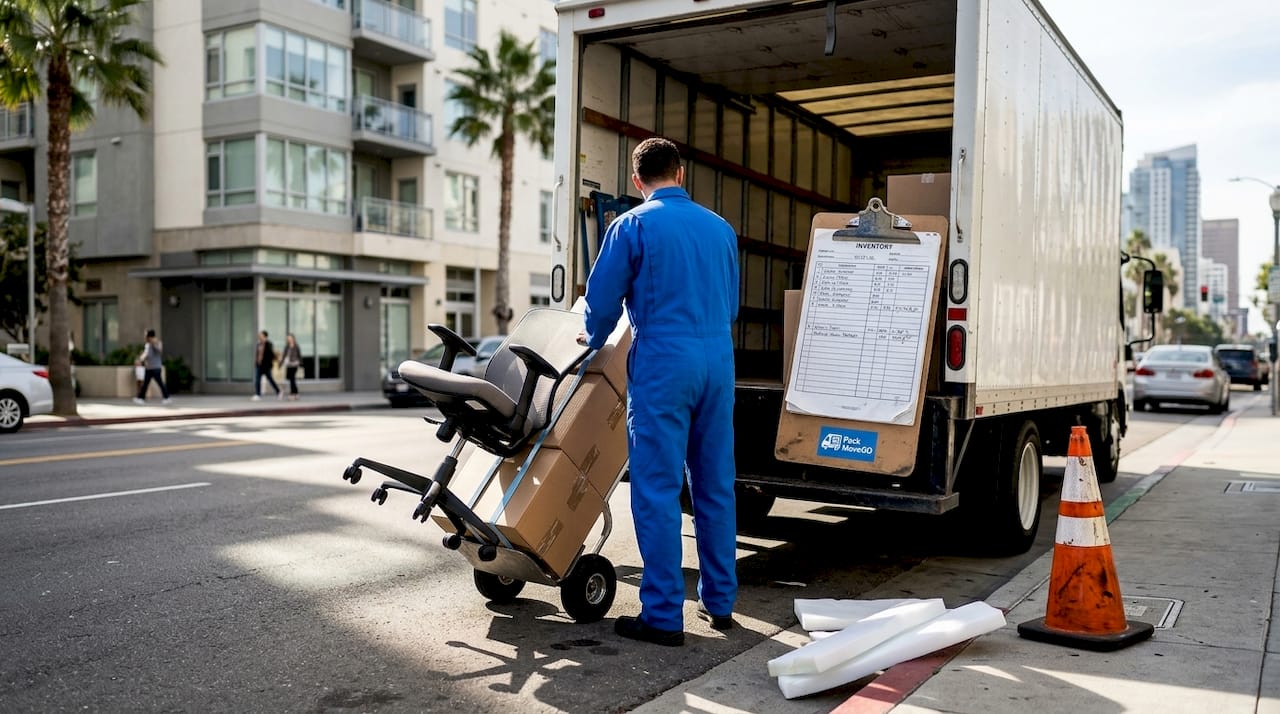
Very few Californians today qualify for the federal moving expense deduction due to the 2017 tax law changes. If you are not active-duty military, that federal benefit is off the table regardless of why you are moving. This makes accurate budgeting even more important because you cannot count on tax relief to offset your costs.
Special cases: storage, travel, and non-deductible costs
Beyond the routine line items, certain categories need special attention due to rule changes and frequent misconceptions.
Storage is one of the most misunderstood moving expense categories. Many people assume that any storage rental connected to a move counts as a deductible expense. That is not accurate. According to IRS guidance, deductible storage is limited to costs incurred within 30 consecutive days after household goods are moved out of the former home. Anything beyond that 30-day window does not qualify, even if the storage is directly connected to the move.
"You can deduct the cost of storing and insuring household goods and personal effects within any period of 30 consecutive days after the day your things are moved from your former home and before they are delivered to your new home." — IRS Publication 3
Travel expenses follow a similar pattern of limited eligibility. Lodging for one night during the actual move is generally accepted as a qualifying expense. But meals eaten during that travel day are specifically excluded. House-hunting trips, even if they directly led to your new location, are not deductible under any scenario. This distinction catches many people off guard.
Here is a list of commonly mistaken "moving expenses" that do not qualify:
- Meals during travel days. Even if you are driving across the state for your move, food costs are excluded.
- House-hunting trips. Flights, hotels, and car rentals for scouting your new neighborhood are personal expenses.
- Pre-move cleaning services. Cleaning your old home before the movers arrive is not a moving expense.
- Utility setup fees. Connecting your gas, electric, or internet at the new address is a living expense, not a moving expense.
- Furniture purchases for the new space. Buying new items because your old ones did not fit is not part of a move cost.
- Pet transportation. Shipping or boarding pets during the move is generally not included.
Understanding how to store items during your move can help you plan timing so that storage costs fall within eligible windows if you do qualify. A solid storage packing guide also reduces how long you need storage in the first place, which saves money regardless of deductibility.
For most taxpayers, the federal deduction simply does not apply after 2017. California's state rules offer a potential alternative for work-related moves, but the documentation requirements are strict. Keep every receipt.
Side-by-side comparison: deductible vs. non-deductible costs
To wrap up, let's clarify which expenses actually qualify and for whom by comparing them directly.
| Expense category | Federal (non-military) | California (work-related) | Active-duty military |
|---|---|---|---|
| Moving household goods | Not deductible | Potentially deductible | Deductible |
| Packing and crating | Not deductible | Potentially deductible | Deductible |
| In-transit storage (within 30 days) | Not deductible | Potentially deductible | Deductible |
| Insurance on goods during move | Not deductible | Potentially deductible | Deductible |
| Lodging during travel | Not deductible | Potentially deductible | Deductible |
| Meals during travel | Not deductible | Not deductible | Not deductible |
| House-hunting travel | Not deductible | Not deductible | Not deductible |
| Utility setup fees | Not deductible | Not deductible | Not deductible |
| Long-term storage (beyond 30 days) | Not deductible | Not deductible | Not deductible |
Rules differ substantially by situation, which is why this table matters. A cost that is deductible for a military member moving under orders is not automatically deductible for a civilian relocating for a job.
California's deduction eligibility also depends on passing a distance test (the new job must be at least 50 miles farther from your old home than your old job was) and a time test (you must work full-time in the new area for at least 39 weeks during the 12 months after arrival). If you do not meet both, the deduction does not apply.
Here are the steps to evaluate whether an expense is deductible for your California move:
- Confirm whether you are an active-duty military member or a civilian.
- If civilian, determine whether your move is directly connected to starting a new job.
- Apply the 50-mile distance test to your specific situation.
- Verify you will meet the 39-week time test within the first year.
- Check whether the specific expense falls into an allowed category (transport, lodging, not meals).
- Save every receipt, invoice, and contract tied to the expense.
- Consult a California tax professional before claiming any deduction.
For anyone planning a full service move in California, having itemized invoices from your moving company is critical. Most reputable movers will provide this, but you should ask upfront.
What most guides miss about tracking moving expenses
Most articles about moving expenses get stuck on the deduction question. Can I deduct this? Does this qualify? But for the vast majority of California homeowners and business managers in 2026, the federal deduction simply does not exist. Focusing energy there leads to disappointment and, worse, diverts attention from the real problem: runaway costs from poor planning.
The uncomfortable truth is that most moving budget overruns come from missed line items, not from the big-ticket categories. A family that correctly budgets $3,500 for a moving truck still ends up $1,800 over budget because they forgot elevator fees, bought last-minute boxes at retail prices, paid for an extra storage month, and did not account for cleaning services at the old apartment. These are not dramatic failures. They are quiet leaks that add up fast.
The most practical thing you can do is build and maintain a simple moving expenses spreadsheet. Create columns for expense category, vendor or service name, estimated cost, actual cost, date paid, and receipt status. Update it weekly during your planning period and daily during the final two weeks before the move. This habit takes ten minutes a day and can save you hundreds of dollars by flagging overruns early.
We have seen clients walk into moves with a solid understanding of the big costs and still get hit hard by surprises like weekend surcharges, fuel minimums, and last-minute valuation upgrades. Understanding your moving service agreements before signing is one of the most effective ways to prevent those surprises. Read the fine print on fuel, peak-day pricing, and liability coverage.
Tracking is not glamorous. But it is what actually saves money on a California move.
Make your California move seamless with expert help
Budgeting for every moving expense is far less stressful when you have a professional team that provides transparent, itemized pricing from the start.
At PackMoveGo, we serve homeowners and businesses throughout California with licensed, insured moving services designed to eliminate guesswork. Whether you need local residential support or a complex commercial relocation, our team provides clear quotes, structured planning, and expert execution. Explore our comprehensive moving services to see exactly what is included at each service level. For ongoing planning guidance, our moving tips and tricks resource library keeps you informed at every stage. Visit PackMoveGo to get your free quote today and take the first step toward a move that stays on budget.
Frequently asked questions
Which moving expenses are tax-deductible in California?
In California, reasonable expenses for transporting household goods and travel lodging directly related to a work relocation may be deductible if strict distance and time tests are met. Meals and house-hunting costs are always excluded.
Are storage costs always included as moving expenses?
Only storage within 30 consecutive days after leaving your old home is generally considered a qualified moving expense for eligible taxpayers. Longer-term storage does not qualify under California or federal rules.
Can meals or house-hunting travel be counted as moving expenses?
No. Meals and house-hunting costs are explicitly excluded from deductible moving expenses under both California and federal tax rules, regardless of your situation.
Who can still deduct federal moving expenses after 2017?
Only active-duty members of the Armed Forces moving under a military order qualify for the federal moving expense deduction after the 2017 tax law changes.