
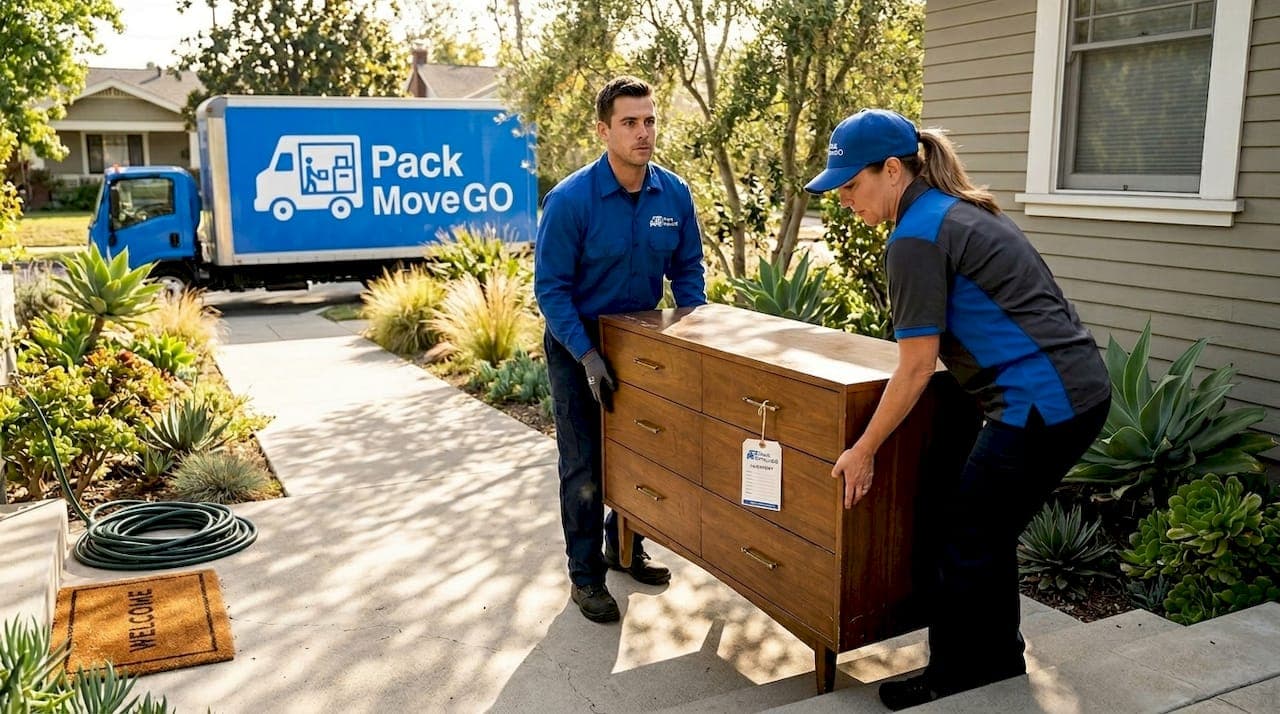
Moving in California is more complicated than most people expect. The state has specific legal requirements that govern every licensed mover operating within its borders, and those rules exist to protect you. Whether you are relocating across town or crossing county lines, the moving company you hire does far more than carry furniture. They serve as your legal partner, your documentation keeper, and your first line of defense when something goes wrong. This guide breaks down exactly what that means so you can make informed decisions before, during, and after your move.
Table of Contents
- Why moving companies matter: Beyond heavy lifting
- California regulations: What movers must do for you
- Understanding moving coverage and your options
- Packing, documentation, and the mover's value in edge cases
- The truth most people miss about moving company value
- Get a smooth, transparent California move with PackMoveGo
- Frequently asked questions
Key Takeaways
| Point | Details |
|---|---|
| Licensing is essential | California law requires movers to have a Cal‑T permit, ensuring professionalism and accountability. |
| Understand coverage choices | Know the difference between basic and full value protection to properly safeguard your belongings. |
| Documentation protects you | Accurate estimates, inventories, and packing records are key to settling claims and avoiding disputes. |
| Go beyond price | Choosing movers based on experience and transparency can prevent costly headaches and losses. |
Why moving companies matter: Beyond heavy lifting
Now that you know not all moving help is equal, let's uncover what a true professional mover means in California.
Most people think of movers as strong workers with a truck. That picture is incomplete. In California, professional movers operate inside a defined legal framework that assigns them specific duties and holds them accountable for how your belongings are handled from start to finish.
California licensed movers carry a state-issued authorization that sets them apart from unlicensed operators advertising on classified sites. Licensed movers in California must hold a Household Mover Permit, known as a Cal-T number, issued by the Bureau of Household Goods and Services to legally move household goods within the state. This is not optional. A company without a Cal-T number is operating illegally, and you have no legal recourse if things go wrong.
Beyond legal compliance, professional movers provide essential moving services that go well beyond muscle. Their responsibilities include:
- Safety and security: Protecting your belongings through proper packing techniques and careful loading
- Efficiency: Completing your move within the agreed timeline and without unnecessary delays
- Accountability: Providing written records, signed inventories, and clear contracts
- Expert guidance: Helping you understand valuation options, contract terms, and consumer rights
"A licensed mover in California is not just a service provider. They are a regulated professional with legal obligations to you as a consumer. Knowing that changes how you should evaluate who you hire."
Pro Tip: Before booking any mover, ask directly for their Cal-T number. Then verify it at no cost through the California Bureau of Household Goods and Services website. If a company hesitates or cannot provide the number quickly, that is a clear warning sign.
The difference between a licensed mover and an unlicensed one is not just paperwork. It is the difference between having legal protections and having none. Unlicensed movers can disappear with your belongings or charge surprise fees at delivery with no regulatory oversight to stop them.
California regulations: What movers must do for you
With an understanding of their broad role, let's dig deeper into what the law requires movers to do for you in California.
California's regulatory environment for movers is one of the more detailed in the country. The Bureau of Household Goods and Services oversees compliance, and the rules cover everything from how estimates must be presented to what documentation movers are required to give you. Knowing these rules turns you from a passive customer into an informed consumer.
California moving company insurance requirements confirm that the Cal-T permit is a baseline legal requirement, not a nice-to-have. Every licensed mover must comply with state regulations around written estimates, inventory documentation, and cargo liability. Here is a quick breakdown of what compliant movers are required to provide:
| Requirement | What it means for you |
|---|---|
| Cal-T number | Proof the mover is legally authorized to operate in California |
| Written estimate | A documented cost agreement before any work begins |
| Inventory list | A record of all items being moved, signed by both parties |
| Valuation disclosure | Clear explanation of your coverage options before pickup |
| Consumer rights booklet | State-required guide to your rights and dispute options |
Reviewing your moving service agreements carefully before signing is one of the most important steps you can take. Once you sign, you are bound by whatever terms are in that document.
Here is how to check whether your mover is actually compliant:
- Request the Cal-T number in writing before any booking is confirmed
- Ask for a written, non-binding or binding estimate with all costs itemized
- Confirm you will receive a complete inventory list on moving day before loading begins
- Request the California Consumer Protection Guide for household movers
- Ask the mover to walk you through coverage options and document your selection
When preparing for movers, most homeowners focus on packing their boxes. However, the paperwork stage is just as critical. A mover who skips the written estimate or refuses to provide an inventory list is already in violation of state requirements.
Consumer rights highlight: Under California law, you have the right to a written estimate before your move begins. You have the right to a complete inventory of your belongings. And you have the right to choose and fully understand your valuation coverage before your items are loaded onto any truck.
These rules protect you. Take the time to use them.
Understanding moving coverage and your options
Besides legal requirements, financial protection is key. Let's make sense of what coverage actually provides during your move.
One of the most misunderstood parts of any California move is coverage. Many people assume they are automatically protected if something gets damaged. The reality is more nuanced and, frankly, more limiting than most people expect.
California's moving coverage framework makes a critical distinction between two types of protection: basic coverage, also called released value, and full value protection. These are not the same, and the difference matters significantly when you file a claim.
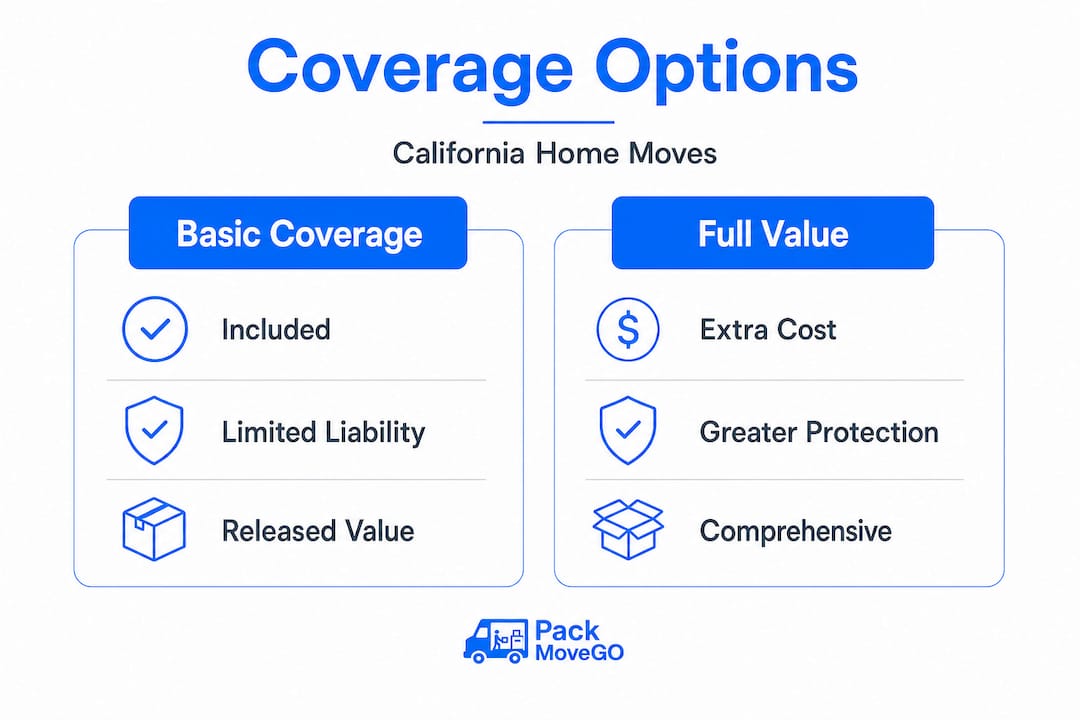
| Coverage type | What it covers | Your recovery |
|---|---|---|
| Basic coverage (released value) | Limited liability based on weight | 60 cents per pound per item |
| Full value protection | Replacement or repair at current market value | Actual cost of the item |
| Third-party insurance | Independently purchased, broader protection | Varies by policy |
To put that in practical terms: if a 30-pound flatscreen television is damaged under basic coverage, you would recover $18. That television likely cost hundreds of dollars. This is why full service moving tips consistently emphasize the importance of choosing the right coverage before your move begins.
Consider third-party moving insurance if any of these situations apply to you:
- You own high-value electronics, art, antiques, or jewelry
- The mover's full value protection comes with limitations or deductibles you cannot accept
- Your homeowner's or renter's insurance does not cover items in transit
- You are moving fragile or irreplaceable items that cannot be replaced at any price
The most common mistake California movers make is assuming basic coverage is enough because it comes included with the service. It is not a safety net. It is a legal minimum that barely covers the weight of your belongings, not their value. Upgrading to full value protection or purchasing independent insurance is a straightforward decision when you understand what basic coverage actually delivers.
Packing, documentation, and the mover's value in edge cases
Knowing what coverage means, let's see how packing and documentation practices can make or break your move's outcome.

Even with the right coverage in place, what happens at the end of a damage claim often comes down to two things: how items were packed and what the paperwork shows. This is where the skill and discipline of a professional mover directly affects your financial outcome.
Packing methodology and documentation discipline are central to how claims and disputes get resolved. If a mover used improper packing materials or skipped the pre-move inventory, your ability to recover losses shrinks considerably. A well-trained mover knows how to wrap fragile items, label boxes with contents and handling instructions, and record the condition of valuables before they leave your home.
Understanding the difference between packing and loading is also important. Packing refers to protecting individual items in boxes with appropriate materials. Loading refers to how those boxes are placed and secured in the truck. Both stages require trained technique, and errors at either stage can cause damage that might otherwise have been avoided.
Here are the edge cases where a professional mover's expertise matters most:
- Fragile items: Glass, ceramics, musical instruments, and electronics require specific wrapping methods and box placement
- High-value items: Art, antiques, and collectibles need documented condition reports before and after the move
- Disputed damages: Without a pre-move inventory, it is your word against the mover's when a dispute arises
- Long-distance moves: The longer the transit, the greater the potential for damage, making documentation even more important
- Unusual or large items: Pianos, grandfather clocks, and custom furniture need specialized handling that not all movers are trained for
Pro Tip: On moving day, take photos of all high-value or fragile items before the movers load them. Time-stamped photos give you independent documentation that can support a claim if an item arrives damaged. Pair this with the mover's own inventory sheet and you have a solid record from two sources.
You can also find detailed packing tips and information about professional packing services that explain what a trained crew does differently compared to a DIY approach. The short version: they use better materials, proven techniques, and systematic labeling that saves you time and protects your belongings more reliably.
The truth most people miss about moving company value
Most conversations about moving focus on price. How much will it cost? Is this quote competitive? Can I find someone cheaper? That is the wrong place to start, and we have seen firsthand why that thinking leads to costly outcomes.
The real measure of a moving company's value is what happens when something goes wrong. A company that offered the lowest quote but skipped the written inventory or provided misleading coverage information will leave you with little recourse when a claim is disputed. The savings on day one evaporate instantly when you are fighting for compensation with no documentation to back you up.
Trusted California movers are distinguished not by their advertising budget but by their operational discipline. Do they provide detailed written estimates without being asked? Do they proactively walk you through coverage options? Do their crews label boxes, photograph high-value items, and complete the inventory before loading starts? These habits are not common across the industry. They reflect a mover that has invested in training and cares about what happens when there is a problem.
Consider this scenario: a family moves from San Jose to Los Angeles. They hire the lowest bidder who offers a verbal estimate and skips the formal inventory. A custom dining table arrives with a cracked leg. The mover acknowledges the damage but argues the table was already damaged before loading. Without a pre-move inventory or photos, the family has no way to prove otherwise. Their basic coverage pays out $21 for a $1,400 table. That outcome was entirely preventable.
"The paperwork and documentation habits of your moving crew are not bureaucratic formalities. They are your financial protection plan. A mover who skips them is not saving you time. They are removing your ability to recover losses."
When you are evaluating movers, ask harder questions. How do they handle disputed damage claims? What does their inventory process look like? How do they document item conditions at pickup? The answers tell you far more about their value than their price ever will. Experience and transparency are not premium add-ons. For a high-value move, they are the baseline you should demand.
Get a smooth, transparent California move with PackMoveGo
If you want to apply these principles without doing all the research yourself, working with a compliant, experienced mover takes that burden off your plate.
PackMoveGo operates with full Cal-T compliance and prioritizes transparency at every step. From your first quote through final delivery, you receive written documentation, clear coverage explanations, and a professional crew trained in proper packing and inventory practices. Whether you need local support or long-distance coordination, explore residential and long-distance moving services designed around California's regulatory requirements. You can also browse detailed moving tips to stay informed and prepared throughout your relocation. Your move deserves more than a truck and a handshake.
Frequently asked questions
How can I verify that a moving company is licensed in California?
Ask for their Cal-T number and confirm it with the California Bureau of Household Goods and Services. Licensed movers must hold a Household Mover Permit to legally operate within the state.
What's the difference between moving coverage and third-party moving insurance in California?
Mover-provided coverage is state-regulated and limited; third-party insurance offers broader protection for high-value items. Basic coverage pays only 60 cents per pound, so expensive or irreplaceable belongings may require an independent policy.
What documents should a moving company provide before my move?
You should receive a written estimate, an inventory, and clear information about coverage options. California regulations require movers to verify their Cal-T permit and ensure all documentation is consistent and complete before pickup begins.
How does proper packing by movers help with damage claims?
Professional packing and solid documentation increase the odds of successful claims or dispute resolution. Packing methodology and documentation discipline directly influence whether your claim succeeds, because disputes are resolved based on how items were prepared, recorded, and covered.