
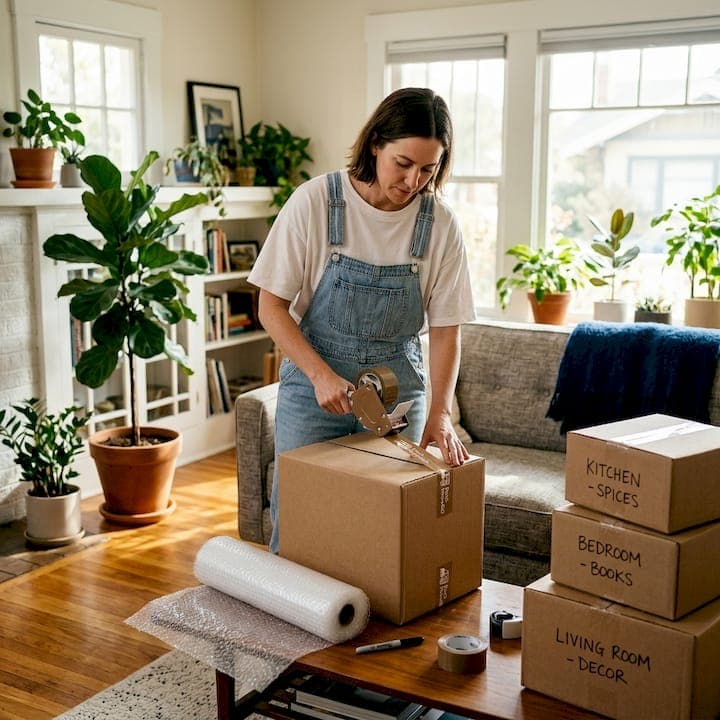
Most people planning a move spend weeks researching trucks, routes, and timing. Very few spend that same energy thinking about how items get packed. That gap is exactly where moves go wrong. Broken dishes, missing cables, chaotic unpacking sessions that stretch into days — these problems almost never trace back to the truck or the driver. They trace back to what happened before the truck ever arrived. Whether you are renting a one-bedroom apartment in San Diego or selling a four-bedroom house in Sacramento, understanding how packing shapes your entire relocation experience is the first step toward a move that actually goes smoothly.
Table of Contents
- Why packing matters in relocation
- Professional packing vs DIY: What's the difference?
- The anatomy of an organized packing process
- Packing priorities: Renters vs homeowners
- Perspective: What most moving guides miss about packing
- Professional help for stress-free packing in California
- Frequently asked questions
Key Takeaways
| Point | Details |
|---|---|
| Packing impacts move success | Proper packing is crucial for preventing damage and keeping your move on track from start to finish. |
| Professional vs DIY options | Hiring packers saves time and adds organization, while DIY requires more effort but greater control. |
| Organization prevents stress | Using a clear room sequence and labeling system avoids last-minute chaos and lost items. |
| Tailor packing to your needs | Renters and homeowners have different packing priorities—choose a strategy that fits your timeline and lifestyle. |
| Expert help is available | Professional packing services in California can make your move safer and more efficient if you want extra support. |
Why packing matters in relocation
Packing is not just about getting items into boxes. It is about protecting what you own, keeping the move organized, and making sure the other end of the journey is manageable. Packing tips for moving confirm that packing is a core determinant of safe relocation because it prevents shifting and breakage and improves unpacking efficiency through labeling and room-by-room organization. That is not a small claim. It means the way you wrap a lamp or label a box directly determines whether your belongings arrive intact and whether your first week in a new home is calm or chaotic.
California homes add a specific layer of complexity. The state includes everything from studio apartments near the coast to sprawling multi-level homes in the suburbs. Lifestyles vary enormously, and so do packing challenges. A renter in Los Angeles may need to navigate tight hallways and an elevator. A homeowner in Fresno might have a garage full of tools and seasonal items that need careful sorting. Smart packing strategy accounts for these real-world differences.
Understanding the packing vs loading differences is also important. Packing is the preparation stage. Loading is execution. Problems during loading almost always originate from poor packing decisions made hours or days earlier.
Common packing mistakes that derail moves:
- Packing items from multiple rooms in a single box
- Using undersized or recycled boxes that collapse under weight
- Skipping labels entirely or writing vague descriptions like "stuff"
- Leaving packing until the final 24 hours before move day
- Forgetting to set aside essentials needed immediately at the new home
Having the right essential packing supplies on hand before you start makes a measurable difference. Running out of tape or bubble wrap mid-session is more disruptive than it sounds.
"A well-packed home arrives as a well-organized home. The boxes tell the story of where everything goes and protect items through every bump along the way."
Pro Tip: Never mix items from different rooms in a single box. Even if it seems efficient in the moment, it creates a nightmare at the destination when you cannot tell which box belongs where.
| Packing approach | Outcome |
|---|---|
| Labeled, room-by-room | Fast unpacking, minimal breakage |
| Mixed items, no labels | Extended unpacking, high confusion |
| Last-minute rush | High breakage, misplaced essentials |
| Systematic with inventory | Maximum protection, trackable items |
Professional packing vs DIY: What's the difference?
Once you understand why packing matters, the next question is who should do it. The honest answer depends on your timeline, budget, and how much you value your own time and peace of mind.
Professional packing operates on a completely different scale than most DIY efforts. Trained packers bring their own materials, follow a tested sequence, and can box up an average home in a fraction of the time most people expect. According to Redfin, professional packers can complete an entire home in just a few hours, while DIY packing for the same space often stretches across days or even weeks of evenings and weekends.
Comparison: Professional packing vs DIY
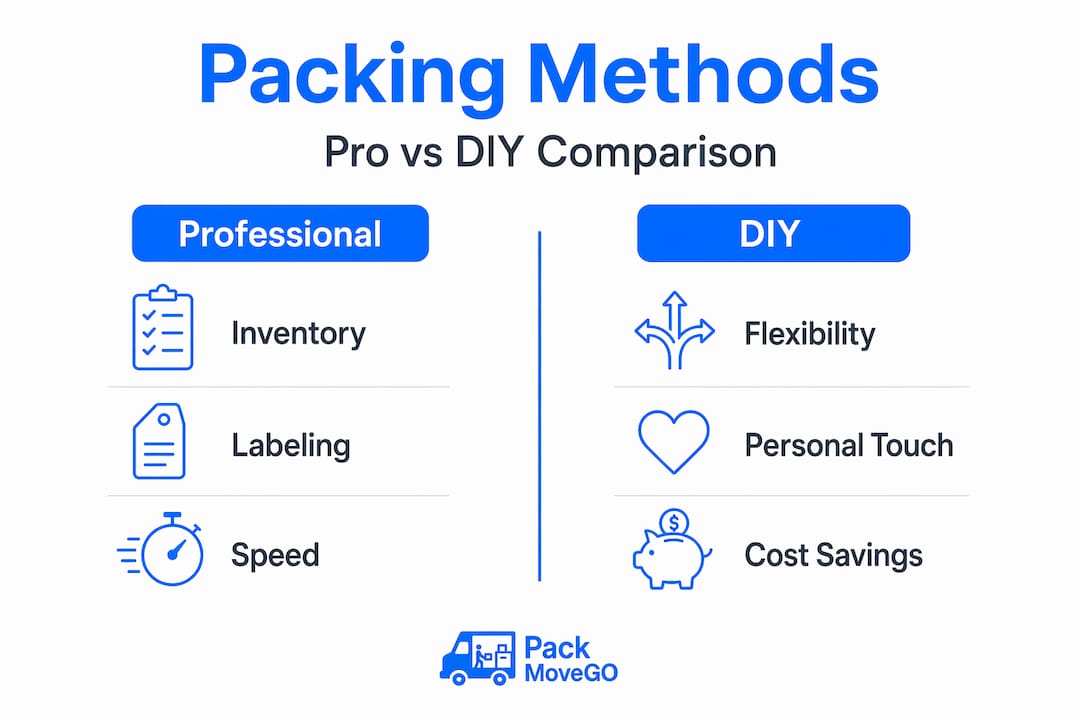
| Factor | Professional packing | DIY packing |
|---|---|---|
| Time for 1BR | 2 to 4 hours | 6 to 12 hours |
| Time for 3BR | 6 to 10 hours | 14 to 30+ hours |
| Materials | Provided by packers | Purchased separately |
| Labeling | Systematic and consistent | Variable and often incomplete |
| Breakage risk | Low (trained technique) | Higher (inconsistent wrapping) |
| Cost in California | $300 to $1,500+ depending on size | Cost of supplies only |
| Stress level | Low | High to very high |
Steps professionals take that DIY packers typically skip:
- Assessment of all items before a single box is packed
- Sourcing the right box sizes for different item types
- Wrapping fragile items with layered protective material
- Packing heaviest items at the bottom of each box
- Filling empty space in boxes to prevent shifting in transit
- Writing detailed labels on multiple sides of each box
- Creating a running inventory of packed boxes and their contents
- Setting aside a clearly marked survival box for move-in day
Understanding why use packing services comes down to a simple calculation. If your time is worth more than the cost of professional help, or if you have fragile, valuable, or high-volume items, professional packing delivers a clear return. Learning more about packing assistance meaning helps you know exactly what to expect from the service before you book.
"Packing an average home in California on your own realistically takes two to three full weekends. Professional packers can accomplish the same task in a single day, with fewer errors and less physical strain on you."
Pro Tip: Even if you choose to pack yourself, borrow the professional workflow. Assess first, supply second, pack in sequence, label every box on at least two sides, and create a simple inventory list before the truck arrives.
The anatomy of an organized packing process
Structure is what separates a smooth pack from a stressful one. It is not about having the best supplies or the most time. It is about following a process that builds on itself.
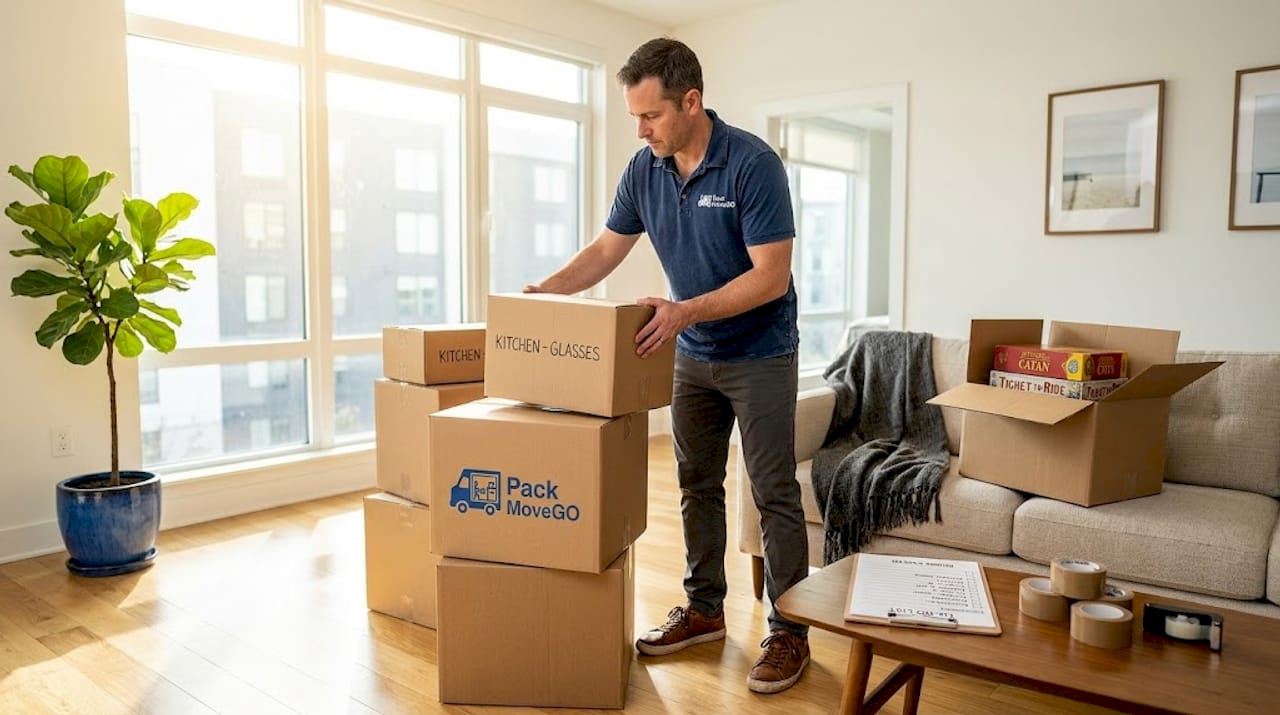
The room-by-room system prevents backtracking and keeps the home functional until late in the move. When you pack one room completely before moving to the next, you never have half-empty boxes scattered everywhere and you always know where everything is. The process also makes unpacking far more logical.
Core tasks that reduce stress and breakage:
- Declutter before packing, not after. Fewer items mean fewer boxes and less work.
- Purchase all supplies at once so you are not making hardware store runs mid-session.
- Wrap breakables individually. Never stack fragile items directly on top of each other.
- Use clothing, towels, and linens as padding to save space and reduce waste.
- Photograph the back of electronics before disconnecting cables.
- Keep all hardware (screws, bolts) in labeled zip-lock bags taped to the furniture they belong to.
Recommended room packing order (least used to most used):
- Storage rooms, attic, basement, or garage
- Guest bedrooms and formal dining rooms
- Home office and bookshelves
- Children's rooms (coordinate timing with their school schedule)
- Living room and entertainment areas
- Master bedroom
- Kitchen (leave essentials until the final day)
- Bathrooms (pack all but daily use items early)
This sequence keeps your home livable for as long as possible while making steady progress. Following the pack and move workflow in a structured order also reduces decision fatigue. You always know what comes next.
Pro Tip: Create a central inventory before move day. Use your phone to photograph each labeled box and record its contents in a simple notes app or spreadsheet. For high-value or sentimental items, this record is invaluable if something gets misplaced. You can find more detail on this in the top packing tips resource.
One often-overlooked practice is the survival box. Pack one clearly marked box or bag with everything you need for the first 24 to 48 hours in your new home. Think toiletries, a phone charger, basic medications, a change of clothes, coffee supplies, snacks, and a couple of plates and utensils. Load it last so it comes off the truck first.
Packing priorities: Renters vs homeowners
Not all moves are created equal. Renters and homeowners in California face different packing challenges, and recognizing those differences helps you plan more effectively.
Renters often deal with strict move-out deadlines. Lease agreements typically require the unit to be fully vacated and cleaned by a specific date, sometimes with very little flexibility. That tight timeline makes speed and efficiency critical. There is usually less furniture volume overall, but the pressure to be out fast can lead to rushed, disorganized packing that results in forgotten items or damage to walls and floors during a hurried exit.
Homeowners face a different set of pressures. More rooms, more years of accumulated belongings, higher-value items, and more logistical coordination all add up. A family moving from a three-bedroom house in the Bay Area might be managing a piano, a garage full of tools, holiday decorations, and years of paperwork alongside everyday furniture and kitchen items.
Typical packing time estimates by home size:
- Studio or 1BR apartment: 4 to 6 hours for DIY, 2 to 3 hours with professionals
- 2BR apartment or condo: 6 to 10 hours for DIY, 3 to 5 hours with professionals
- 3BR home: 12 to 16 hours for DIY, 6 to 8 hours with professionals
- 4BR+ home: 20+ hours for DIY, 8 to 12 hours with professionals
According to research on packing service value, professional packing with structured inventory and labeling can significantly reduce lost essentials and improve unpacking efficiency — a benefit that applies equally to renters with limited time in a unit and homeowners navigating a multi-room move.
Key challenges and strategies by group:
Renters:
- Challenge: Move-out deadline pressure
- Strategy: Start packing non-essentials two weeks out, use move workflow tools to stay on track
Homeowners:
- Challenge: Volume and variety of items
- Strategy: Pack smart for California move by room category, hire professional help for kitchens and fragile collections
Pro Tip: Both renters and homeowners benefit from preparing a survival box and using consistent labeling. These two habits alone can cut unpacking time at the new home by 30 to 40 percent.
Perspective: What most moving guides miss about packing
Most moving articles focus on hacks. Use wardrobe boxes. Color code your labels. Wrap plates in paper. These are fine tips. But they miss the real point.
The biggest packing failures we see are not caused by lack of time or the wrong supplies. They are caused by randomness. A homeowner packs whatever is in front of them. Boxes fill up with mixed items from three different rooms. Labels get skipped because it "feels obvious in the moment." The result is a truck full of mystery boxes and a move-in day that turns into a week-long scavenger hunt.
We have seen moves where families spent $200 on specialty packing tape and color-coded labels but never followed a room sequence. The fancy supplies did nothing because there was no underlying structure. Contrast that with a renter who used plain brown tape, basic markers, and followed a simple room-by-room plan from start to finish. Their unpack took one afternoon.
The uncomfortable truth is that packing rewards process, not products. A simple sequence, followed consistently, outperforms expensive materials packed randomly every single time.
If you are hiring professional movers, do not just hand them a home and hope for the best. Ask specifically about their labeling method, whether they create an inventory, and how they handle fragile or high-value items. Your involvement in the planning stage is what separates a good move from a great one. Even the best movers benefit from a homeowner who has thought through priorities in advance.
For anyone managing long-term storage as part of a move, reviewing a clear storage packing process beforehand makes a real difference in how retrievable your stored items remain over time.
Professional help for stress-free packing in California
You now have a clear picture of why packing drives move outcomes, how professionals approach it, and what a structured process looks like. The next step is deciding how much support you want.
PackMoveGo connects California homeowners and renters with licensed, insured packing and moving professionals who follow exactly the kind of structured, inventory-driven process described in this article. Whether you need full-service packing for an entire home or targeted help with specific rooms and fragile items, the services are designed to match your timeline and budget. Visit moving and packing services to see what is available, explore the moving tips guide for additional planning resources, or go directly to PackMoveGo to request a free quote and get your California move started on the right foot.
Frequently asked questions
How long does professional packing usually take for a three-bedroom home in California?
Packing a three-bedroom home with professional help typically takes 6 to 10 hours, though more complex homes with fragile collections or high item volume can extend that to 16 hours.
Can I hire packers just for certain rooms or items?
Yes, many packing services let you choose specific rooms or items rather than your entire home, which is a practical option when budget or time are limited.
What should go in my survival box for the first day?
Include essentials like toiletries, a change of clothes, chargers, basic dishes, snacks, and any necessary medications. Pack it last so it comes off the truck first and stays accessible throughout move-in day.
How does professional inventorying reduce lost items in a move?
Structured inventory and labeling create an itemized record of every packed box, making it easy to locate specific belongings at the destination and confirm nothing was left behind or misplaced in transit.