
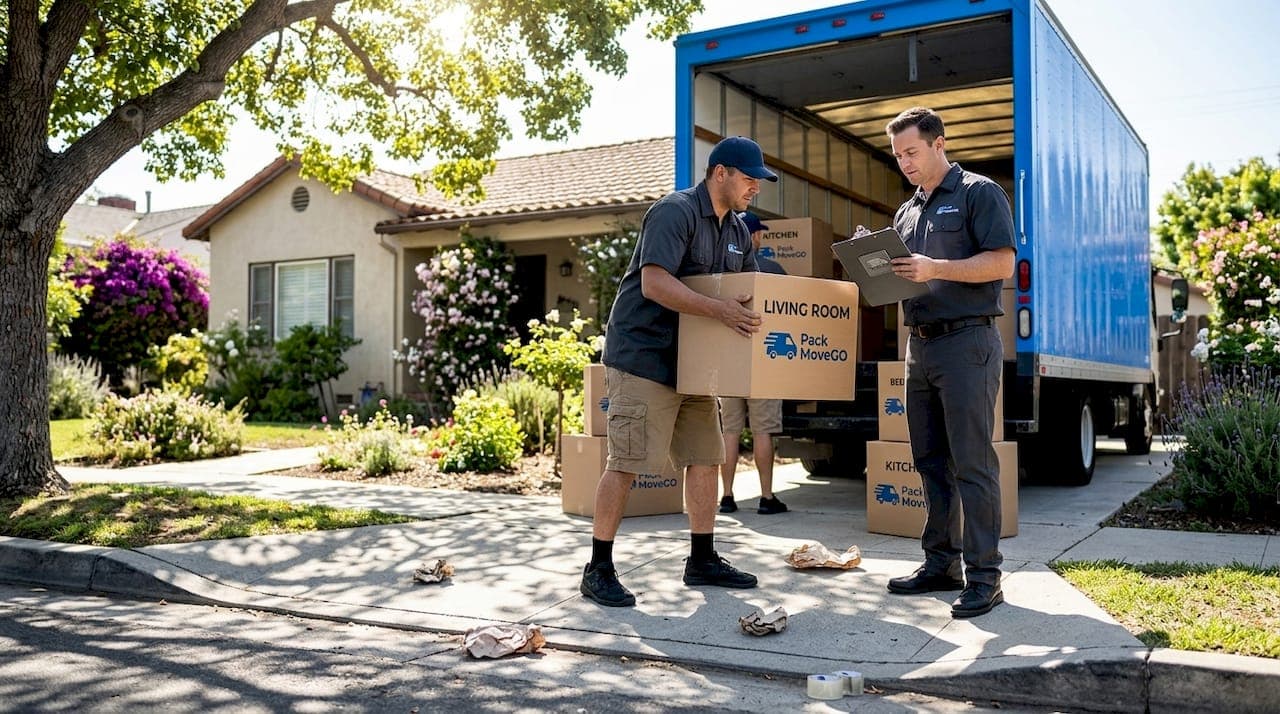
Not every move is the same, and not every moving service will fit your situation. California homeowners dealing with a cross-town apartment move face entirely different challenges than a business owner relocating an entire office across the state. Understanding the types of moving services available before you book anything saves you money, avoids scheduling headaches, and keeps your belongings protected. This guide walks you through each major option, breaks down the real cost differences, and gives you a clear framework to decide what works for your specific move.
Table of Contents
- Criteria to consider for choosing moving services
- Full-service moving: convenience for large and complex moves
- Labor-only moving: affordable help for DIY moves
- Moving container services: flexible packing and storage options
- Specialty movers: expert care for valuable or complex items
- Comparing moving service types: features, costs, and best use cases
- Choosing the right moving service for your California move
- Rethinking moving service choices: insights from California pros
- Streamline your move with PackMoveGo's expert moving services
- Frequently asked questions
Key Takeaways
| Point | Details |
|---|---|
| Understand key move criteria | Assess move size, timing, budget, and special needs before choosing a moving service. |
| Full-service offers convenience | Best for large or complex California moves with limited time and effort to spare. |
| Labor-only suits DIY budgets | Cost-effective option for those willing to rent trucks and handle transport themselves. |
| Containers add flexibility | Ideal for packing on your schedule and temporary storage during uncertain moves. |
| Specialty movers protect valuables | Necessary for fragile, bulky, or high-value items needing expert care. |
Criteria to consider for choosing moving services
Before comparing specific types of moving services, you need to know what factors actually matter for your situation. Most people go straight to price, which leads to either overpaying for services they did not need or underpaying and being left without enough help.
Here are the key factors worth evaluating:
- Move size and complexity: A studio apartment move is simple. A five-bedroom house or a multi-floor office is not. Larger moves usually require more labor, specialty equipment, and longer transportation windows.
- Your timeline: If you are on a tight schedule, you cannot afford a service that requires you to manage multiple vendors. If you have flexibility, cheaper options open up.
- Budget: There is a wide range of cost across different moving service options. Know your ceiling before you start comparing.
- Need for storage: California's housing market means closing dates shift, escrow periods extend, and leases do not always line up. Storage capability matters here more than in most states.
- How involved you want to be: Some people want movers to handle everything. Others prefer to pack their own belongings and just need hands on moving day.
Understanding why moving services matter for your specific circumstances is the first real step. Notably, 61% of Californians prefer partial professional help, balancing effort and cost effectively. That statistic is telling. Most people do not need the most expensive option or the cheapest one. They need the right combination.
Having clarified the key criteria for selecting moving services, let's explore the main types available to California movers.
Full-service moving: convenience for large and complex moves
Full-service moving is exactly what it sounds like. You hand the entire process over to professionals from start to finish. Full-service movers handle packing, loading, transport, unloading, and unpacking, making them ideal for tight timelines and large moves.
What full-service typically includes:
- Professional packing with proper materials for each item type
- Furniture disassembly and reassembly
- Loading and unloading with the right equipment
- Transportation in a licensed, insured moving truck
- Unpacking and basic setup at your new location
The cost is higher than other types of relocation services. For a large California home, full-service moving can run several thousand dollars. But the math often works in your favor when you factor in your time, the risk of injury, and the value of items that need proper protection.
One feature that makes full-service moving particularly smart in California is flat-rate pricing. Many full-service movers offer a fixed quote based on your inventory, which means traffic delays on the 405 or a longer-than-expected elevator wait does not inflate your bill. That cost predictability alone is valuable in a state known for unpredictable traffic.
Full-service moving benefits extend beyond convenience, especially for business owners who cannot afford downtime during a commercial relocation.
Pro Tip: Before booking full-service movers, do a thorough walkthrough of your home or office and create a detailed inventory. The more precise your list, the more accurate your quote, and the less likely you are to face add-on charges on moving day.
Next, we'll look at a budget-friendly alternative that offers more personal control during your move.
Labor-only moving: affordable help for DIY moves
Labor-only moving strips away the truck and logistics, leaving you with trained movers who show up to do the heavy lifting. You rent the truck or container yourself, you may pack everything yourself, and the movers load and unload for you.

Labor-only services provide loading and unloading without transportation, costing between $200 and $1,500 depending on move size. That range reflects just how flexible this option is for different budgets.
What labor-only moving typically covers:
- Loading your pre-packed boxes and furniture into your rented vehicle
- Proper stacking and securing of items to prevent shifting in transit
- Unloading at the destination
- Moving heavy items like appliances, beds, and couches that you cannot safely move alone
The trade-off is real. You are responsible for renting the truck, buying packing materials, packing everything yourself, and driving the vehicle. If packing is not something you want to handle alone, pairing labor-only movers with packing assistance gives you cost savings without the full DIY burden.
Pro Tip: When renting a truck for a labor-only move in California, book at least two weeks in advance during summer months. Truck availability drops sharply between May and September, and last-minute rentals can cost double.
While labor-only suits many, some moves demand more flexibility in timing and storage options, which brings us to moving container services.
Moving container services: flexible packing and storage options
Moving containers are a practical middle-ground. A company delivers a portable container to your home or office. You pack it yourself, at your own pace. When you are ready, the company picks it up and delivers it to your new location or stores it until you are ready.
Container services provide flexible storage during remodels or uncertain closing dates in competitive California markets, making them a smart choice when timelines are unpredictable.
How the process typically works:
- Request a container size based on your move volume
- The container is delivered and placed at your location
- You pack at your own schedule, usually over several days
- Schedule pickup when you are ready
- The container is delivered to your new address or held in storage
Here is a quick breakdown of how container services compare on key factors:
| Factor | Moving containers | Full-service | Labor-only |
|---|---|---|---|
| Packing | You do it | Movers do it | You do it |
| Transportation | Company handles | Movers handle | You drive |
| Storage option | Yes, built-in | Usually add-on | No |
| Schedule flexibility | High | Moderate | Moderate |
| Relative cost | Moderate | Highest | Lowest |
The benefits of storage built into container services make them especially useful in California, where the gap between leaving one property and accessing another can stretch weeks due to escrow delays.
Apart from these general solutions, some moves require more specialized attention, which we will examine next.
Specialty movers: expert care for valuable or complex items
Specialty movers exist for one reason. Some items cannot survive a standard move without proper equipment, training, and handling techniques.
Specialty movers have the expertise to safely move delicate or oversized items worth thousands or more, which makes paying extra worth it for valuable possessions.
Items that commonly require specialty moving services:
- Pianos: Upright and grand pianos require custom dollies, padding, and in some cases cranes for multi-story buildings
- Fine art and antiques: Temperature-sensitive or fragile pieces need custom crating and white-glove handling
- Vehicles and motorcycles: Auto transport includes enclosed or open carriers depending on vehicle value
- Medical or lab equipment: Specialized calibration requirements mean standard movers should not handle these
Attempting to move a grand piano or irreplaceable antique without a specialist is one of the most common and costly moving mistakes California homeowners make. The damage bill almost always exceeds what a specialty mover would have charged.
Specialty moving is not for every move, but when your inventory includes any of the items above, the cost of expertise is simply the cost of protecting what you own. Learn more about what California movers really do when handling high-value items.
With these core types explained, let's sum up their differences side-by-side for clearer decision-making.
Comparing moving service types: features, costs, and best use cases
A moving service comparison helps you stop guessing and start deciding. Here is how the four main types of relocation services stack up:
| Service type | Cost level | What's included | Best for |
|---|---|---|---|
| Full-service | Highest | Packing, transport, unpacking | Large homes, busy schedules, commercial moves |
| Labor-only | Lowest | Loading and unloading only | Budget movers with rental trucks |
| Moving containers | Moderate | Container delivery, storage, transport | Flexible timelines, storage needs |
| Specialty movers | Varies | Expert handling of specific items | Pianos, art, vehicles, antiques |
A few details that the table does not capture:
- Hourly pricing on labor-only moves can escalate fast. Flat-rate full-service pricing prevents surprises unlike hourly labor-only arrangements, which risk overtime in California traffic conditions.
- Container services charge for storage duration, so costs rise if your new home is not ready on schedule.
- Specialty movers often charge by item, so costs scale with what you are moving, not how far.
Reviewing detailed examples of moving expenses for California-specific moves gives you a more accurate budget baseline before you request quotes.
Understanding these comparisons helps clarify which service matches your unique move circumstances.
Choosing the right moving service for your California move
Now that you know what each service type involves, here is how to match the right option to your situation:
- Large home or full office relocation: Use full-service movers. The time and physical effort saved, combined with flat-rate pricing, justifies the cost for moves of this scale.
- Budget move with physical ability: Labor-only combined with a truck rental is your most cost-effective path. Add packing services if you want help with that part without upgrading to full-service.
- Uncertain closing date or remodel overlap: Container services give you the packing and storage flexibility California's real estate market often demands.
- Valuable or oversized items: Hire a specialty mover for those items, even if you use labor-only or containers for everything else.
- Commercial relocation: Commercial movers reduce business downtime by offering setup and expert handling, which is fundamentally different from what residential moving crews are trained to do.
Pro Tip: For commercial moves, ask movers directly whether they offer weekend or after-hours scheduling. Many California businesses move on Saturdays specifically to avoid disrupting normal business operations during the week.
Having explored how to choose the best moving service, let's share a fresh perspective on common moving myths and overlooked considerations.
Rethinking moving service choices: insights from California pros
Here is something most moving guides will not tell you. The assumption that full-service moving is always the expensive option, and labor-only is always the smart budget play, is frequently wrong.
Flat-rate full-service pricing avoids costly surprises unlike hourly labor-only rates in California's traffic conditions. A three-hour labor-only job in Los Angeles during peak traffic can easily stretch to five or six hours. That changes the math entirely.
The best value combo for many California movers is often this: rent your own truck, hire labor-only movers for the heavy lifting, and add professional packing help for fragile or high-value items. You control transport costs, you are not paying movers for hours spent in traffic, and your valuables are properly packed.
Container services are underused by California movers who think of them only as a last resort. In reality, they are the most rational choice when your escrow date is uncertain, when you are moving out of one property before your new one is ready, or when you are renovating before moving in. The flexibility they offer matches California's housing market realities better than any other option.
For business owners, the biggest mistake is treating a commercial move like a large residential move. Commercial moves require movers who understand equipment labeling, IT disconnection and reconnection sequences, and minimizing operational downtime. That is a completely different skill set, and hiring a general mover for a commercial job is where businesses lose the most time and money.
Streamline your move with PackMoveGo's expert moving services
Now that you understand the moving service landscape, making the right choice comes down to matching your situation to the right support.
PackMoveGo serves California homeowners and business owners with customized moving packages designed around your actual needs. Whether you need full-service movers to handle every detail, labor-only help for a budget move, or packing and storage solutions that fit an unpredictable California timeline, the team is licensed, insured, and available 24/7. Explore the moving tips guide to prepare your inventory, understand what to expect on moving day, and get a free quote that reflects your real move, not a generic estimate.
Frequently asked questions
What is the difference between full-service and labor-only moving?
Full-service movers handle packing, loading, transport, unloading, and unpacking, while labor-only movers assist only with loading and unloading without transportation included. Full-service costs more but removes virtually all physical and logistical effort from the customer.
When should I consider using moving container services?
Moving containers are best for flexible schedules, situations needing temporary storage, or when you want to pack at your own pace. Container services provide flexibility during remodels or uncertain closing dates, which is a common reality in California's housing market.
Are specialty movers necessary for all moves?
No. Specialty movers bring the expertise needed only for valuable, fragile, oversized, or technically complex items like pianos, antiques, or vehicles. Standard household furniture does not require specialty handling.
How can commercial moving services minimize business downtime during relocation?
Commercial movers reduce downtime by offering specialized packing, transport, and office setup services that keep disruption to a minimum. They are trained differently from residential crews and understand how to handle equipment, IT infrastructure, and operational scheduling.
What should California movers know about moving costs?
Costs vary by service type, move size, and timing. Flat-rate pricing prevents surprises unlike hourly labor-only rates, which can increase significantly with traffic delays that are common throughout California.