
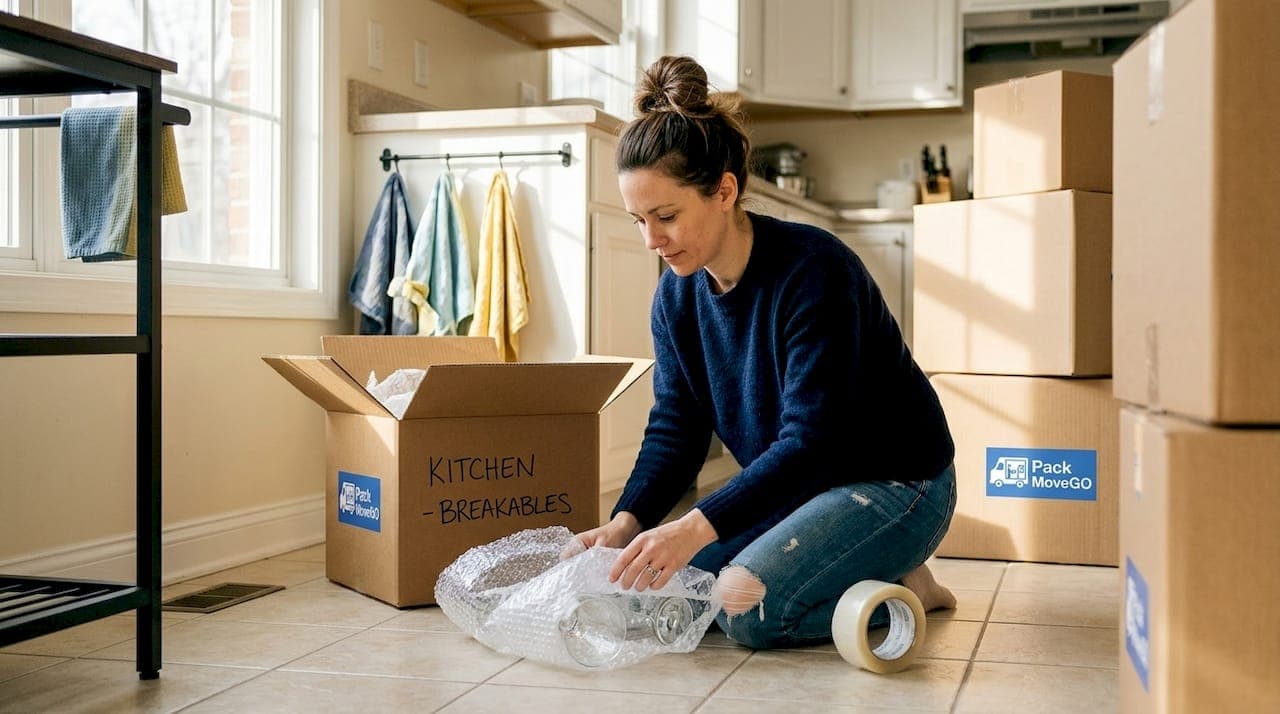
Packing for storage seems straightforward until you open a unit six months later to find crushed boxes, cracked furniture legs, and a mystery bin labeled "stuff." A solid guide to packing for storage keeps that from happening. Done right, smart packing protects your belongings, uses every square foot of space, and makes retrieval far less painful. Whether you are storing ahead of a California move, clearing out a home, or holding seasonal items long term, the decisions you make before you tape a single box matter more than most people realize.
Table of Contents
- Key takeaways
- Your guide to packing for storage: what to gather first
- How to pack different types of belongings
- Loading and organizing your storage unit
- Mistakes that cost you later
- My take on stress-free storage packing
- Let PackMoveGo handle the heavy lifting
- FAQ
Key takeaways
| Point | Details |
|---|---|
| Start with the right materials | Quality boxes, packing tape, and padding prevent most common storage damage. |
| Pack by item type and weight | Heavy items go in small boxes; fragile items need individual wrapping and dedicated space. |
| Label every box on two sides | Labels on multiple sides let you read contents without shifting boxes around. |
| Load your unit strategically | Heavy items on the bottom, frequently used items near the door, and a clear center walkway. |
| Declutter before you store | Storing items you do not need wastes money and space every month you pay for that unit. |
Your guide to packing for storage: what to gather first
Before a single item goes into a box, you need the right supplies. Using the wrong materials is one of the most common and costly mistakes families make. A flimsy box that collapses under weight can destroy everything stacked on top of it.
Here is what to collect before you start packing:
- Medium and small cardboard boxes for general items and books
- Large boxes for lightweight bulky items like pillows and comforters
- Wardrobe boxes with hanging bars for clothing you want wrinkle free
- Bubble wrap for fragile items and electronics
- Packing paper (unprinted newsprint) to wrap dishware and fill empty box space
- Heavy-duty packing tape and a tape gun
- Stretch wrap or plastic sheeting for furniture protection
- Permanent markers in two colors for labeling
- Silica gel packets to control moisture inside bins and containers
- Pallets or furniture risers to keep items off concrete floors
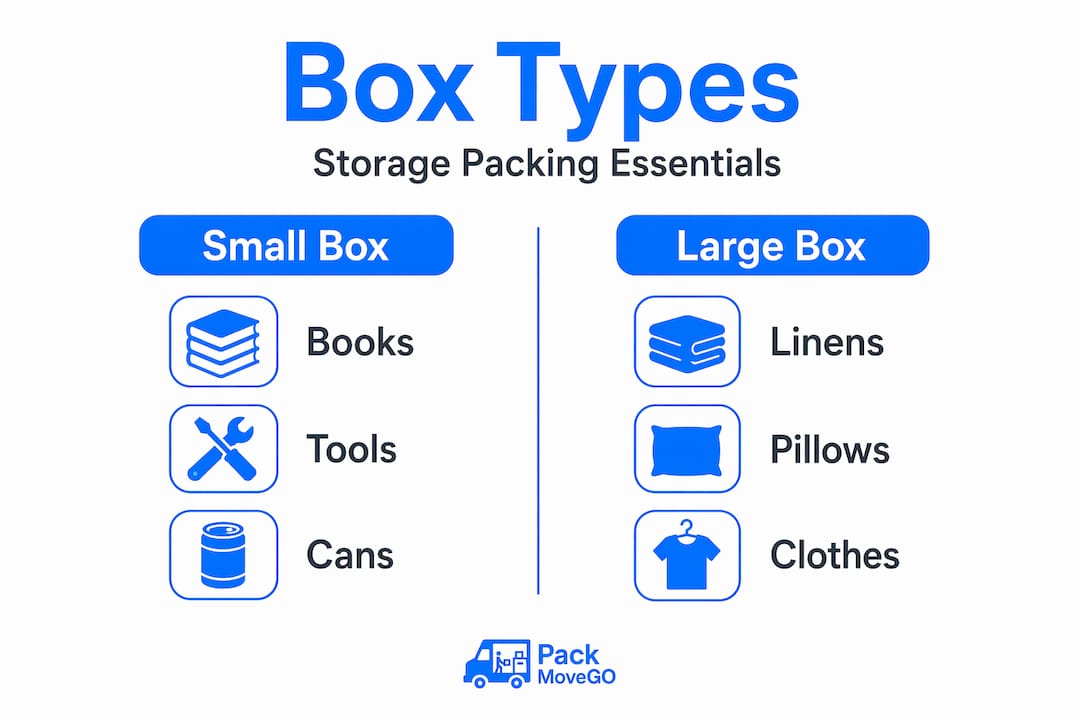
The table below breaks down which box type works best for specific storage situations.
| Box type | Best for | Why it works |
|---|---|---|
| Small (1.5 cu ft) | Books, tools, canned goods | Limits weight per box; easier to carry |
| Medium (3 cu ft) | Kitchenware, toys, files | Versatile for most household items |
| Large (4.5 cu ft) | Linens, pillows, lamp shades | Good for bulky, lightweight items only |
| Wardrobe (24" x 21" x 46") | Hanging clothes, drapes | Prevents creasing and compression |
| Plastic bins with lids | Long-term storage, garage items | Moisture resistant; stackable |
Pro Tip: Buy more tape than you think you need. Running out mid-pack causes rushed decisions and boxes sealed with two strips of tape instead of the H-pattern required for structural strength.
When selecting your materials for storage versus a regular move, think longer time frames. For a move, a box might hold for three days. For storage, that same box could hold for three years. Spend the extra money on double-walled boxes for anything valuable or heavy.
How to pack different types of belongings
This is where most people lose hours and damage items. Different belongings require completely different approaches. A step-by-step process for each category saves time and prevents regret.
Furniture
- Remove all drawers, doors, and shelves from furniture before storing. Disassembling furniture protects structural integrity and creates significantly more usable vertical space in your unit.
- Wrap table legs and chair arms in bubble wrap, then secure with stretch wrap.
- Cover upholstered pieces with breathable moving blankets, not plastic sheeting. Plastic traps moisture against fabric.
- Place furniture on pallets or plastic sheeting so pieces never sit directly on concrete floors, which wick moisture upward.
Fragile items and electronics
- Wrap each fragile piece individually in packing paper or bubble wrap before placing it in a box.
- Fill every gap in the box with crumpled packing paper so nothing shifts.
- Mark boxes containing fragile items with a large "FRAGILE" label on top and on two sides.
- Store electronics in their original boxes when possible. If those are gone, use the original foam padding shape as a guide for custom padding.
- Remove batteries from all devices before storage to prevent corrosion.
Pro Tip: Stand dishes vertically inside boxes like records in a crate, not flat like a stack of pancakes. Vertical packing dramatically reduces the chance of cracking under weight.
Clothing and textiles
This category trips up more families than any other. The instinct is to stuff clothes into plastic bags because it feels quick and airtight. The problem is that plastic traps moisture and promotes mold growth, making it unsuitable for any long-term textile storage.
For clothing stored longer than a few weeks, use breathable garment bags or acid-free boxes. For vacuum-sealed bags, use them carefully. Research shows vacuum-sealed bags should not be used for more than six months without risking permanent creasing in fabrics.
Books, antiques, and delicate papers
Pack books flat or spine down, never standing on their pages. Keep each box under 30 pounds since boxes exceeding 30 pounds risk box failure and injury during handling. For antiques, use acid-free archival paper to wrap any item made of wood, paper, or textile. Standard newsprint contains acids that transfer and discolor over time.
Loading and organizing your storage unit
Packing boxes well is only half the job. How you load the unit determines whether you can actually find and retrieve anything later.
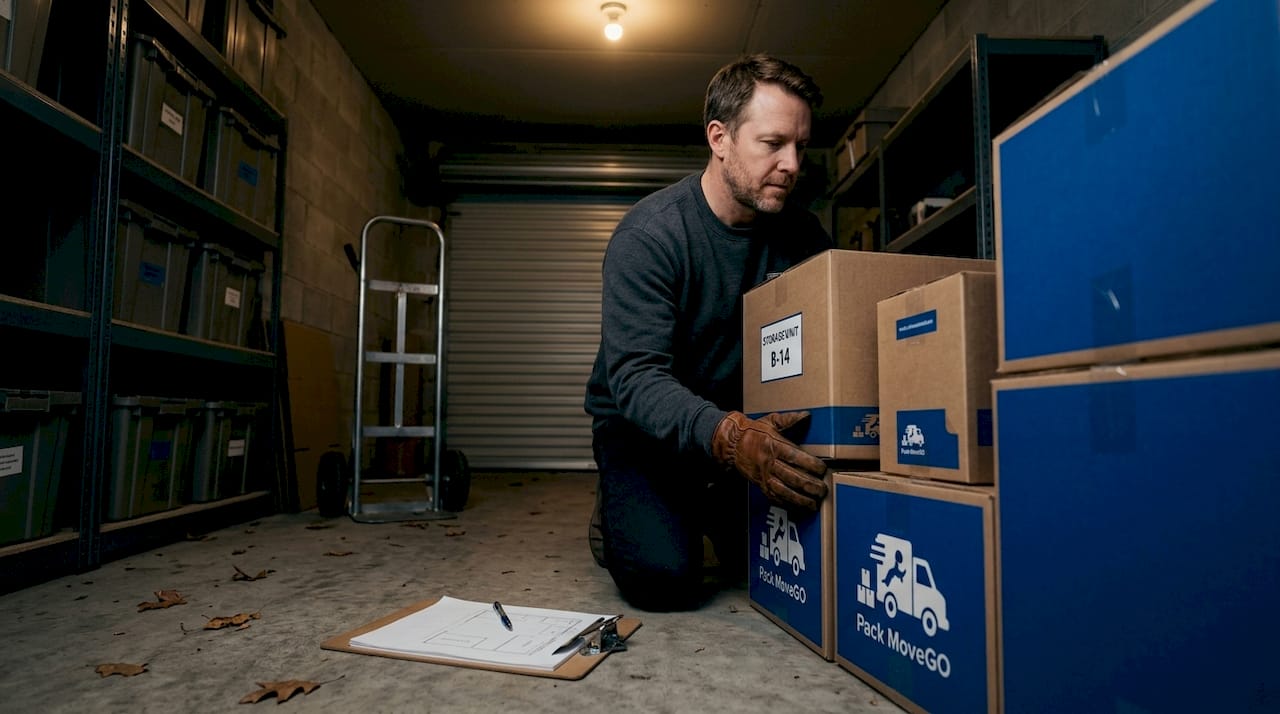
Start with a clear plan before anything goes through the door. Organize the unit into zones. One corner holds holiday decorations. Another holds tools. A third holds furniture. Designating specific zones significantly reduces retrieval time and prevents the common problem of pulling everything out just to reach one item in the back.
Here is a loading order that protects items and maximizes space:
- Heaviest items go in first and sit against the back wall on the floor.
- Large furniture and appliances line the walls on both sides.
- Medium weight boxes stack on top of each other, never exceeding four boxes high.
- Fragile and lighter boxes go on top of the stack.
- Items you need to access regularly stay near the front of the unit.
- Leave a center walkway at least 24 inches wide so you can reach any zone without moving everything.
Pro Tip: Draw a quick map of your unit layout on paper and photograph it. Tape the map to the inside of the unit door. When you need something six months later, you will thank yourself for the two minutes this takes.
Labeling is non-negotiable. Research confirms that labels on multiple sides improve content identification without requiring you to move or rotate boxes. Write the room of origin and a brief content description on at least two sides of every box.
For long-term storage of furniture or sensitive items, climate-controlled units maintain stable temperature and humidity to protect antiques, electronics, and natural fabrics from warping and deterioration. If your storage timeline extends beyond a few months, climate control is worth the added cost.
Drop silica gel packets inside plastic bins and sealed containers to absorb ambient moisture. Replace them when their color changes, which signals saturation.
Mistakes that cost you later
Even experienced packers make these errors. Knowing what to watch for helps you course-correct before damage happens.
- Overpacking boxes. A box packed past its weight limit will fail. Items shift, corners collapse, and the boxes below suffer. Keep boxes manageable and never guess at weight.
- Using plastic bags for long-term clothing. This point deserves repeating because the damage it causes is irreversible. Mold ruins fabric permanently.
- Skipping labels on boxes. Unlabeled boxes become permanent mysteries. You will not remember what is inside, and you will eventually unpack everything to find one item.
- Placing furniture directly on concrete. Concrete floors in storage units are rarely moisture-free. A piece of plywood, a pallet, or even thick cardboard is a sufficient barrier.
- Ignoring your storage unit layout. Piling everything in without a zone plan leads to a chaotic unit that requires full unpacking to access anything stored in the back.
A storage unit you cannot use efficiently is not really storage. It is just a paid room full of inaccessible boxes.
For a more thorough storage packing checklist and process walkthrough, the step-by-step packing guide on the PackMoveGo blog covers every stage from first box to final loading.
My take on stress-free storage packing
I have worked through enough moves and storage setups to know that the anxiety people feel about storage almost always comes from the same source. They packed fast, labeled nothing, and loaded without a plan. Then they needed one item three months later and spent an afternoon unpacking half the unit to find it.
The single habit that changes everything is photographing your boxes before you close them. A quick photo of the contents sitting in the open box, then a wide-angle shot of the unit when fully loaded, saves hours of searching later. Photographing box contents and the overall unit layout creates a visual inventory you can reference from your phone without ever opening a box.
My other strong opinion: do your guide to decluttering before storage first. Most people store more than they need to because sorting feels harder than packing. But every item you store costs you monthly, takes up space, and adds weight you have to eventually move again. Spending one hour sorting before you pack one box always pays off. For families combining storage with a California relocation, storing items during your move can actually simplify the entire process rather than complicate it.
The mindset shift that makes packing easier: think about future you opening that unit, not present you closing it. Pack for retrieval, not just for storage.
— Support
Let PackMoveGo handle the heavy lifting
Packing well takes time, the right materials, and a clear plan. If you are preparing for a California move and need professional support, PackMoveGo takes the pressure off with licensed and insured packing and moving services designed for residential and commercial clients alike.
PackMoveGo's team knows how to pack for safe storage and transport, using industry-grade materials and tested loading methods that protect your belongings from day one. Whether you need full-service packing, help loading a storage unit, or a complete relocation plan, the team is available around the clock for support. Explore the full range of moving and packing services to find the option that fits your situation, and get a free quote to see what professional help actually costs. You can also browse moving tips and resources to continue building your storage plan.
FAQ
What is the weight limit per box for safe storage packing?
Keep each box under 30 pounds. Boxes over that weight risk structural failure and are difficult to handle safely.
Can I use vacuum-sealed bags for storing clothes long term?
Vacuum-sealed bags are acceptable for short-term use but should not be used beyond six months. Longer compression causes permanent creasing in most fabrics.
How should I label boxes for a storage unit?
Write the room of origin and contents on at least two sides of every box. This lets you read labels without moving or rotating stacked boxes.
Do I need a climate-controlled unit?
Climate control is recommended for antiques, electronics, and natural fabric items. Stable temperature and humidity prevent warping, cracking, and mold in sensitive belongings.
What should I do before packing to make storage more efficient?
Complete a decluttering pass before you pack. Removing items you no longer need reduces storage costs, saves space, and cuts down the total number of boxes you have to manage.